



| HEADLINE |

|

WMO warns of record heat as El Niño threatens global stability
Published : Tuesday, 10 November, 2026 at 8:24 AM
Observer Online Report


Collected Photo
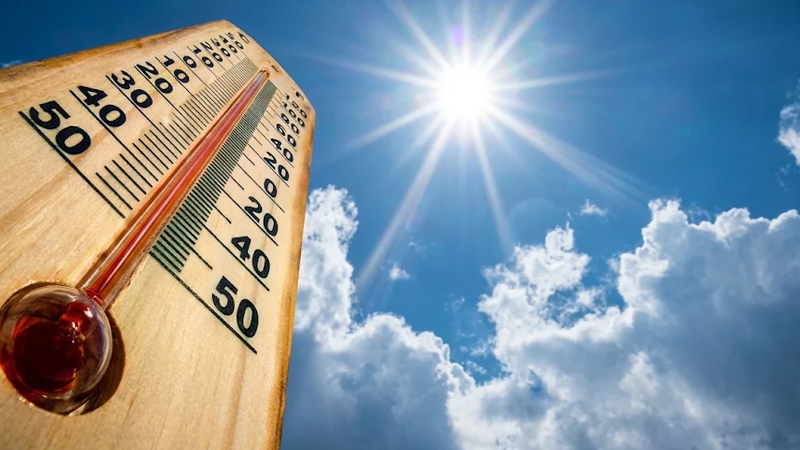
World Meteorological Organization (WMO) has warned that global temperatures could reach record-breaking levels from the remainder of 2026 through early 2027, driven by the intensifying El Niño phenomenon in the Pacific Ocean.
According to the WMO’s "State of the Climate" report released on Monday (November 9)—coinciding with the opening of the UN COP31 Climate Summit in Turkey—El Niño could elevate global average temperatures by an additional 0.1 to 0.2 degrees Celsius, significantly heightening the risk of extreme heatwaves and severe weather events worldwide.
Data from the report indicates that global average temperatures between January and September 2026 were 1.47 degrees Celsius above pre-industrial levels, positioning 2026 to become one of the hottest years on record.
Commenting on the trend, WMO Secretary-General Celeste Saulo stated that human-induced activities continue to exacerbate extreme weather conditions, with El Niño amplifying these risks further.
She added that the global climate state in 2026 is surpassing historical projections. Meanwhile, data released last week by the European Union’s Copernicus Climate Change Service indicated that 2026 temperatures could potentially exceed the critical 1.5-degree Celsius threshold above pre-industrial baselines.
The WMO projects that El Niño conditions will persist through February 2027, with sea surface temperatures in the central and eastern equatorial Pacific rising up to 3.7 degrees Celsius above normal—a sharp increase from the 0.2-degree Celsius anomaly recorded in March.
The report also highlighted alarming oceanic developments. Between 2017 and 2026, global sea levels rose at an average rate of 3.9 millimetres per year, up from 2.4 millimetres annually between 1993 and 2002, driven by thermal expansion and polar ice melt. Additionally, Arctic sea ice extent reached its lowest or second-lowest recorded maximum in March 2026.
To mitigate extreme weather hazards, countries are expanding early warning infrastructure. As of 2025, 136 nations reported having early warning systems in place—up from 56 a decade ago—aligning with the United Nations' initiative to achieve universal early warning coverage by the end of 2027.
-SA

Loading...
Loading...
Also read








Editor : Iqbal Sobhan Chowdhury
Published by the Editor on behalf of the Observer Ltd. from Globe Printers, 24/A, New Eskaton Road, Ramna, Dhaka.
Editorial, News and Commercial Offices : Aziz Bhaban (2nd floor), 93, Motijheel C/A, Dhaka-1000.
Phone: PABX- 41053001-06; Advertisement: 41053012; 01793317829, 01550707291, 01550707296
E-mail: [email protected], [email protected]. [email protected], [email protected], [email protected], [email protected], Online-email: [email protected]


