



| HEADLINE |

|

Cocktail Explosions, Arson: Is the Awami League Repeating Its History of Violent Politics?


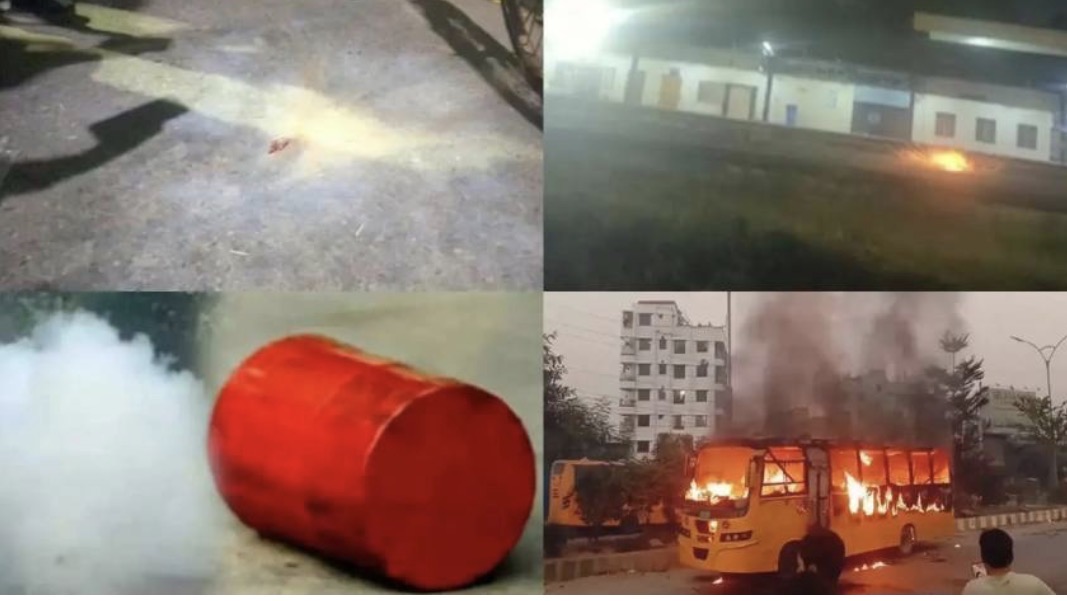
From the capital to different parts of the country, incidents of cocktail explosions, vehicles being set on fire and attempts at sabotage have sparked public fear. Are recent developments pushing Bangladesh towards a repeat of its past political violence? Are there historical similarities between the current situation and the 2006 Logi-Baitha violence, street clashes and the then Awami League’s anti-government movement? These questions have once again sparked discussion.
The period between 2001 and 2006 was one of intense political confrontation in Bangladesh’s history. During the BNP-led four-party alliance government’s tenure, the Awami League, now a banned political party, was the country’s main opposition. Political differences between the ruling government and the opposition gradually intensified. Boycotting parliament, hartals, blockades, sit-ins and street demonstrations became some of the main tools of opposition politics.
However, alongside peaceful political programmes, many of these activities were accompanied by clashes, vandalism of vehicles, arson, the use of gunpowder and confrontations between protesters and police. Reports also emerged at different times of attacks on political opponents and retaliatory violence. As a result, the impact of political programmes was not limited to the political arena; ordinary people’s daily lives, security and economic activities were also adversely affected.
October 2006: A devastating chapter of street violence
In October 2006, as the BNP-Jamaat alliance government’s tenure was nearing its end, the political crisis over the formation of a caretaker government for the upcoming election reached its peak.
The 14-party alliance, led by the Awami League, intensified its movement demanding a non-partisan and neutral caretaker government. Meanwhile, tensions between the ruling alliance and opposition political groups continued to escalate.
As part of this confrontation, on 28 October, violent clashes broke out between activists and supporters of the Awami League-led 14-party alliance and Jamaat-e-Islami in Dhaka’s Paltan and Baitul Mukarram areas.
The clashes involving sticks and oars, beatings, deaths and scenes of violence sparked widespread outrage across the country at the time. The incident remains known in Bangladesh’s political history as the ‘28 October Logi-Baitha violence’.
A 2007 Bangladesh report by Human Rights Watch stated that 28 people were killed in political violence in October 2006. A total of 30 political activists were killed in violence between political parties throughout the year.
These incidents once again demonstrate that when political differences turn violent, ordinary people pay the heaviest price.
Hartals, blockades and allegations of violence in opposition politics
During the BNP-Jamaat alliance government’s tenure, the Awami League and its 14-party alliance staged nationwide hartals, blockades and sit-in programmes at different times. News reports during that period documented incidents of obstructing vehicle movement, vandalism, arson and clashes with police in various areas surrounding these programmes.
In particular, reports emerged of clashes, vehicle vandalism and arson in Dhaka and other areas during the 36-hour hartal called by the 14-party alliance in June 2006. Many people were injured in these incidents.
However, there were also allegations of attacks on opposition activists, politically motivated cases, arrests and excessive use of force by law enforcement agencies during that period. Human rights organisations also expressed concern over extrajudicial killings, torture and the overall human rights situation under the then government.
Therefore, an assessment of the political reality of that period must take into account violence by both the ruling and opposition sides, political vendettas and allegations of repression.
Current situation: Cocktail explosions and arson return
Since the first week of November 2026, several incidents of cocktail explosions, arson attacks on public transport and acts of sabotage have been reported in Dhaka and different parts of the country. Private cars and school buses are also being targeted.
According to information published in the media, at least 15 cocktail explosions have occurred in Dhaka since 1 November. In addition to the capital, incidents of vehicles being set on fire have also been reported in different parts of the country.
On 9 November, reports emerged of cocktail explosions in different parts of Dhaka, particularly around Dhaka University, Pallabi, Malibagh and Tejgaon. On the same day, a bus was set on fire in the Farmgate area.
On 10 November, incidents of buses being set on fire, cocktail explosions and attempts to block roads were reported in different parts of the country. News also emerged of a sleeping driver being killed when a bus was set on fire in Faridpur.
These incidents are undoubtedly a matter of concern for public safety. Arson attacks on public transport, explosions in crowded areas and acts of sabotage near important establishments are directly putting ordinary people’s lives at risk.
Political identity and investigations: Who is behind the sabotage?
Regarding the recent incidents, the Dhaka Metropolitan Police said they believe the explosions and arson attacks are being carried out with the intention of creating public panic and causing sabotage.
Police have also reported the arrest of several members of banned organisations and individuals allegedly linked to the incidents. In some cases, law enforcement agencies have alleged the involvement of activists of the banned Awami League and its affiliated organisations.
The important question here is whether these incidents are occurring independently or whether a well-planned network is operating behind them. Who is collecting the explosives, who is financing the activities and whose instructions are being followed? These questions need to be answered through investigation.
However, police allegations, arrests and crimes proven in court are three different matters. Therefore, impartial investigations, proper evidence and transparent judicial proceedings are essential to uncover the truth behind each incident.
Where are the similarities between 2006 and the current situation?
A comparison between the current situation and the political violence of 2006 brings several issues to the forefront.
First, political differences are once again creating an atmosphere of tension and confrontation on the streets.
Second, incidents involving cocktail explosions, arson and attacks on vehicles are spreading fear among ordinary people.
Third, there are concerns that political programmes and clashes could disrupt public transport, businesses, educational institutions and everyday life.
Fourth, allegations of attempts to politically undermine opponents, counter-accusations and confrontations are making the overall political situation increasingly complicated.
Ordinary people’s question: How long must they remain victims of political violence?
The people of Bangladesh have witnessed the devastating consequences of political conflict many times. Hartals, blockades, buses engulfed in flames, cocktail explosions and street clashes — ordinary people are the biggest victims of every such incident.
The person who leaves home in the morning to earn a living, the student travelling to sit for an examination, the worker who depends on daily wages or the driver who takes a vehicle onto the road to support a family — their lives are the most vulnerable to the risks of political violence.
Political parties may have differences of opinion. Changes in power, elections, political rights and movements against the government are all part of the democratic process. But attempts to establish political demands through explosions, arson and loss of life can never be acceptable.
People want security, not political conflict. They want to live normal lives, not in fear. They want the rule of law and justice, not a politics of revenge.
Preventing a repeat of history is essential
The political violence of 2006 remains a painful chapter in Bangladesh’s history. If, instead of learning from those events, the country once again witnesses explosions, arson and an atmosphere of fear on the streets, it will pose a major threat to political stability and public safety.
The question today is not simply who will remain in power and who will be in the opposition. The bigger questions are whether people will be able to move around safely, whether students will be able to attend educational institutions without disruption, whether businesses will be able to operate normally and whether ordinary people will be able to live without the fear of violence.
It is the government’s responsibility to ensure impartial investigations into every act of sabotage, bring the actual perpetrators to justice and prevent the harassment of innocent people. At the same time, all political parties have a responsibility to avoid violence and ensure a democratic and peaceful political environment.
Because Bangladesh does not want to witness another 28 October. No mother should have to see her child lose their life to political violence. No innocent person should have to become a passenger on a bus engulfed in flames.
Politics should be about establishing people’s rights, not taking their lives.
Bangladesh wants peace, security and stability — not a repetition of history.







Published by the Editor on behalf of the Observer Ltd. from Globe Printers, 24/A, New Eskaton Road, Ramna, Dhaka.
Editorial, News and Commercial Offices : Aziz Bhaban (2nd floor), 93, Motijheel C/A, Dhaka-1000.
Phone: PABX- 41053001-06; Advertisement: 41053012; 01793317829, 01550707291, 01550707296
E-mail: [email protected], [email protected]. [email protected], [email protected], [email protected], [email protected], Online-email: [email protected]


