



| HEADLINE |

|

DU students anxious as cocktail explosions disrupt campus
Published : Wednesday, 11 November, 2026 at 7:25 PM
Maliha Tabassum


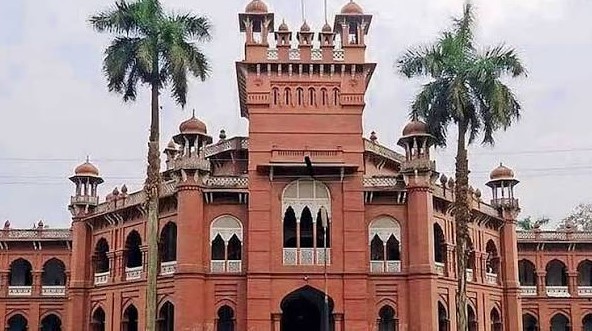
A growing sense of fear and insecurity has gripped students of Dhaka University (DU) following a series of cocktail bomb explosions across the campus over three consecutive days, raising serious questions about campus security and the safety of students, teachers and employees. The repeated blasts, reported at different locations ranging from the Teacher-Student Centre (TSC) to academic buildings and residential hall areas, have disrupted the sense of security on a campus where thousands of students move around daily for classes, examinations and other academic activities.
For many students, the concern is no longer limited to the possibility of another explosion. Rather, they are increasingly worried about how such incidents could occur repeatedly in different parts of the university without those responsible being immediately identified. The fact that the latest explosions took place in broad daylight, when students and teachers were present on campus, has further intensified their anxiety.
The situation escalated on Sunday evening (November 8), when eight to nine crude bombs exploded at different locations across the university and its adjoining areas within around 30 minutes. The explosions were reported between 6:15PM and 6:45PM near the TSC, the gate of the Nabab Nawab Ali Chowdhury Senate Building, the Nilkhet area and roads adjacent to residential halls, including Bangladesh-Kuwait Maitree Hall and Sheikh Fazilatunnesa Mujib Hall.
The successive explosions triggered panic among students and people present on the campus. At the TSC area, several people were detained by students and handed over to the authorities on suspicion of involvement in the incidents. The explosions also prompted the university administration and law enforcement agencies to examine the circumstances surrounding the attacks.
However, the situation did not return to normal the following day. On Monday evening (November 9), another crude bomb exploded near the TSC, renewing concerns over the security situation. Students again detained individuals suspected of involvement and handed them over to the authorities.
The most alarming incident occurred on Tuesday afternoon (November 10), when two more crude bombs exploded at separate locations near the Faculty of Business Studies and the Shadow intersection beside the Arts Building. Unlike the previous incidents, which were reported during the evening, the latest blasts occurred in the afternoon while regular academic and other activities were underway.
One of the explosions took place in front of the Faculty of Business Studies building, damaging a parked private car belonging to a university teacher. The vehicle's windscreen shattered, and its driver, identified as Sohel, 36, sustained injuries from the explosion. He was rushed to the emergency department of Dhaka Medical College Hospital for treatment. Another explosion was reported near the Shadow intersection, where a private vehicle was also slightly damaged.
The incidents have prompted students from different departments and residential halls to question how explosives could be brought onto the campus and detonated at multiple locations. Many are also concerned about the possibility of students or university employees being caught in similar incidents while attending classes, using campus facilities or travelling between residential halls and academic buildings.
Meanwhile, the incidents have triggered protests by several student organisations, with activists demanding stronger security arrangements, accountability and the identification of those responsible.
Separate demonstrations were organised by Bangladesh Jatiyatabadi Chhatra Dal, Islami Chhatra Shibir, Jatiya Chhatra Shakti and left-leaning student organisations following the Tuesday explosions. Protesters gathered at different points, including the TSC and the vice-chancellor's office, and demanded effective measures to prevent further attacks.
During their demonstrations, student leaders criticised the university administration's response and questioned its ability to maintain a safe academic environment. Some organisations also made allegations regarding the involvement of political activists in the incidents, although such claims have yet to be established through an investigation.
The Dhaka University unit of Chhatra Shibir demanded stronger security and action against those responsible for the explosions, while its leaders criticised what they described as the administration's failure to take effective measures against campus violence.
Jatiya Chhatra Shakti also staged a demonstration, accusing the university administration of failing to ensure students' security and demanding accountability from the authorities. Other student organisations, including the Gonotantrik Chhatra Jote, also joined protests over the deteriorating security situation.
The demonstrations reflect growing dissatisfaction among sections of the student community, who want the university authorities to move beyond assurances and take visible steps to prevent further incidents.
In response to the developments, the university administration has announced a series of security measures following an emergency coordination meeting with senior law enforcement officials on Tuesday. Vice-Chancellor Professor Dr ABM Obaidul Islam chaired the meeting, which was attended by members of the proctorial team and representatives of law enforcement agencies.
According to a university press release, the authorities decided to strengthen round-the-clock security patrols across the campus and establish joint security checkpoints at all six entry points. The university's proctorial team, law enforcement personnel and members of the Bangladesh National Cadet Corps (BNCC) will work together to monitor movement at these checkpoints.
The administration has also decided to strengthen CCTV surveillance, restrict the entry of unauthorised outsiders and ensure that students, teachers, officers and employees carry their institutional identity cards while entering and moving around the campus.
In another development, the university temporarily suspended an employee and issued him a show-cause notice after preliminary evidence suggested his involvement in a recent cocktail explosion and activities aimed at creating instability on the campus. The administration has said it would take strict legal and administrative action against anyone found involved in sabotage, violence or attempts to disrupt normal academic and administrative activities.
DU Proctor Associate Professor Israfil Ratan said the authorities were looking into the incidents and examining CCTV footage to identify those involved. Law enforcement agencies have also been informed about the explosions and are involved in the investigation.
Despite the announcement of additional security arrangements, the incidents have left students questioning whether the measures will be sufficient to prevent further attacks. They are particularly concerned about the security of academic buildings, residential halls, campus entrances and busy public spaces where students regularly gather.
For a university that serves as a major centre of higher education and student activities in the country, ensuring campus safety is essential not only for maintaining normal academic activities but also for protecting the thousands of people who use its facilities every day.
The repeated explosions have therefore placed the university administration and law enforcement agencies under growing pressure to identify those responsible, establish how the explosives reached the campus and prevent a recurrence.
Until the perpetrators are identified and effective security arrangements are ensured, the fear generated by the successive blasts is likely to remain a major concern among students, who want to return to their regular academic activities without having to worry about their personal safety.
- MaT

Loading...
Loading...
Also read




Editor : Iqbal Sobhan Chowdhury
Published by the Editor on behalf of the Observer Ltd. from Globe Printers, 24/A, New Eskaton Road, Ramna, Dhaka.
Editorial, News and Commercial Offices : Aziz Bhaban (2nd floor), 93, Motijheel C/A, Dhaka-1000.
Phone: PABX- 41053001-06; Advertisement: 41053012; 01793317829, 01550707291, 01550707296
E-mail: [email protected], [email protected]. [email protected], [email protected], [email protected], [email protected], Online-email: [email protected]


