



| HEADLINE |

|

Govt targets 10,000MW solar power in 5 years


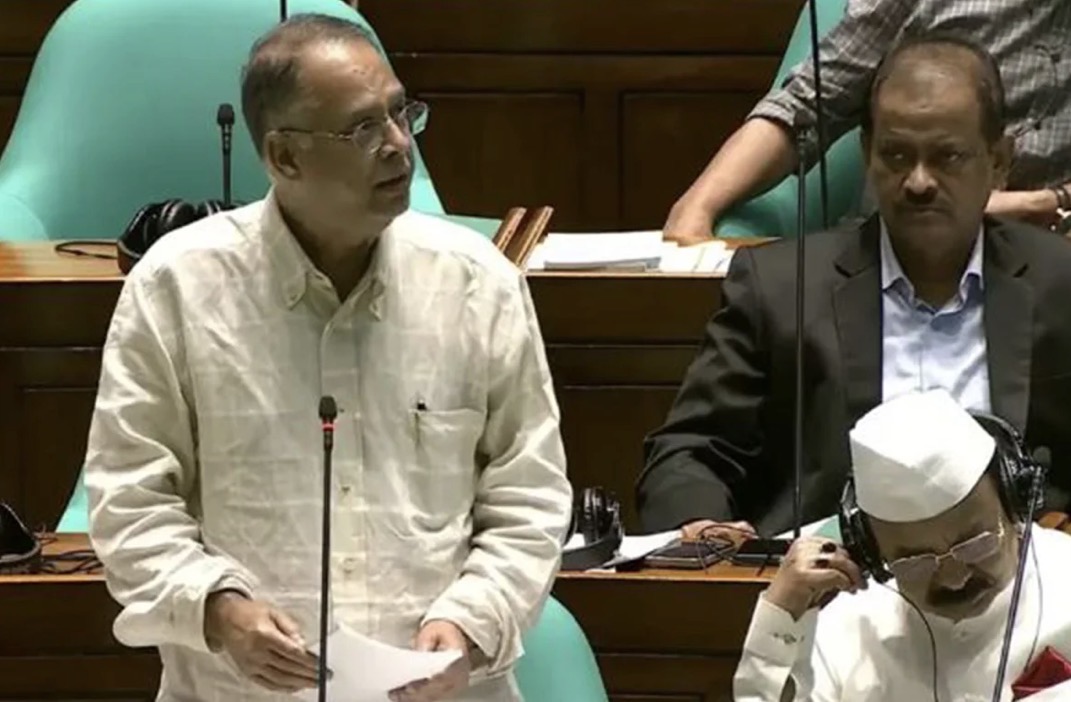
The government aims to generate 10,000 megawatts of solar power over the next five years as part of its plan to meet 20 per cent of the country’s electricity demand through solar energy, Power, Energy and Mineral Resources Minister Iqbal Hasan Mahmud has said.
“Our election manifesto pledged to generate 30 per cent of the country’s electricity from solar energy. Accordingly, we have set a target of generating 10,000MW of solar power during the government’s first five years,” he said.
The minister made the remarks in Parliament on Wednesday while responding to an urgent public importance notice under Rule 71 of the Rules of Procedure. Government MP Shachat Ara Akter, representing reserved women’s seat-33, raised the notice.
He said the government had taken several initiatives to accelerate solar power generation, including measures to attract private investment and raise public awareness about rooftop solar systems.
As part of the campaign, the government recently organised a two-day national solar power fair, attracting thousands of visitors and generating considerable public interest in solar energy, he added.
More than 8,000 suppliers have applied against tenders for expanding solar power services, while the number of suppliers has also been increased to speed up implementation of the programme, the minister said.
He added that similar fairs would be organised in divisional cities to highlight the benefits of rooftop solar systems, with the campaign gradually extended to district levels.
Highlighting the economic benefits of rooftop solar power, Mahmud said households could generate electricity to meet their own needs and sell surplus power to the government for additional income.
Under the Prime Minister’s announcement, the government will purchase surplus electricity generated by rooftop solar systems at Tk 10 per unit, while the maximum production cost is estimated at Tk 8 per unit. This would allow consumers to earn Tk 2 per unit, he said.
The minister also stressed the importance of battery storage systems alongside solar panels to ensure uninterrupted electricity supply.
“Solar power alone is not enough; battery storage systems are also necessary,” he said, adding that the government was encouraging the use of solar systems with battery backup.
Citing the Prime Minister’s official residence as an example, he said it was currently operating entirely on solar power, with battery backup ensuring electricity supply around the clock.
The government is also conducting promotional campaigns, advertisements and public awareness programmes to encourage households to install rooftop solar systems, he added.
Mahmud said the Cabinet Division had instructed deputy commissioners in all districts to install solar power systems in government offices. Funds had also been allocated for implementing the initiative.
Referring to a recently issued ordinance on solar power development, the minister said it had restored investor confidence and increased interest in private-sector investment.
He added that nearly 200MW of solar power had been connected to the national grid within a short period after the President promulgated the ordinance.
The minister expressed hope that continued policy support, private investment and public participation would help the government achieve its solar power generation target and reduce the country’s dependence on conventional energy sources.







Published by the Editor on behalf of the Observer Ltd. from Globe Printers, 24/A, New Eskaton Road, Ramna, Dhaka.
Editorial, News and Commercial Offices : Aziz Bhaban (2nd floor), 93, Motijheel C/A, Dhaka-1000.
Phone: PABX- 41053001-06; Advertisement: 41053012; 01793317829, 01550707291, 01550707296
E-mail: [email protected], [email protected]. [email protected], [email protected], [email protected], [email protected], Online-email: [email protected]


