



| HEADLINE |

|

Structure agreed, funding disagreed over just transition at COP31
Published : Thursday, 12 November, 2026 at 12:00 AM
Shahnaj Begum from Antaliya


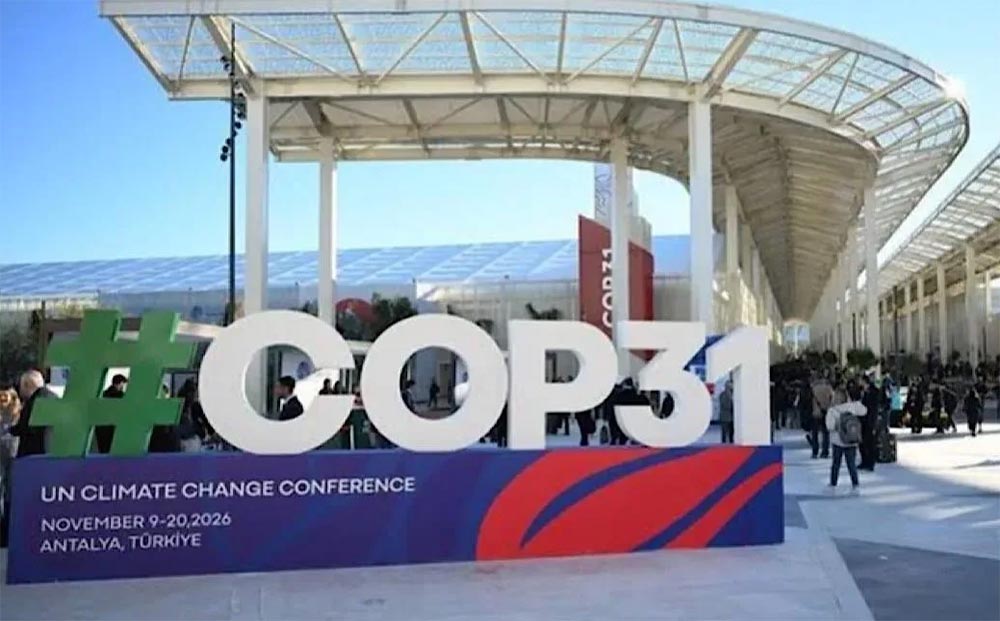 COP31 negotiators have broadly supported a proposed structure for a just transition mechanism, comprising a political or governing body and a separate technical arm. However, they remain divided over financial support, the creation of additional institutions and conditions attached to assistance.
The proposed mechanism aims to help countries pursue climate action while protecting workers and communities and taking their differing development needs into account.
* Arab Group argues against prescribing countries’ choice of technology
* Environmental Group calls for a voluntary, country-driven approach that does not prescribe national policies
* African Group stresses need for practical support for developing countries
* Alliance of Small Island States calls for technical assistance tailored to their limited capacities
The positions emerged during a contact group meeting on the Just Transition Work Programme under the UN climate convention's subsidiary bodies in Antalya. The discussions indicated growing convergence on some elements of the mechanism's structure, but no agreement has yet been reached.
Delegations broadly favoured pairing political oversight with complementary technical support, but left unresolved the mandates, responsibilities and working arrangements of the two bodies. Negotiators must also decide what assistance the technical arm would provide and how countries would access it.
The Environmental Integrity Group called for a voluntary, country-driven approach that does not prescribe national policies. It proposed dialogue, knowledge exchange and coordination with organisations outside the UN climate process, while warning against creating a new fund.
“It is long past time to stop treating the transition away from fossil fuels as taboo or intractable,” António Guterres said, adding that “Now, here at CoP 31, we must move from discussing the transition to organising it, financing it, and delivering it.”
The two countries hosting Cop31 are significant exporters of fossil fuels. Early on Tuesday, the Turkish President, Recep Tayyip Erdogan, was extolling his country’s oilfields even as he prepared for his appearance at the summit on Wednesday.
Guterres said the talks should end with “clear next steps” to advance a roadmap to transition away from fossil fuels presented to delegates on Tuesday by Brazil, which presided over last year’s talks.
However, the African Group stressed the need for practical support for developing countries, saying the mechanism must address informal economies and limits on public spending, both of which constrain governments’ ability to support workers and communities through the transition.
Brazil called for improved access to finance, technology and capacity building while avoiding processes that duplicate existing arrangements.
The European Union proposed a work plan covering policy dialogue, implementation across sectors, international cooperation, technical assistance and coordination with external bodies.
The Alliance of Small Island States called for technical assistance shaped by countries’ requests and tailored to the limited capacities of small island developing states.
Japan cautioned against creating additional bodies and favoured using existing programmes to improve efficiency. Panama called for technical assistance guided by Indigenous Peoples and local communities, with their free, prior and informed consent.
The Arab Group stressed national sovereignty and technological neutrality, arguing against prescribing countries’ choice of technology. It also favoured guidance that leaves national policy choices to governments and opposed conditions attached to support.
The financing debate involves three distinct questions: how the mechanism’s operations would be funded, whether a new funding arrangement is needed, and how it would help countries obtain resources from existing sources.
Support for better access to finance does not necessarily imply support for a new fund, while opposition to additional institutions does not automatically mean opposition to assistance.
For workers and communities, the mechanism’s practical value will depend on whether it connects national transition plans with accessible assistance.
Sohanur Rahman, executive coordinator of YouthNet Global, said participation must be matched by resources and fair financing for a just climate transition, arguing that workers and communities must have a say in decisions affecting their livelihoods.
The mechanism, he said, should link that participation to accessible finance, skills and social protection, especially for informal workers, women and young people.
Negotiators still need to define the technical arm’s mandate, its relationship with existing institutions and how countries would obtain support. Those decisions will determine what the proposed mechanism can deliver for workers and communities.
US secretary of state and climate envoy John Kerry said the roadmap had come “at a critical moment” but “words in conversation don’t cut a single ton of emissions - action does”.

Loading...
Loading...
Also read



Editor : Iqbal Sobhan Chowdhury
Published by the Editor on behalf of the Observer Ltd. from Globe Printers, 24/A, New Eskaton Road, Ramna, Dhaka.
Editorial, News and Commercial Offices : Aziz Bhaban (2nd floor), 93, Motijheel C/A, Dhaka-1000.
Phone: PABX- 41053001-06; Advertisement: 41053012; 01793317829, 01550707291, 01550707296
E-mail: [email protected], [email protected]. [email protected], [email protected], [email protected], [email protected], Online-email: [email protected]


