



| HEADLINE |

|

Commission to function with full impartiality and independence: Chief Information Commissioner
Published : Thursday, 12 November, 2026 at 3:19 PM
Press Release


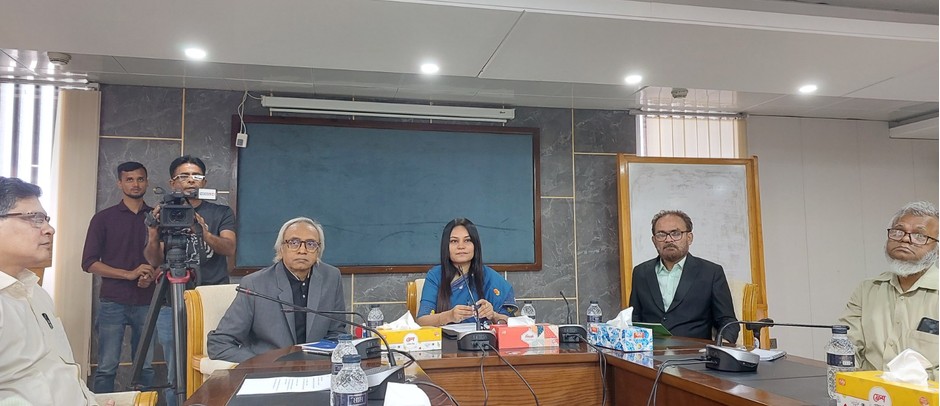
The Information Commission Bangladesh will function with full impartiality and independence, Chief Information Commissioner Professor Dr. Nahreen Islam Khan has said, emphasising that the Commission would maintain a neutral position without favouring either the government or any individual or group. It would work strictly in accordance with the law to uphold people's right to access information.
She made the remarks at a press briefing held at the Conference Room of the Information Commission Bangladesh at 11:00 am on Thursday, 12 November 2026. On the occasion, she presented the 100-day roadmap of the newly constituted Commission.
The Chief Information Commissioner said the Commission had undertaken a number of initiatives to ensure effective implementation of the Right to Information Act, 2009, and protect people's right to information. As part of these initiatives, a week-long RTI Fair will be organised at three public and four private universities in Dhaka towards the end of this month. The initiative aims to raise awareness among students about their right to information and encourage them to exercise this right through lawful means. The Commission also plans to organise smaller-scale RTI fairs at different schools with support from NGOs.
Identifying the disposal of long-pending complaints as a priority, she said hearings on 917 complaints accumulated over the past two years would begin on 16 November. More than 200 additional complaints had been received since the new Commission assumed office. Steps would be taken to dispose of the complaints in phases.
She said journalists, content creators and politicians would be included in training programmes to enhance their awareness and understanding of the right to information. The aim is to strengthen the capacity of people from different professions and backgrounds to ensure lawful use of information, its responsible dissemination and greater accountability.
The Commission would also monitor whether government, semi-government and foreign-funded organisations publish their budgets and other required information on their respective websites. Necessary steps, including issuing notices to the concerned organisations where necessary, would be taken to ensure compliance. Letters have also been sent to universities encouraging them to formulate information disclosure policies, following the example of the University of Rajshahi.
Speaking at the press briefing, Information Commissioner MahfuzurRahman said the media was one of the key stakeholders of the Information Commission in upholding people's right to information. Coordinated efforts between the media and the Commission could create greater opportunities to promote transparency and accountability in society and public administration.
Describing information as one of the most powerful resources of the present era, he said Artificial Intelligence (AI) had opened up new opportunities for the free flow of information and democratic practices. At the same time, it had heightened the risks of misinformation, disinformation, distortion and the spread of misleading content. Against this backdrop, the media must play a more responsible role in disseminating objective, reliable and verified information. Ensuring the accuracy and credibility of information is as important as safeguarding its free flow, he added.
He said journalists could seek assistance from the Information Commission in preparing investigative reports. If they faced obstacles in collecting information, they could invoke the provisions of the Right to Information Act to obtain the information they needed.
He also said the newly constituted Commission aimed to play a significant role in ensuring people's access to information through effective implementation of the Right to Information Act. The new Commission was constituted on 17 October and assumed office on 18 October. Following its assumption of office, it formulated a roadmap identifying priority activities for its first 100 days.
Information Commissioner Khan Mohammad AbulHossain said freedom of expression was one of the fundamental prerequisites for the development of democracy, while the right to know was an integral part of that freedom. He observed that the absence of an Information Commission for nearly two years had resulted in a backlog of complaints and delays in various activities. Although the Right to Information Act was enacted 17 years ago, public awareness of the Commission and the right to information remained inadequate. He stressed that the Commission and the media must work together to raise public awareness.
He also noted that, for the first time in the Commission's 17-year history, a press briefing was being held inside its own building, marking an important milestone in its institutional activities. Despite having an approved organisational structure of 76 posts in its 15-storey building, the Commission is currently operating with only 22 personnel. He said the Commission had begun its work with this limited workforce, reaffirming its commitment to ensuring people's right to access information.

Loading...
Loading...
Also read






Editor : Iqbal Sobhan Chowdhury
Published by the Editor on behalf of the Observer Ltd. from Globe Printers, 24/A, New Eskaton Road, Ramna, Dhaka.
Editorial, News and Commercial Offices : Aziz Bhaban (2nd floor), 93, Motijheel C/A, Dhaka-1000.
Phone: PABX- 41053001-06; Advertisement: 41053012; 01793317829, 01550707291, 01550707296
E-mail: [email protected], [email protected]. [email protected], [email protected], [email protected], [email protected], Online-email: [email protected]


