



| HEADLINE |

|

Floating shops on Chalan Beel fading into memory
Published : Friday, 13 November, 2026 at 12:00 AM
Our Correspondent


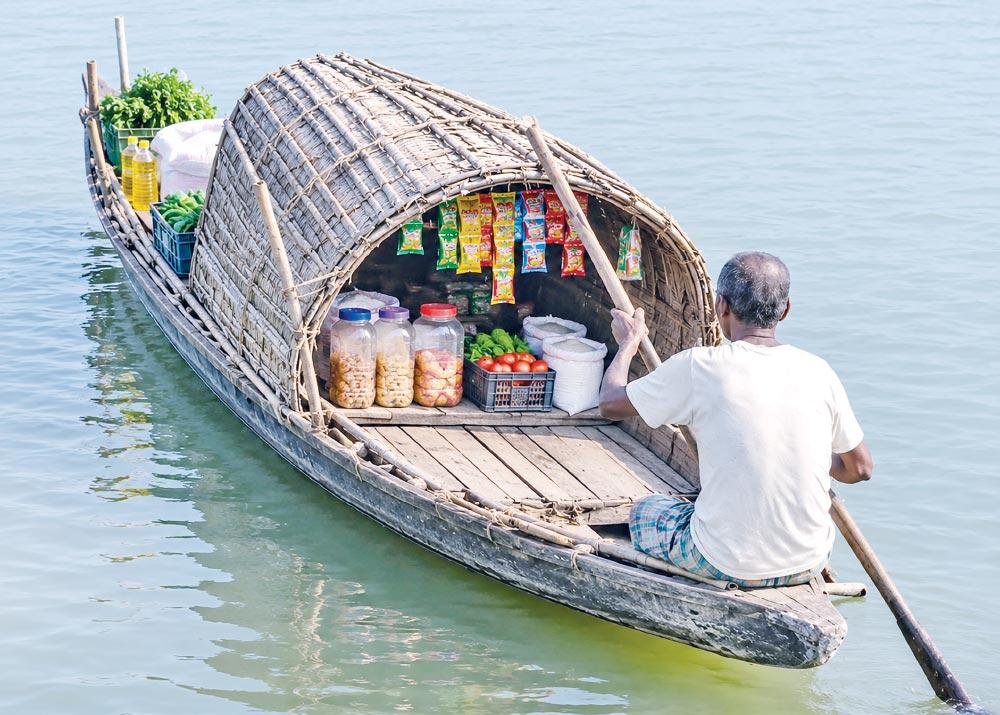 GURUDASPUR, NATORE, Nov 12: “Pots and pans for sale! Come and buy household essentials!” Such familiar calls once echoed across the waterways of Chalan Beel as small traders travelled from village to village selling household goods from their boats.
Their boats carried earthen pots, pans, pitchers, plates, utensils and other everyday necessities. Hearing the calls, housewives would come out to buy goods, while curious children gathered around the boats.
Two or three decades ago, these floating shops were a familiar feature of rural life in Chalan Beel. Today, the tradition has almost disappeared.
For families who found it difficult to travel to distant markets, the boat shops were a convenient source of essential goods. During the monsoon, much of the wetland remained submerged, leaving villages isolated by vast stretches of water. Travelling to markets, schools or hospitals was difficult, while road connections were limited.
Boats were therefore a major means of transport, communication and trade.
Small traders turned their boats into mobile shops, carrying household necessities and stopping at village ghats to display their products. They collected earthenware from potters and delivered them to remote villages where regular markets were unavailable or difficult to reach.
The business also supported a small economic chain involving potters, traders, boatmen and customers. Potters produced the goods, traders transported them, and boatmen carried them across waterways to meet rural households' needs.
The floating shops were also centres of social interaction. Regular visits helped traders develop close relationships with customers, often remembering their preferences and previous purchases.
However, the expansion of road networks and the growing availability of motorcycles, CNG-run auto-rickshaws, vans and other vehicles have changed the region's lifestyle. Shops and markets have spread across rural areas, making household goods more accessible.
Meanwhile, the use of plastic, aluminium and steel products has reduced demand for traditional earthenware, contributing to the decline of boat-based trading.
Although improved communication has made life easier, the disappearance of floating shops marks the loss of an important part of Chalan Beel's cultural and economic history.
Preserving this heritage requires collecting elderly residents' memories, old photographs and traditional objects. A local archive or museum exhibition featuring replicas of floating shops could help introduce this disappearing tradition to younger generations.
Chalan Beel's history is not just about rivers, fisheries and agriculture. It is also about the boatmen, potters, farmers and traders whose livelihoods shaped the wetland's identity.
The familiar calls of traders and boats carrying household goods may have disappeared, but their stories deserve to be preserved as an important record of the region's changing way of life.

Loading...
Loading...
Also read



Editor : Iqbal Sobhan Chowdhury
Published by the Editor on behalf of the Observer Ltd. from Globe Printers, 24/A, New Eskaton Road, Ramna, Dhaka.
Editorial, News and Commercial Offices : Aziz Bhaban (2nd floor), 93, Motijheel C/A, Dhaka-1000.
Phone: PABX- 41053001-06; Advertisement: 41053012; 01793317829, 01550707291, 01550707296
E-mail: [email protected], [email protected]. [email protected], [email protected], [email protected], [email protected], Online-email: [email protected]


