



| HEADLINE |

|

Compassion for animals reflects our humanity
We beat dogs, we torture cats: Bangladesh's morality has collapsed
Published : Saturday, 14 November, 2026 at 12:00 AM
Alisha Pradhan


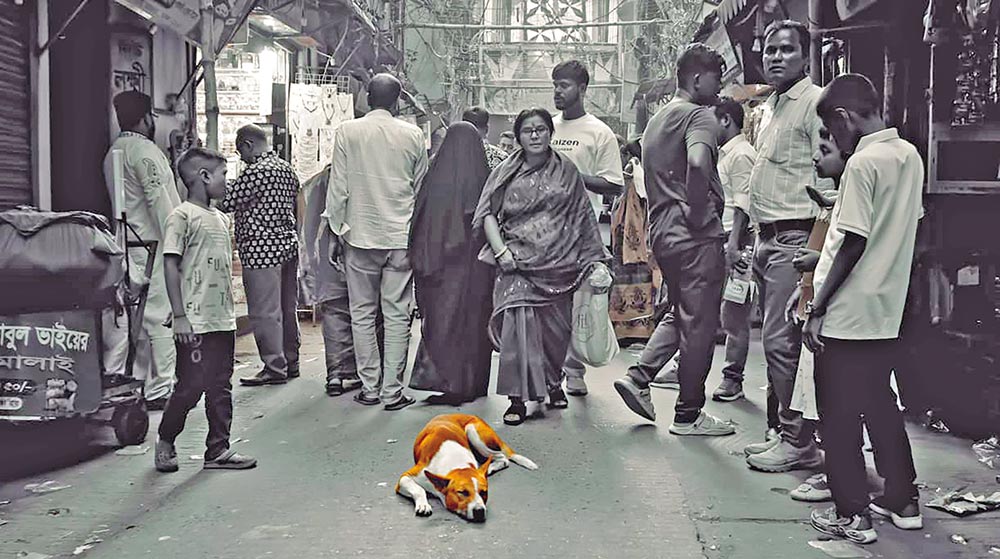 We talk about progress, innovation, technology and a better future. We dream of a modern Bangladesh, discuss artificial intelligence and celebrate development. But take a moment to look at what is happening around us. How can a nation claim to be progressive when it cannot show compassion to its voiceless animals?
A man ties a dog's mouth with wire and beats it while others laugh and film. A woman pours boiling water on a nursing cat and her kittens. Puppies are thrown into sacks and abandoned, while helpless cats are dragged along roads. These are not merely isolated incidents. Stories of animal cruelty are increasingly appearing on social media, sometimes treated as entertainment rather than acts of violence.
Cruelty towards animals is not just an animal welfare issue. It reflects a deeper failure of empathy. When children grow up watching adults hurt helpless creatures, what lessons are they learning? A society that normalises violence against animals risks becoming insensitive to suffering in other forms. Violence and cruelty should never be dismissed as harmless behaviour.
Awareness campaigns and posters are important, but they are not enough. Those who deliberately torture animals must face consequences. The government must ensure effective enforcement of animal welfare laws, impose meaningful penalties and take reports of abuse seriously. Citizens should also be encouraged to report cruelty and help rescue animals safely rather than remain silent.
The most painful excuse is the misuse of religion to justify cruelty. Islam does not teach hatred towards animals. The Holy Quran mentions the dog of the Companions of the Cave in Surah Al-Kahf. In Sahih Bukhari, we find the account of a woman punished for locking up a cat without feeding it, while another narration tells of a man rewarded for giving water to a thirsty dog. The Prophet Muhammad (PBUH) taught that kindness towards every living creature carries reward. Religion should inspire mercy, not become an excuse for cruelty.
We need to build an infrastructure of kindness. Every apartment building, office, shop, school and neighbourhood can keep a small bowl of clean water and food for street animals. It costs very little, but it can save lives. Communities can support volunteers who feed and rescue street animals, while encouraging adoption, vaccination and sterilisation programmes.
I also call upon our celebrities, actors, influencers and cricketers. You have millions of followers. Use that influence to make kindness fashionable. Share a video feeding a street dog, caring for a cat or supporting an animal rescue initiative. Let kindness go viral, not cruelty.

The government must also launch sustained public awareness campaigns through television, films, dramas and social media. Compassion should become part of our culture, our education and our everyday lives.
A dog's life on the street is not its choice. A cat does not choose hunger, injury or abandonment. They cannot speak, vote or demand justice. But we can choose how we treat them.
Bangladesh's greatness will not be measured only by its GDP, buildings or technological achievements. It will also be judged by how it treats those who cannot defend themselves.
So, keep a bowl of water outside your home. Feed a hungry animal. Give a street dog a name. Report cruelty when you see it.
Because, in the end, compassion is not just about animals. It is about what kind of human beings we are.
The writer is a Founder, HerNet Foundation & HerNet TV, Chief Curator, HerNet Fine Arts and Global Advocate on Women Empowerment, Youth, and SDGs.

Loading...
Loading...



Editor : Iqbal Sobhan Chowdhury
Published by the Editor on behalf of the Observer Ltd. from Globe Printers, 24/A, New Eskaton Road, Ramna, Dhaka.
Editorial, News and Commercial Offices : Aziz Bhaban (2nd floor), 93, Motijheel C/A, Dhaka-1000.
Phone: PABX- 41053001-06; Advertisement: 41053012; 01793317829, 01550707291, 01550707296
E-mail: [email protected], [email protected]. [email protected], [email protected], [email protected], [email protected], Online-email: [email protected]


