



| HEADLINE |

|

Sakhawat admits interim govt's failure to deliver key reforms
Published : Sunday, 15 November, 2026 at 12:00 AM
Special Correspondent


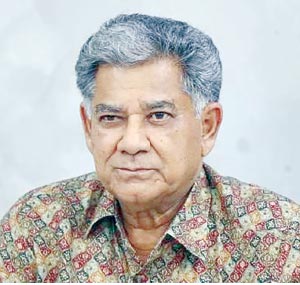 Former interim government adviser Brigadier General (retd) M Sakhawat Hossain has acknowledged that members of the interim administration also had significant shortcomings and must take responsibility for failing to implement essential state reforms.
"They should have taken responsibility for implementing the essential reforms needed by the state," he said at a discussion marking the 24th anniversary of Shushashoner Jonno Nagorik (SHUJAN) at the Monsoon Theatre of the July Mass Uprising Memorial Museum in Dhaka on Saturday.
Sakhawat, a former election commissioner, said structural changes were essential to establishing democracy and good governance, stressing that electoral reforms, curbing the influence of money in elections and ensuring greater public participation were crucial.
"There is no scope for returning to the old system," he said.
Highlighting SHUJAN's longstanding work on electoral reforms, he called for greater electoral transparency through disclosure of candidates' information, restrictions on campaign expenditure, stronger local government institutions and transparency in political financing.
Recalling resistance to proposals for restricting election campaigns, Sakhawat said a senior political leader had sarcastically compared his proposal to arranging a widow's marriage. He said such attitudes towards electoral reforms needed to change.
Presiding over the discussion, retired Justice MA Matin, chairperson of the SHUJAN Trust, said effective democracy required strong local government institutions and an organised civil society.
He said organisations like SHUJAN played an important role in bringing citizens' views together and strengthening public participation.
SHUJAN Secretary Badiul Alam Majumdar, a former chairman of the interim government's Election Commission Reform Commission, said the organisation had continued its activities despite obstacles and threats since its establishment in 2002. It now has more than 20,000 members nationwide, he said.

Loading...
Loading...
Also read



Editor : Iqbal Sobhan Chowdhury
Published by the Editor on behalf of the Observer Ltd. from Globe Printers, 24/A, New Eskaton Road, Ramna, Dhaka.
Editorial, News and Commercial Offices : Aziz Bhaban (2nd floor), 93, Motijheel C/A, Dhaka-1000.
Phone: PABX- 41053001-06; Advertisement: 41053012; 01793317829, 01550707291, 01550707296
E-mail: [email protected], [email protected]. [email protected], [email protected], [email protected], [email protected], Online-email: [email protected]


