



| HEADLINE |

|

19 yrs after Sidr, Pirojpur residents still await durable embankments
Published : Sunday, 15 November, 2026 at 12:55 PM
Observer Correspondent


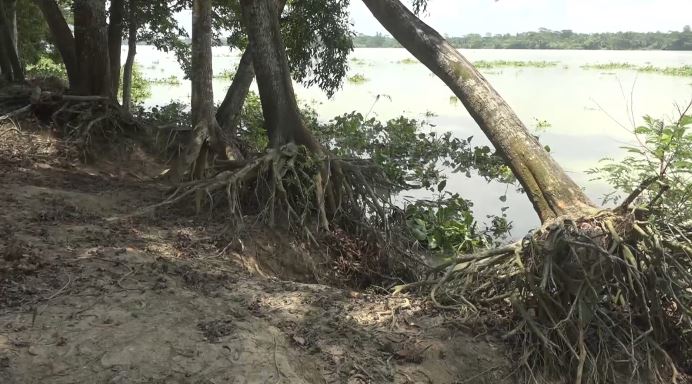
19 Years After Cyclone Sidr, Sustainable Embankments Still Missing in Pirojpur; Hundreds of Thousands Live in Fear
Nineteen years after devastating Cyclone Sidr struck the coastal district of Pirojpur on November 15, 2007, many damaged embankments remain unrepaired, while no new sustainable embankments have been built in several vulnerable areas. As a result, hundreds of thousands of people living along riverbanks continue to live in fear of natural disasters.
Cyclone Sidr devastated the southern coastal region, destroying nearly 150,000 homes and killing hundreds of people in Pirojpur alone.
On Thursday, November 15, 2007, rain continued throughout the day. Around midnight, strong winds began to intensify, and by 2:00 AM, Cyclone Sidr had unleashed its full fury.
The combination of powerful winds and tidal surges destroyed nearly 150,000 houses across Pirojpur district and claimed more than 500 lives, according to local accounts. Surging waters from the Kacha, Baleshwar and Sandhya rivers swept away everything in their path.

Among the worst-affected areas were Baramasua, Khyata Chira and Majher Char in Mathbaria upazila, as well as different parts of Bhandaria and Jiannagar upazilas and areas along the Kacha River in Pirojpur Sadar upazila. Several other coastal districts, including Pirojpur, Bagerhat and Satkhira, also suffered casualties.
According to information published in various newspapers, Cyclone Sidr killed 409 people across Pirojpur's seven upazilas and affected 1,143,871 people. A total of 54,416 houses were completely destroyed, while crops on more than 11,746 hectares of land were damaged.
The disaster also completely destroyed 73.70 kilometres of embankments and partially damaged another 147.09 kilometres. Numerous roads, bridges, educational institutions and religious establishments were also damaged.
Families Still Haunted by Sidr Tragedy
Balipara Union in Indurkani upazila was among the worst-hit areas in the district. As many as 57 people lost their lives in the union during the devastating cyclone.
Among the victims was a child named Rabbi from Bepshabunia village, located along the Baleshwar River. He died after being crushed under his house during the cyclone.
Nineteen years later, his mother Hanufa and other family members still struggle to overcome the grief of losing him.
Meanwhile, residents of riverbank communities in Mathbaria, Jiannagar, Bhandaria and Pirojpur Sadar remain deeply concerned about their safety.
Even today, memories of that terrifying night leave many residents shaken. Adequate and durable embankments have yet to be constructed along the banks of the Kacha, Baleshwar and Sandhya rivers. As a result, low-lying areas are frequently inundated by tidal surges and even moderate rainfall.

Thousands of families in different parts of Mathbaria, Jiannagar and Bhandaria are living with constant anxiety because of river erosion and vulnerable embankments. Despite the passage of years, no lasting solution has been implemented in many affected areas.
A visit to several locations in Jiannagar upazila, along the Kacha River in Pirojpur Sadar and in different parts of Mathbaria revealed that embankment breaches were among the major reasons for the extensive flooding during Cyclone Sidr.
However, many of those damaged embankments have still not been repaired, even after 19 years.
Subsequent natural disasters have further weakened the already vulnerable embankments, repeatedly affecting thousands of riverbank residents during the monsoon and subsequent cyclones.
Residents fear that unless the damaged structures are repaired and sustainable embankments are constructed, Pirojpur's coastal communities will face even greater losses during future disasters.
Residents Share Their Ordeals
Hanufa Begum, mother of the late Rabbi from Bepshabunia village in Jiannagar upazila, said:
"Everything was destroyed during Sidr. I lost my child. Many people in our area died in the flooding. Since Sidr, several other cyclones have hit us, and our homes have repeatedly gone underwater. Even last year, floodwater rose up to our necks. There is no embankment in our area. We desperately need one."
Abul Kalam, a resident of the Kacha River bank in Parerhat Union of Jiannagar upazila, recalled the devastation:
"The 2007 cyclone swept away everything we had. Our house collapsed during Sidr, and I was trapped underneath it. Around 2:00 AM, the winds became extremely strong, and everything was destroyed within moments. The river water rose dramatically, and floodwater from the broken embankment submerged our homes. The embankment has still not been repaired."
Minara Begum, another resident of the same area, said that despite several cyclones since Sidr, no durable embankment had been built.
"Many cyclones have struck since Sidr, but no sustainable embankment has been constructed. Every year, when a cyclone hits, our homes, kitchens and everything else go underwater. We live beside the river. Without a proper embankment, our suffering will never end," she said.
Rafiqul Islam, imam of a riverside mosque in Kaibartakhali village of Pirojpur Sadar upazila, said river erosion had made everyday life increasingly difficult.
"Our suffering knows no bounds. The river is eroding so much land, but no one seems to pay attention. Our children cannot even attend school and madrasa regularly. I fear that our mosque may not survive this year and could be swallowed by the river. We do not even have a proper cyclone shelter where we can take refuge during floods. We urge the government to build a sustainable embankment in our area," he said.
Fisherman Azmal Khan said many families had already been forced to leave the area because of river erosion.
"Many people used to live in our area, but they no longer do. How can they stay when all their land has been swallowed by the river? Our homes were completely destroyed during Sidr. Whenever the tide rises, everything goes underwater. During floods, we have nowhere to go. Given the way the river is eroding, we may eventually have to leave with our children and settle somewhere else," he said.
Red Crescent and Officials Respond
Alamgir Hossain, chairman of the Pirojpur Red Crescent Unit, said Cyclone Sidr had caused extensive loss of life and property in 2007.
He said the Red Crescent had helped rebuild homes for affected families using its own funds and foreign assistance. He also personally visited affected areas and said the organisation distributed cash assistance immediately after the disaster.
He added that the Red Crescent Society in Pirojpur was fully prepared to respond to any natural disaster.
Pritam Kumar Sarkar, executive engineer of the Pirojpur Water Development Board, said Cyclone Sidr had caused extensive damage to the district, including several embankments.
"After Sidr, damaged embankments in Indurkani and Hularhat were reconstructed. These are known as FCDI embankments. We have also taken initiatives to repair these structures. Some embankments in Shankarpasha and Shariktala have been repaired under the non-development revenue budget," he said.
He added that a survey of the Sandhya, Kacha and Baleshwar rivers was currently underway.
"We expect the survey to progress quickly. The report will include recommendations for reconstructing the damaged embankments," he said.
Pirojpur Deputy Commissioner Md. Golam Rabbani said several initiatives had been undertaken since Cyclone Sidr to minimise the impact of natural disasters.
"We have established a district-wide early warning network to ensure preparedness for natural disasters. We have more than 400 cyclone shelters across the district, which remain operational to provide safe shelter to people, particularly those who need to be evacuated within 24 hours of an emergency. We maintain regular communication with those responsible for managing the shelters," he said.
He added that a significant portion of the roads, river crossings and embankments damaged by Sidr had already been repaired.
"Steps will be taken to repair the remaining damaged infrastructure as quickly as possible," he said.
Despite the passage of 19 years and the repeated devastation caused by subsequent cyclones, including Fani, Aila and Amphan, many damaged embankments in Pirojpur remain unrepaired. Consequently, thousands of families living along the rivers continue to face uncertainty and fear whenever another natural disaster approaches.
-MT

Loading...
Loading...
Also read









Editor : Iqbal Sobhan Chowdhury
Published by the Editor on behalf of the Observer Ltd. from Globe Printers, 24/A, New Eskaton Road, Ramna, Dhaka.
Editorial, News and Commercial Offices : Aziz Bhaban (2nd floor), 93, Motijheel C/A, Dhaka-1000.
Phone: PABX- 41053001-06; Advertisement: 41053012; 01793317829, 01550707291, 01550707296
E-mail: [email protected], [email protected]. [email protected], [email protected], [email protected], [email protected], Online-email: [email protected]


