



| HEADLINE |

|

Dhaka's air remains very unhealthy
Published : Monday, 16 November, 2026 at 10:32 AM
Observer Online Report


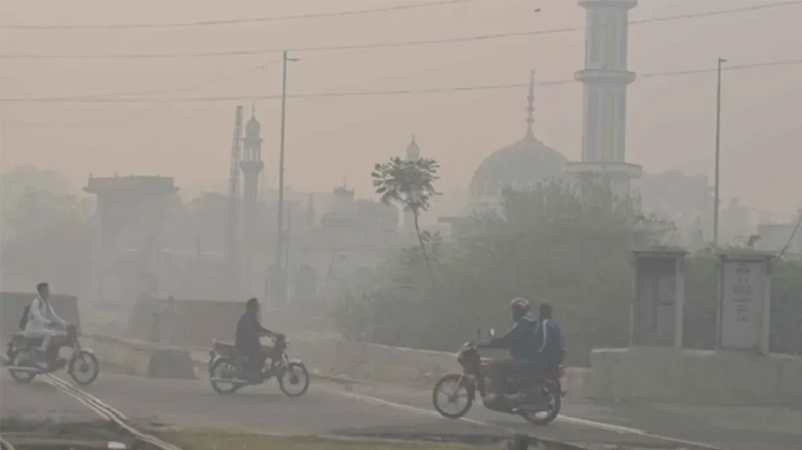
Collected Photo
Dhaka ranked third among the world's most polluted cities on Monday (November 16), with an air quality index (AQI) score of 208, which is considered very unhealthy for citizens.
Dense dust, smoke, and harmful particulate matter continue to disrupt normal public life as air pollution worsens across major global cities due to climate change and ongoing development works.
According to data from IQAir, a Switzerland-based air quality monitoring organization, Pakistan's Lahore occupied the top spot on the list of the world's most polluted cities. Lahore recorded an AQI score of 306, a level categorized as hazardous.
India's Kolkata stood in second place with an AQI score of 255, followed by Bangladesh's capital Dhaka in third position. Meanwhile, India's capital New Delhi ranked fourth with a score of 188, and Iran's Tehran placed fifth with 186 points.
According to IQAir’s grading standards, an AQI score between zero and 50 is considered good, while 51 to 100 is moderate. Scores between 101 and 150 are deemed unhealthy for sensitive groups, and 151 to 200 are labeled unhealthy. Readings from 201 to 300 fall into the very unhealthy category, and any score exceeding 301 is treated as hazardous.
In Bangladesh, AQI is determined based on five core pollutants: particulate matter (PM10 and PM2.5), nitrogen dioxide (NO2), carbon monoxide (CO), sulfur dioxide (SO2), and ozone (O3).
A joint report by the Department of Environment and the World Bank in March 2019 identified brick kilns, vehicle emissions, and construction site dust as the three primary sources of air pollution in Dhaka.
Data from the World Health Organization (WHO) indicates that air pollution elevates mortality rates due to strokes, heart disease, chronic obstructive pulmonary disease, lung cancer, and acute respiratory infections, claiming an estimated seven million lives worldwide each year.
-EM

Loading...
Loading...
Also read








Editor : Iqbal Sobhan Chowdhury
Published by the Editor on behalf of the Observer Ltd. from Globe Printers, 24/A, New Eskaton Road, Ramna, Dhaka.
Editorial, News and Commercial Offices : Aziz Bhaban (2nd floor), 93, Motijheel C/A, Dhaka-1000.
Phone: PABX- 41053001-06; Advertisement: 41053012; 01793317829, 01550707291, 01550707296
E-mail: [email protected], [email protected]. [email protected], [email protected], [email protected], [email protected], Online-email: [email protected]


