



| HEADLINE |

|

Bhashani’s 50th death anniversary today
Week-long Bhashani Fair underway in Tangail’s Santosh
Published : Tuesday, 17 November, 2026 at 12:00 AM
Our Correspondent


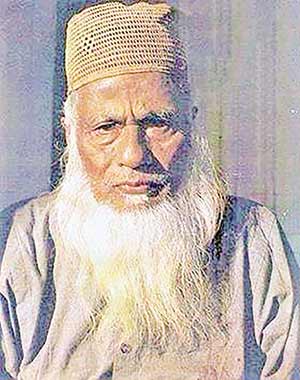 TANGAIL, Nov 16: The 50th death anniversary of Maulana Abdul Hamid Khan Bhashani, a prominent anti-imperialist leader and champion of the rights of oppressed people, is going to be observed across the country tomorrow (Tuesday).
Bhashani died at the then PG Hospital in Dhaka on November 17, 1976, while undergoing treatment. He was later buried at Santosh in Tangail.
The anniversary is being marked with various programmes in Santosh, Dhaka and elsewhere in the country. A traditional seven-day Bhashani Fair is underway on the premises of his mausoleum beside the campus of Mawlana Bhashani Science and Technology University in Santosh, drawing devotees, followers and visitors.
The day's programmes include placing wreaths at his grave, recitation of Fateha and special prayers. His family, the university administration and Bhashani Foundation, among others, have arranged discussions, Urs and prayer gatherings. Prominent personalities are also expected to pay tribute to the leader.
Born on December 12, 1880, in Dhangara village of Sirajganj, Bhashani lost his parents at an early age. He later received religious and social education at India's historic Darul Uloom Deoband. He began his career as a teacher in Kagmari, Tangail, but soon became involved in movements for the rights of peasants and working people.
He earned the title 'Bhashani' for his leadership in peasant movements in Bhashan Char in Assam.
During British rule, he led resistance against the Line System in Assam and campaigns to drive Bengalis out of the region. He also fought for the abolition of zamindari and farmers' land rights.
In 1949, he became the founding president of the East Pakistan Awami Muslim League. Later, in 1957, he founded the National Awami Party (NAP). He played a significant role in the Language Movement, the 1969 mass uprising and the 1971 Liberation War.
After independence, he led the historic Farakka Long March on May 16, 1976, demanding a fair share of the Ganges water from India.
Known as the 'Majlum Jananeta' (leader of the oppressed) and 'Red Maulana', Bhashani remained committed to the rights of peasants and workers throughout his life. He was posthumously awarded the Independence Award in 1977 and the Ekushey Padak in 2002.

Loading...
Loading...
Also read



Editor : Iqbal Sobhan Chowdhury
Published by the Editor on behalf of the Observer Ltd. from Globe Printers, 24/A, New Eskaton Road, Ramna, Dhaka.
Editorial, News and Commercial Offices : Aziz Bhaban (2nd floor), 93, Motijheel C/A, Dhaka-1000.
Phone: PABX- 41053001-06; Advertisement: 41053012; 01793317829, 01550707291, 01550707296
E-mail: [email protected], [email protected]. [email protected], [email protected], [email protected], [email protected], Online-email: [email protected]


