



| HEADLINE |

|

Five European countries plan to establish migrant return hubs in Rwanda
Published : Tuesday, 17 November, 2026 at 11:26 AM
Observer Online Report


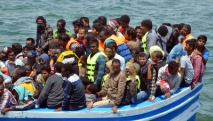
The Dutch government said that, during the initial phase, only single men would be transferred to Rwanda. Particular priority would be given to migrants originating from countries near Rwanda.
Upon arrival, they would have access to accommodation, education, healthcare, the labour market and legal services.
Rwandan Interior Minister Vincent Biruta said his country was committed to working with European partners to ensure safe, legal and dignified solutions for migrants.
However, Spanish Prime Minister Pedro Sánchez has criticised the proposal. In an interview with AFP, he said he saw neither a future nor any humanitarian value in establishing such centres in Rwanda, adding that the initiative was not a solution.
Human rights organisations have also expressed concern over the plan.
Clementine de Montjoye, a senior researcher on Africa at Human Rights Watch, said Rwanda had a long history of suppressing dissent, arbitrary detention and mistreatment of prisoners.
She also pointed to allegations that Rwanda has supported armed rebels in neighbouring Democratic Republic of Congo.
According to her, paying Rwanda to accommodate migrants would provide financial and political benefits to the Rwandan government.
Meanwhile, the European Union Agency for Fundamental Rights (EUAFR) said that even if return hubs were established in third countries, fundamental rights must be respected.
It stressed that no one should be sent to a country where they could face a serious risk of persecution. It also said unaccompanied children should not be transferred to such centres.
The Dutch government has confirmed that children will not be included in the scheme.
Citing diplomatic sources, AFP reported that the centre is initially expected to operate as a pilot project, with a capacity of around 100 people.
The five participating countries may each send 20 migrants to Rwanda. The International Organization for Migration (IOM), a United Nations agency, could play a supporting role in the programme.
Meanwhile, according to data from the European Border and Coast Guard Agency, approximately 110,000 irregular border crossings into the European Union were detected during the first 10 months of 2026, a 29 per cent decline compared with the same period last year.
Around 18,100 irregular crossings were recorded in October, down 6 per cent from the same month in 2025. However, the figure represented a 22 per cent increase compared with September.
The rise was attributed mainly to an increase in migrant arrivals from West Africa along the route to the Canary Islands.
-MT

Loading...
Loading...
Also read








Editor : Iqbal Sobhan Chowdhury
Published by the Editor on behalf of the Observer Ltd. from Globe Printers, 24/A, New Eskaton Road, Ramna, Dhaka.
Editorial, News and Commercial Offices : Aziz Bhaban (2nd floor), 93, Motijheel C/A, Dhaka-1000.
Phone: PABX- 41053001-06; Advertisement: 41053012; 01793317829, 01550707291, 01550707296
E-mail: [email protected], [email protected]. [email protected], [email protected], [email protected], [email protected], Online-email: [email protected]


