



| HEADLINE |

|

Govt plans 20-30-storey buildings to ease Dhaka's housing crunch
Published : Wednesday, 18 November, 2026 at 4:50 PM
Observer Online Report


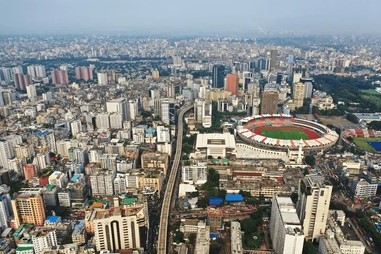
The government plans to promote high-rise buildings to ease the housing and space shortages in Dhaka, with a focus on constructing 20- to 30-storey buildings while ensuring adequate open spaces, playgrounds and public areas in development projects, Planning State Minister Md Zunaid Abdur Rahim Saki has said.
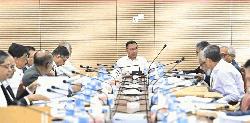
He made the remarks at a press conference organised by the Planning Ministry at the conference room of the Press Information Department at the Secretariat on Wednesday (November 18), following a meeting of the Executive Committee of the National Economic Council (ECNEC).
The state minister said buildings needed to expand vertically to ensure the optimum use of available land in Dhaka.
This would allow more people to be accommodated on the same plot while creating greater opportunities for playgrounds and open spaces, he added.
"We are currently constructing small buildings of five, eight or 10 storeys. But there should be opportunities to build 15-, 20-, 25- and even 30-storey buildings in Dhaka.
"Instead of accommodating people in 100 separate buildings, if we can house them in two or three 20- to 30-storey buildings, substantial land will remain available. Playgrounds and public spaces can be developed there," he said.
Saki said the Planning Ministry was prioritising adequate open spaces in newly proposed development projects.
He added that the ministry was working on guidelines specifying the minimum amount of open space that must be maintained in projects. Plans were also underway to determine the permissible height limits for high-rise buildings.
No project implementation without feasibility studies
Asked about media reports that more than 75 projects had been undertaken without feasibility studies, the planning state minister said there were guidelines requiring feasibility studies for projects costing more than Tk 50 crore.
He said such assessments were particularly important for technically significant projects.
Some projects might receive approval to align with the fiscal year's timeline, but they must fulfil the feasibility study requirements before implementation, he said.
"No project will be implemented without a feasibility study," he added.
Speaking about bridge construction plans, Saki said the government was paying particular attention to ensuring that bridges did not obstruct the natural flow of rivers.
He noted that river width and natural water flow had been affected in many cases due to bridge construction.
In future bridge designs, greater importance would be given to maintaining connectivity between the two riverbanks without disrupting the rivers' natural flow, he said.
He added that such projects would be implemented only after following proper feasibility studies and design requirements.
- MaT

Loading...
Loading...
Also read





Editor : Iqbal Sobhan Chowdhury
Published by the Editor on behalf of the Observer Ltd. from Globe Printers, 24/A, New Eskaton Road, Ramna, Dhaka.
Editorial, News and Commercial Offices : Aziz Bhaban (2nd floor), 93, Motijheel C/A, Dhaka-1000.
Phone: PABX- 41053001-06; Advertisement: 41053012; 01793317829, 01550707291, 01550707296
E-mail: [email protected], [email protected]. [email protected], [email protected], [email protected], [email protected], Online-email: [email protected]


