



| HEADLINE |

|

India cannot hold 240m people hostage, Pakistan tells UN
Published : Thursday, 19 November, 2026 at 9:58 AM
Observer Online Report


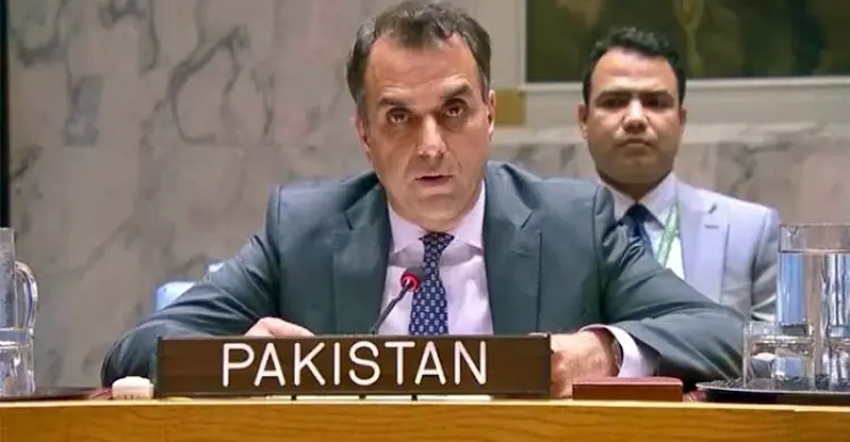
Collected Photo
Pakistan has rejected India's unilateral decision to suspend the Indus Waters Treaty (IWT), warning the United Nations Security Council that using shared water resources as a tool for political leverage threatens regional peace and puts the lives and livelihoods of over 240 million people at risk.
Addressing an Arria-formula meeting of the UN Security Council in New York on Wednesday (November 18), Pakistan's Deputy Permanent Representative Ambassador Usman Jadoon accused India of attempting to "weaponise water" by unilaterally suspending the treaty and threatening to halt water flows.
"Such actions by India pose a threat to the lives and livelihoods of more than 240 million people, while risking further escalation of tensions between the two neighbouring countries," Jadoon said.
The Pakistani diplomat pointed out that in its ruling on August 31, 2026, the Permanent Court of Arbitration affirmed that the Indus Waters Treaty remains fully valid and binding on India. He asserted that no state should be allowed to violate international law and binding treaty obligations to use shared natural resources as an instrument of coercion or political gain.
Tensions between the two neighbours over the accord have persisted since April 2025, when New Delhi moved to hold the 1960 treaty in abeyance following an attack in Indian-administered Jammu and Kashmir that killed 26 people. India blamed Pakistan for the incident, an allegation Islamabad has denied.
Brokered by the World Bank, the Indus Waters Treaty grants India rights over the eastern rivers—Ravi, Beas, and Sutlej—while allocating the western rivers—Indus, Jhelum, and Chenab—primarily to Pakistan. The accord contains no provision allowing either party to unilaterally suspend or terminate it.
Emphasising that cooperation and peaceful dispute resolution among neighbours are vital for regional stability—particularly in managing transboundary resources like water—Jadoon cited UN Security Council Resolution 2788 and called for the use of peaceful mechanisms under Article 33 of the UN Charter to resolve disputes. Respect for international law and mutually agreed treaties is essential for regional peace, he added.
The Pakistani envoy was speaking at a meeting titled "Natural Resources and Conflict: Prevention and Peacebuilding through Enhanced Cooperation," organised by Liberia, which focused on preventing resource-driven conflicts, curbing illegal resource exploitation, and ensuring resource benefits reach local populations.
-EM

Loading...
Loading...
Also read








Editor : Iqbal Sobhan Chowdhury
Published by the Editor on behalf of the Observer Ltd. from Globe Printers, 24/A, New Eskaton Road, Ramna, Dhaka.
Editorial, News and Commercial Offices : Aziz Bhaban (2nd floor), 93, Motijheel C/A, Dhaka-1000.
Phone: PABX- 41053001-06; Advertisement: 41053012; 01793317829, 01550707291, 01550707296
E-mail: [email protected], [email protected]. [email protected], [email protected], [email protected], [email protected], Online-email: [email protected]


