



| HEADLINE |

|

Tarique Rahman turns 62: A journey of struggle, politics and leadership
Published : Friday, 20 November, 2026 at 12:06 AM
Observer Special


Collected Photo
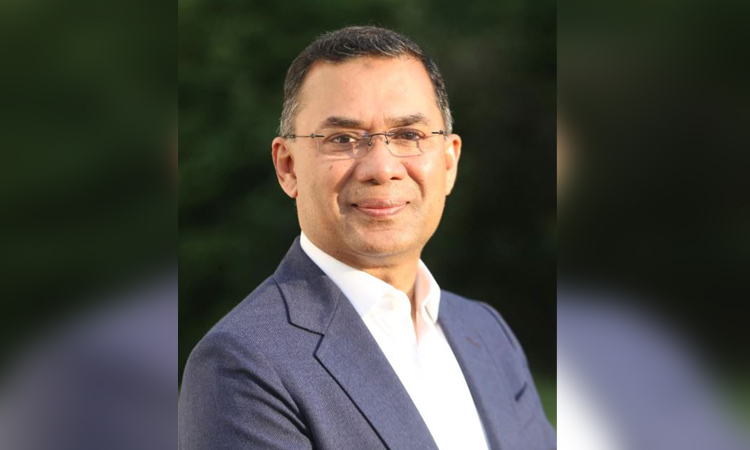
Prime Minister Tarique Rahman steps into his 62nd year on Friday (November 20), marking a significant milestone in a political journey shaped by decades of political involvement, nearly 17 years in exile, organisational challenges, the July 2024 mass uprising and his eventual return to Bangladesh as head of government.
Born on November 20, 1965, Tarique Rahman is the eldest son of Shaheed President Ziaur Rahman and former Prime Minister Begum Khaleda Zia. Growing up in a politically influential family, he was deeply influenced by his father's political philosophy and his mother's leadership.
Although he lost his father at a young age, Ziaur Rahman's ideals continued to shape his political outlook. His father's philosophy of Bangladeshi nationalism, national unity, multi-party democracy, self-reliance and economic development became important pillars of Tarique's political thinking. Zia believed in building a self-reliant Bangladesh through people's participation, rural development and national solidarity.
From growing up with a historic political legacy to leading the Bangladesh Nationalist Party (BNP) through years of political uncertainty, Tarique's journey has passed through several defining chapters.
Standing beside Khaleda Zia through 17 years of struggle
Tarique Rahman's political journey began in 1988 when he joined the BNP as a primary member in Gabtali, Bogura. He gradually became involved in the party's organisational activities and played a role in strengthening its grassroots network.
His political career became closely associated with his mother, Khaleda Zia, particularly during the BNP's difficult years. Following the political changeover in January 2007, he was arrested by the military-backed caretaker government and later left Bangladesh for London in September 2008.
For nearly 17 years, he remained outside the country but continued to lead the BNP as its acting chairman. During this period, Khaleda Zia faced imprisonment, while thousands of party leaders and activists experienced arrests, legal cases and political challenges. Tarique maintained communication with party leaders, coordinated organisational activities and remained involved in major political decisions from London.
His prolonged absence from the country did not end his involvement in party affairs. Rather, his leadership from abroad became an important part of the BNP's efforts to maintain its organisational structure during a prolonged period of political uncertainty.
July uprising and return to the motherland
The July-August 2024 mass uprising marked a historic turning point in Bangladesh. Tarique Rahman remained politically engaged from London during the movement, communicating with BNP leaders and expressing support for the broader struggle against the government.
The BNP participated in the wider movement, which brought together students, political parties and people from different sections of society. The uprising eventually led to a major political transition and opened a new chapter in the country's political history.
His return to Bangladesh on December 25, 2025, after more than 17 years in exile, marked a defining moment in his political career. He returned when the country was preparing for a new political direction and the BNP was gearing up for the national election.
He contested from Bogura-6 and Dhaka-17 constituencies and won both seats. His 31-point reform agenda, covering the executive, legislative and judicial branches, became a central part of the BNP's political programme. Following the party's victory in the 13th National Election on February 12, 2026, he took oath as Prime Minister on February 17.
Simplicity and accessibility in public life
Since assuming office, Tarique Rahman has drawn attention through his approach to public appearances and everyday official activities.
He has maintained a limited motorcade, sought to avoid unnecessary road closures and travelled without extensive disruption to public movement. On May 6, he stopped his motorcade on the Dhaka elevated expressway to allow an ambulance carrying a critically ill patient to pass, according to BSS.
His roadside interactions have also attracted attention. A BSS report published on September 6 described how people regularly gather along some of Dhaka's busy roads to catch a glimpse of the Prime Minister, who has gradually come to recognise familiar faces and respond with a wave or smile.
His interactions with children have become another noticeable feature of his public engagements. During a visit to Jashore, he stopped his vehicle to meet a child who was waiting with a flower alongside the child's mother. He later sent gifts to the child, according to BSS.
These informal encounters have added a personal dimension to his public appearances and highlighted his emphasis on connecting with ordinary people.
Austerity begins at the Prime Minister's Office
Reducing unnecessary government expenditure has been another feature of his administration. In April, the Prime Minister's Office introduced a ceiling of Tk 150 per person for lunch and afternoon snacks, bringing official food expenditure under a strict limit.
The government has also taken steps to restrict unnecessary vehicle purchases, reduce overseas trips and training programmes and promote financial discipline across public institutions.
A historic family milestone at the UN
On September 24, 2026, Tarique Rahman addressed the 81st UN General Assembly, becoming the third member of his family to speak at the global forum after his father, Ziaur Rahman, in 1980 and his mother, Khaleda Zia, in 1993. He highlighted Bangladesh’s priorities, including peace, climate change, sustainable development and the Rohingya crisis.
Strengthening global ties
Since becoming Prime Minister, Tarique Rahman has visited Malaysia, China, the United States, Japan and Türkiye to strengthen diplomatic relations, attract investment and expand economic cooperation. His engagements have also provided opportunities to present Bangladesh’s priorities on international platforms.
Family Card: Financial support for households
The Family Card Programme is one of the government's major social protection initiatives. Launched on March 10, 2026, the programme initially provided Tk 2,500 in monthly financial assistance to female heads of 37,814 low-income families in 13 districts and three city corporations, according to BSS.
The government has announced a target of bringing four crore families under the programme within five years. Information collection for nationwide implementation is now underway.
The initiative aims to strengthen women's financial independence while providing direct support to vulnerable households.
Farmer Card and agricultural development
The Farmer Card Programme is another major initiative. According to BSS, the government aims to distribute 2.4 crore cards over four years, including 43 lakh farmers during the 2026-27 fiscal year.
The programme is designed to provide farmers with access to agricultural loans, irrigation support, fertilisers, seeds, government incentives, agricultural insurance, weather information and expert advice.
The government has also waived agricultural loans of up to Tk 10,000, including interest, benefiting approximately 1.2 million small and marginal farmers.
Education, healthcare and social welfare
Education has received attention through initiatives including free education for girls up to the undergraduate level, midday meals in primary schools, free school uniforms, free Wi-Fi facilities and opportunities for students to observe parliamentary proceedings. The government has also emphasised sports, innovation and technology-based learning.
In another significant measure, Tk 2,000 crore was released to settle outstanding dues owed to retired teachers under the Monthly Pay Order system.
Healthcare initiatives include the introduction of Health Cards and expansion of primary healthcare services. The Prime Minister has also announced plans to upgrade all upazila health complexes from 50 beds to 150 beds over five years.
The government has introduced honorarium allowances for imams, muezzins and other religious leaders. It has also announced Sports Card initiatives to support athletes and encourage greater participation in sports.
Environment, economy and institutional reform
Environmental protection has become another important part of the government's agenda. According to BSS, the administration has set a five-year target of excavating and re-excavating 20,000 kilometres of canals and rivers and planting 25 crore saplings. These programmes are intended to improve water management, support agriculture and address climate-related challenges.
On the economic front, the government has highlighted stronger loan recovery efforts, banking-sector reforms, export growth and foreign debt repayment. According to the November 19 BSS report, the non-performing loan ratio declined from 35.73 per cent to 32.78 per cent. The government also reported repaying approximately US$2.0476 billion in foreign loan principal and interest within five months.
The administration has also highlighted initiatives to improve services for expatriate Bangladeshis through a proposed Probashi Card.
Institutional reform has remained another priority. The settlement of 133 ordinances during the first parliamentary session brought a significant number of legislative matters before Parliament. Increased parliamentary discussions, questions and institutional oversight have also featured in the government's approach to restoring accountability.
BSS reported that the government undertook more than 200 initiatives and projects during its first 100 days, covering social welfare, economic assistance, administrative reform, healthcare, agriculture and education.
The responsibilities of a new chapter
As Tarique Rahman steps into 62, his political journey enters another important chapter. His experience includes grassroots politics, organisational leadership, years of political struggle alongside Khaleda Zia, a prolonged stay abroad, involvement during the July uprising and a return to assume the country's highest executive responsibility.
The initiatives undertaken by his government cover a wide range of sectors, from family welfare and agriculture to education, healthcare, economic management and environmental protection. Their long-term significance will depend on effective implementation, transparency and tangible benefits for ordinary citizens.
At this stage of his life, the focus is no longer only on his political survival or party leadership. It is also on the responsibilities of governing a country with high expectations for economic stability, employment, democratic accountability and improved public services.
His journey from a prolonged period outside the country to the Prime Minister's Office represents a significant transition in his political career. As he celebrates another birthday, the coming years will be defined by how effectively his leadership translates political commitments into lasting improvements in the lives of the people of Bangladesh.
-AH

Loading...
Loading...
Also read


Editor : Iqbal Sobhan Chowdhury
Published by the Editor on behalf of the Observer Ltd. from Globe Printers, 24/A, New Eskaton Road, Ramna, Dhaka.
Editorial, News and Commercial Offices : Aziz Bhaban (2nd floor), 93, Motijheel C/A, Dhaka-1000.
Phone: PABX- 41053001-06; Advertisement: 41053012; 01793317829, 01550707291, 01550707296
E-mail: [email protected], [email protected]. [email protected], [email protected], [email protected], [email protected], Online-email: [email protected]


