



| HEADLINE |

|

A season of olives, a harvest of livelihoods
Published : Saturday, 21 November, 2026 at 12:00 AM
Sabbir Hossain


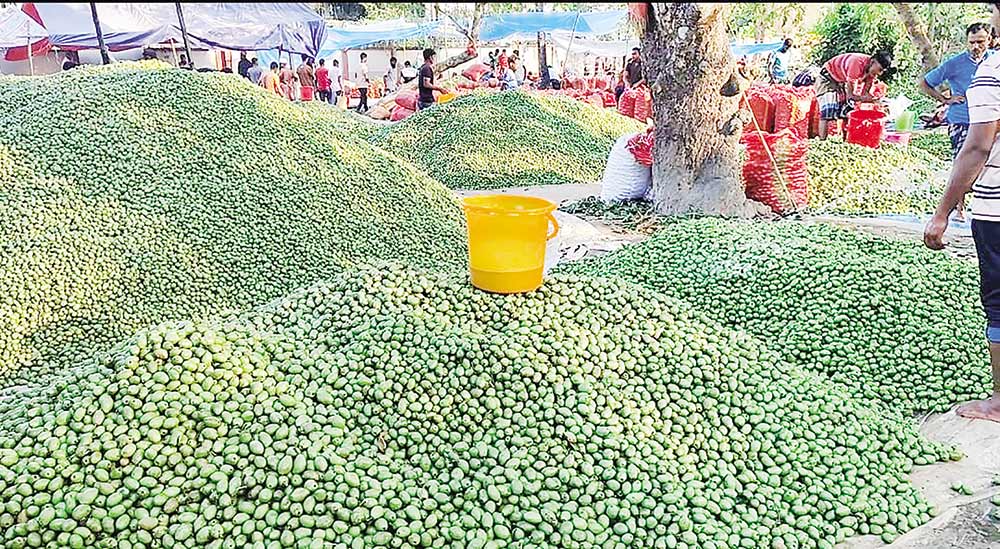 PANCHAGARH, Nov 20: As dawn breaks over Debdaru Tola in Debiganj, the quiet neighbourhood begins to stir with the rumble of vans, pick-up trucks and lorries carrying fresh olives. Farmers and small traders arrive with their harvest, unloading baskets and sacks as the market gradually fills with heaps of green fruit. Before long, buyers gather, bargaining begins and a busy day of trading gets underway.
Farmers from Panchagarh and four neighbouring districts bring their produce here. After unloading, the olives are sorted by size and quality, with small and large fruits kept separately before being sold to wholesale traders.
Buyers travel from different parts of Bangladesh, while representatives of large companies also visit to collect olives. The produce is then supplied to markets across the country, with some shipments going abroad.
The season usually starts in early October and continues until the first week of January. During these months, trading begins early in the morning and keeps the market busy throughout the day.
Farmers are currently selling olives for Tk20 to Tk30 per kilogram. Many earn lakhs of taka each year from their olive trees, turning the seasonal harvest into an important source of household income.
But the business extends far beyond the farmers who grow the fruit. Small traders collect olives from gardens and supply them to wholesalers, while workers sort and carry the produce, drivers transport it and shopkeepers support the daily trade. The market sustains a wider network of livelihoods, providing direct and indirect employment to many families.
Market leaseholder Md Kaderi Kibria Rana said around 1,000 to 1,500 people earned their living through the market.
"Farmers from several nearby districts bring olives here. Traders from different parts of the country come to buy them. Large companies also collect olives from this market," he said.
Despite the scale of the business, traders face a number of basic infrastructure problems. The market has insufficient sheds, leaving many sellers exposed to rain and muddy conditions during the wet season. Even in dry weather, traders often have to sit on the ground with their produce.
Rana said the lack of proper facilities created difficulties for traders and undermined cleanliness in the market. He called for government support to construct sheds, improve the market area and ensure a hygienic environment for buying and selling.
Other agricultural products, including pomelos, lemons and betel leaves, are also traded there, but olives remain the market’s main attraction.
Debiganj Upazila Agriculture Officer Nayeem Morshed said the market was expanding as demand for olives increased and more farmers showed interest in cultivation.
"The agriculture department regularly keeps in touch with farmers. They are making good profits from olive farming," he said.
He added that improved market facilities could help distribute more olives across the country and increase exports, bringing higher returns to farmers and creating further opportunities for the local economy.
For farmers, the season is the reward for months of care and labour. For traders and workers, it brings a few months of intense activity and income to support their families. At Debdaru Tola, the olive trade is therefore much more than a daily exchange of fruit: it is a seasonal economic lifeline for a large rural community.
With better infrastructure, improved sanitation and proper planning, this bustling market could strengthen its role in the local economy and open up greater opportunities for the people whose livelihoods depend on it.

Loading...
Loading...
Also read



Editor : Iqbal Sobhan Chowdhury
Published by the Editor on behalf of the Observer Ltd. from Globe Printers, 24/A, New Eskaton Road, Ramna, Dhaka.
Editorial, News and Commercial Offices : Aziz Bhaban (2nd floor), 93, Motijheel C/A, Dhaka-1000.
Phone: PABX- 41053001-06; Advertisement: 41053012; 01793317829, 01550707291, 01550707296
E-mail: [email protected], [email protected]. [email protected], [email protected], [email protected], [email protected], Online-email: [email protected]


