



| HEADLINE |

|

Cash crunch threatens small garment factories despite export orders
Published : Sunday, 22 November, 2026 at 12:00 AM
Business Correspondent


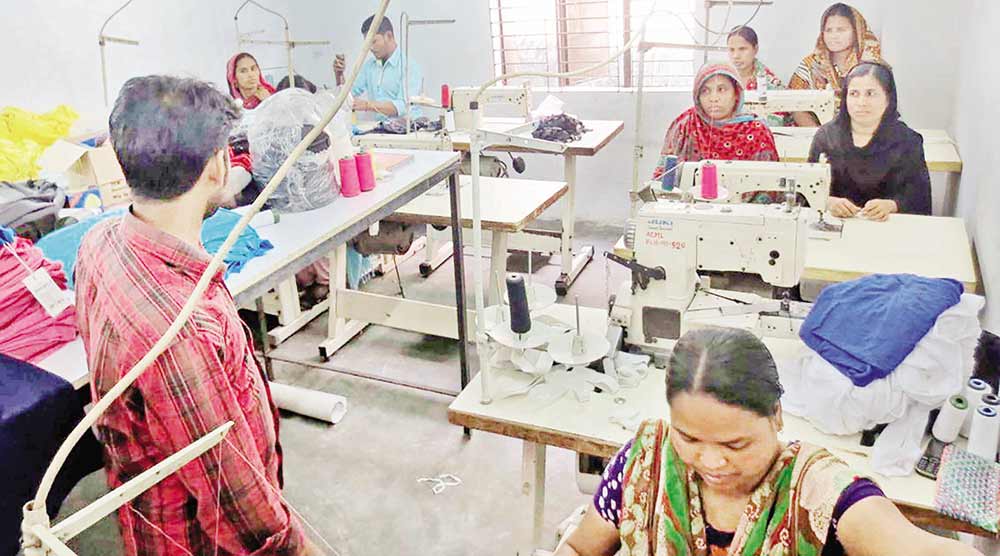 A severe working capital crunch is threatening to cripple small garment factories in Bangladesh, leaving many struggling to keep production lines running despite having confirmed export orders.
For smaller manufacturers, securing an export order is no longer the biggest challenge; financing its execution is. They need cash upfront to purchase fabrics and accessories, pay workers and meet utility bills, often weeks or months before receiving payments for shipped goods.
“With limited access to affordable bank credit, we are finding it increasingly difficult to sustain production”, said a garments manufacturer in the city.
He also pointed to the weak bargaining position of smaller manufacturers in dealing with international buyers. Despite rising costs of raw materials, wages, energy and transportation, many factories struggle to negotiate better prices, leaving little room to absorb additional financial pressure.
The liquidity squeeze comes despite growth in the country's garment exports. Bangladesh earned $13.75 billion from ready-made garment (RMG) exports in July-October of FY2026-27, up 5.82 per cent from $12.99 billion in the corresponding period a year earlier, according to Export Promotion Bureau (EPB) data.
In October alone, RMG exports rose 4.90 per cent to $3.17 billion from $3.02 billion a year earlier. However, rising export earnings do not necessarily translate into stronger financial health for smaller factories, many of which are struggling to finance orders and protect already thin profit margins.
Textile and garment consultant Ariful Islam said working capital shortages had emerged as a major obstacle for small manufacturers, who need uninterrupted financing at every stage of production but often remain trapped while waiting for buyers to settle export payments.
Factories with limited bank credit facilities are particularly vulnerable, as outstanding payments for previous shipments restrict their ability to secure fresh financing. Rising borrowing costs further erode their available cash, making it harder to meet operational expenses and service existing loans.
The industry's mounting financial exposure reflects the depth of the problem. Textile and garment businesses had outstanding bank loans of around Tk3.47 lakh crore, of which Tk1.02 lakh crore had turned non-performing by December 2025, according to market data.
Access to bank finance is also increasingly expensive for smaller industrial units. Bangladesh Bank data for September 2026 showed working-capital lending rates for small industries ranging from 12.75 per cent to 18 per cent, compared with 9.75 per cent to 14.25 per cent for large and medium industries in the reported categories.
The pressure is also reflected in factory closures. According to industry sources, 405 garment factories, including 282 members of the Bangladesh Garment Manufacturers and Exporters Association (BGMEA) and 123 members of the Bangladesh Knitwear Manufacturers and Exporters Association (BKMEA), closed between July 2023 and June 2026.
For a small factory, delayed export payments are not merely an accounting problem. They can mean unpaid suppliers, overdue bank instalments and difficulties meeting workers' salary bills. Prolonged cash shortages can force manufacturers to cut production, delay shipments or shut down operations altogether, putting jobs and supply-chain stability at risk.
The government has introduced a Tk5,000 crore refinancing facility for cottage, micro, small and medium enterprises, with lending rates capped at 9 per cent. However, smaller garment manufacturers need faster, simpler and more effective access to the facility to overcome their liquidity constraints.
Industry stakeholders also stress the need for faster settlement of export incentives and more disciplined payment practices by international buyers to reduce the financing gap between shipment and payment.
Bangladesh's garment export competitiveness depends not only on large exporters but also on the survival of smaller factories that generate employment and sustain a broad network of suppliers and subcontractors.
Unless their working capital crisis is addressed, experts warn that export growth may continue on paper while a vital segment of the country's manufacturing base struggles to stay afloat.

Loading...
Loading...
Also read



Editor : Iqbal Sobhan Chowdhury
Published by the Editor on behalf of the Observer Ltd. from Globe Printers, 24/A, New Eskaton Road, Ramna, Dhaka.
Editorial, News and Commercial Offices : Aziz Bhaban (2nd floor), 93, Motijheel C/A, Dhaka-1000.
Phone: PABX- 41053001-06; Advertisement: 41053012; 01793317829, 01550707291, 01550707296
E-mail: [email protected], [email protected]. [email protected], [email protected], [email protected], [email protected], Online-email: [email protected]
Published by the Editor on behalf of the Observer Ltd. from Globe Printers, 24/A, New Eskaton Road, Ramna, Dhaka.
Editorial, News and Commercial Offices : Aziz Bhaban (2nd floor), 93, Motijheel C/A, Dhaka-1000.
Phone: PABX- 41053001-06; Advertisement: 41053012; 01793317829, 01550707291, 01550707296
E-mail: [email protected], [email protected]. [email protected], [email protected], [email protected], [email protected], Online-email: [email protected]


