



| HEADLINE |

|

HC orders policy for under-16 social media use in B’desh
Published : Sunday, 22 November, 2026 at 2:33 PM
Observer Online Report


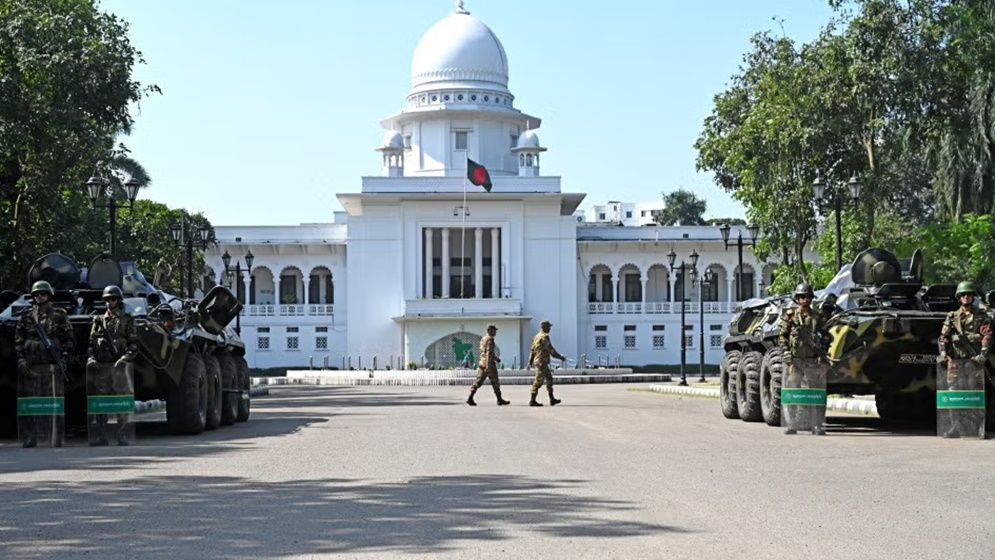
High Court has directed the formation of an expert committee to formulate a policy governing social media use by children under the age of 16 in Bangladesh.
A High Court bench comprising Justice Sikder Mahmudur Razi and Justice Fatema Anwar passed the order on Sunday (November 22) following a hearing on a public interest writ petition argued by Supreme Court lawyer Barrister Mohammad Faisal Dostogir.
The High Court ordered the immediate formation of an independent committee comprising cybersecurity experts, child psychologists, paediatricians, and legal experts to draft the guidelines. The telecommunications secretary, women and children affairs secretary, health secretary, law secretary, and the chairman of the Bangladesh Telecommunication Regulatory Commission (BTRC) have been tasked with complying with the directive.
The court simultaneously issued a rule asking the respondents to explain why their failure to frame a policy on social media use for children aged 16 or younger should not be declared illegal, and why they should not be directed to form an expert committee to draft the policy and assess the impact of social media on children. Respondents have been given four weeks to reply to the rule.
Barrister Mohammad Faisal Dostogir said children in Bangladesh are using social media unchecked in the absence of a policy, experiencing adverse effects including loneliness and depression that hinder their mental development.
Citing an icddr,b research report, the petition stated that more than four out of five children—or 83 percent—in Dhaka spend over two hours a day in front of screens, exceeding internationally recommended limits for recreational screen use. Participating children spent an average of about 4.6 hours daily using smartphones, televisions, tablets, computers, and gaming devices.
According to the researchers, more than one-third of the children suffer from eye problems, while 80 percent experience frequent headaches. Children spending more than two hours daily on screens also had noticeably shorter sleep, averaging just 7.3 hours per night compared with the 8 to 10 hours needed for healthy physical growth and brain development at their age.
The study further found that roughly 14 percent of participating children are overweight or obese, with higher rates among those spending excessive time on screens. Health experts warned that prolonged sleep deprivation in childhood can negatively affect memory, attention, learning ability, and emotional regulation while risking stunted physical growth and harming overall mental well-being.
-SA

Loading...
Loading...
Also read








Editor : Iqbal Sobhan Chowdhury
Published by the Editor on behalf of the Observer Ltd. from Globe Printers, 24/A, New Eskaton Road, Ramna, Dhaka.
Editorial, News and Commercial Offices : Aziz Bhaban (2nd floor), 93, Motijheel C/A, Dhaka-1000.
Phone: PABX- 41053001-06; Advertisement: 41053012; 01793317829, 01550707291, 01550707296
E-mail: [email protected], [email protected]. [email protected], [email protected], [email protected], [email protected], Online-email: [email protected]


