



| HEADLINE |

|

Solar power and net metering to transform irrigation system in Barind
Published : Sunday, 22 November, 2026 at 3:05 PM
Observer Correspondent


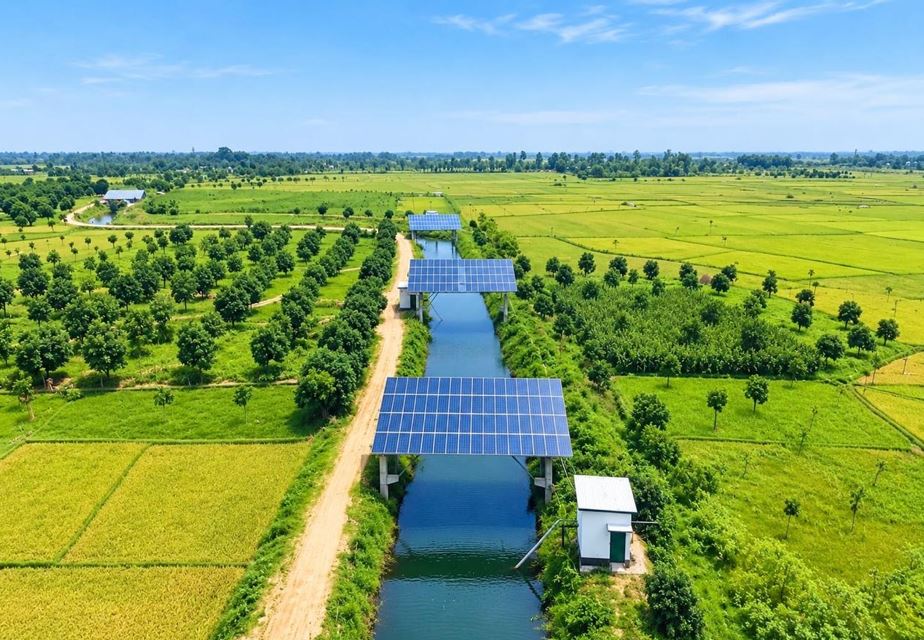
Solar power and net metering are transforming the irrigation system in the Barind region. The Barind Multipurpose Development Authority (BMDA) has intensified efforts to introduce an irrigation system based on solar power and net metering, aiming to make agriculture and irrigation management in the northern region more modern, cost-effective, and environmentally friendly.
Since assuming office, Executive Director (Grade-2) Md. Jahangir Alam Khan has steered the organization forward through well-considered and effective measures. He has prioritized resolving existing institutional challenges, enhancing administrative and financial capacity, and expanding technology-driven services.
To address the organization’s acute manpower shortage, the Executive Director is maintaining regular communication and coordination with the Ministry of Agriculture. According to S. M. Delwar Hossain, Acting Secretary of the BMDA, efforts are underway with the Ministry to transition 650 personnel into the revenue budget and to recruit necessary additional staff. The objective is to improve the operation and maintenance of irrigation equipment at the field level and to enhance services provided to farmers.
Furthermore, the Executive Director, under the leadership of the BMDA Chairman, highlighted the integration of solar power and net metering for BMDA’s irrigation equipment during a meeting with the Prime Minister. Following a policy-level decision reached at an inter-ministerial meeting chaired by the Prime Minister, steps are being taken to form a 'solarization' committee, draft policies, conduct technical reviews, and develop implementation plans. Currently, 692 of the BMDA’s 17,088 irrigation units have been converted to solar power, with 253 units already equipped with net metering.
Under the net metering system, solar power is first used to meet irrigation requirements, while any surplus electricity can be fed into the national grid via a bi-directional meter. According to BMDA data, the planned implementation of solar power and net metering across 15,757 irrigation units has the potential to reduce carbon dioxide emissions by approximately 400,000 metric tons annually.
With a solar-powered irrigation system, farmers will be able to irrigate their land as needed during daylight hours. This will help alleviate the hardships associated with nighttime irrigation, address labor shortages, and reduce reliance on electricity. Furthermore, there are plans to implement a centralized, real-time monitoring system to track the operational status of irrigation equipment, electricity generation and consumption, and power supply to the grid. If this integrated initiative, led by the Executive Director and focused on enhancing human resources and technical capabilities, is successfully implemented, it will not only improve the quality of services provided by the BMDA but also contribute significantly to sustainable agriculture, the use of renewable energy, and national energy security.
During his tenure as the Additional Chief Engineer of the BMDA’s Irrigation Wing, Md. Jahangir Alam Khan successfully restored approximately 1,100 non-functional irrigation units. He addressed field-level challenges with exceptional skill and experience.
Under his expert guidance and supervision, the operational efficiency of the BMDA’s irrigation infrastructure reached its peak, ensuring maximum benefits for farmers. Moreover, by fostering coordination among field-level staff, he cultivated an efficient, dynamic, and farmer-friendly working environment. He demonstrated remarkable proficiency and experience in managing field operations, identifying issues, and implementing immediate solutions.
Meanwhile, some BMDA officials and staff, who wish to remain anonymous, allege that certain factions are spreading misinformation in an attempt to regain political influence and re-establish control over the organization. They warn that these actions threaten to hinder the ongoing reform and development initiatives.
Nevertheless, staff members who subscribe to nationalist ideals remain optimistic; they believe that with the government’s policy support and the ongoing development efforts led by the Executive Director and the Chairman, these initiatives will continue, regardless of any attempts to disrupt them. Executive Director (Grade-2) Md. Jahangir Alam Khan states that, thanks to the tireless efforts of the current administration, solar-powered irrigation infrastructure in the Barind region will not only meet local irrigation demands but also contribute surplus energy to the national grid.
- SA/NS

Loading...
Loading...
Also read





Editor : Iqbal Sobhan Chowdhury
Published by the Editor on behalf of the Observer Ltd. from Globe Printers, 24/A, New Eskaton Road, Ramna, Dhaka.
Editorial, News and Commercial Offices : Aziz Bhaban (2nd floor), 93, Motijheel C/A, Dhaka-1000.
Phone: PABX- 41053001-06; Advertisement: 41053012; 01793317829, 01550707291, 01550707296
E-mail: [email protected], [email protected]. [email protected], [email protected], [email protected], [email protected], Online-email: [email protected]


