



| HEADLINE |

|

Heart stent prices rise 10-12pc despite govt duty cuts
Published : Monday, 23 November, 2026 at 11:41 AM
Observer Online Report


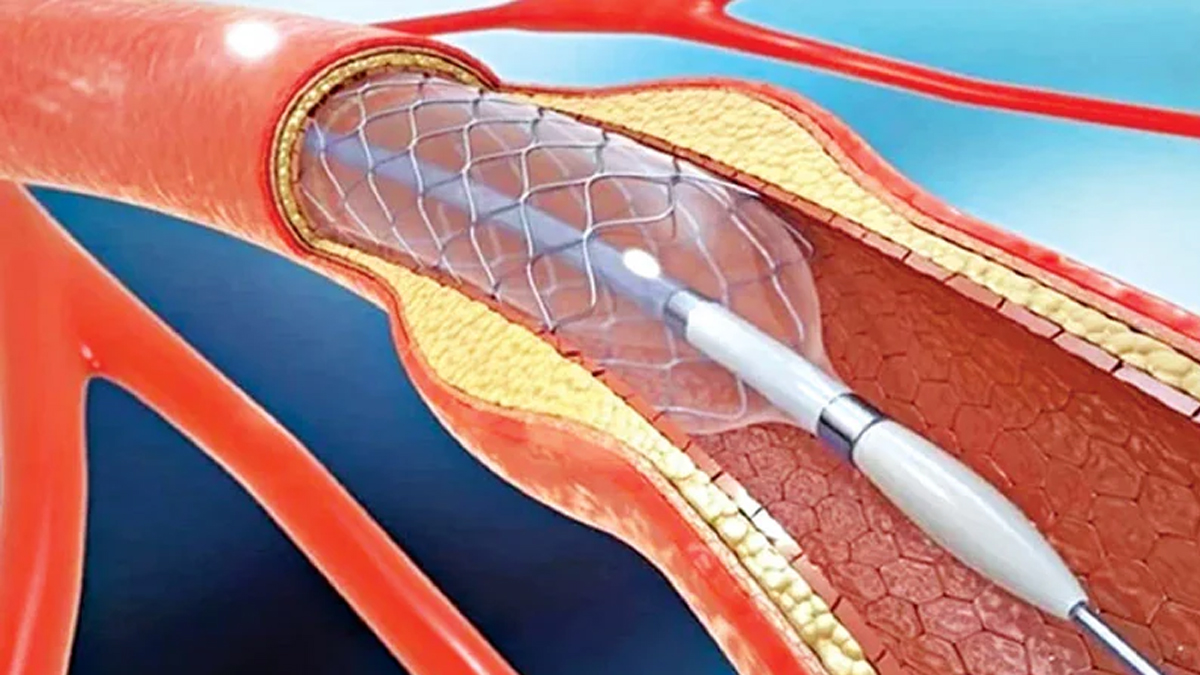
Collected Photo
Although the government reduced import duties and taxes on medicines, pharmaceutical raw materials, and medical equipment to lower production costs and make healthcare more affordable, consumers have seen little benefit—with the prices of two coronary stents, commonly known as heart rings, rising by 10 to 12 per cent.
Meanwhile, despite the withdrawal of duties and taxes on imported dialysis filters for kidney patients, importers and patients are unable to avail of the benefit due to a Harmonised System (HS) code classification error.
In the FY 2026–27 national budget, the government decided to reduce or withdraw duties and taxes on pharmaceutical raw materials, ingredients for cancer drugs, dialysis filters, and various medical devices. However, these import-level concessions have ultimately failed to reduce treatment costs for patients.
According to the Directorate General of Drug Administration (DGDA), the price of the Genoss DES stent manufactured by South Korean company Genoss has been raised by 12 per cent from Tk 50,000 to Tk 56,000. In addition, the price of the Onyx stent produced by US-based Medtronic has been increased from Tk 50,000 to Tk 55,000.
The prices were refixed based on recommendations from the eighth meeting of the advisory committee on coronary and neurological stents held on September 14, with the DGDA issuing a formal order on September 30.
The directive mandates that stent packaging clearly display the maximum retail price, country of manufacture, manufacturing date, expiry date, and Drug Administration Registration (DAR) number, and requires DGDA clearance prior to import and marketing.
Mahabubur Rahman Dalim, managing director of HRS Cardiac International, which imports Medtronic stents, declined to comment on the hike, saying Medtronic officials could better explain the matter.
Medtronic Bangladesh Regional Manager Asif Afsar claimed that during the previous government, the prices of their stents were deliberately reduced excessively. "We wrote to the government seeking a price adjustment for heart stents, and the DGDA adjusted the price," he said, adding that the duty cuts were unrelated to heart stent pricing and therefore were not expected to lower prices.
Conversely, Oliar Rahman Anu, managing director of Cardinal Health Care, which imports South Korea's Genoss DES stent, claimed the price was actually reduced from Tk 82,000 to Tk 56,000 rather than raised. Asked why the DGDA circular listed an increase from Tk 50,000 to Tk 56,000, he alleged an error by the directorate and maintained his firm was selling at the previous rate.
DGDA Director Dr Akter Hossain explained that earlier pricing for certain companies contained anomalies. After those companies submitted fresh applications to the Health Ministry, the pricing committee reviewed them and raised the prices of stents from two manufacturers. He added that duties and taxes were not factored into heart stent prices, meaning the tax exemption decision has no link to the price increase. Sources said several other companies have also applied for stent price hikes, with some requests currently under review.
Kidney patients require regular dialysis, where a fresh blood-purifying filter must be used in every session, making filter costs a major component of treatment expenses. To ease this burden, the FY 2026–27 budget withdrew 15 per cent value-added tax (VAT) and 5 per cent advance income tax on dialysis filter imports.
However, importers say the relief is not taking effect due to an HS code classification mistake. Engineer Nawab Ali, director of dialysis filter importer SNO Tech Health Care, said neither businesses nor patients are benefiting because the VAT waiver was assigned to "ultrapure filters"—used inside dialysis machines with very limited usage in Bangladesh—rather than the blood-purifying filters required for every haemodialysis session. Importers have submitted a written application to the authorities seeking rectification.
A National Board of Revenue (NBR) letter dated October 18 outlined extensive FY 2026–27 budgetary concessions for the pharmaceutical and medical device sectors, including concessional facilities on 17 new pharmaceutical raw materials, duty exemptions on nine raw materials for cancer drugs, and exemptions on 53 new raw materials for Active Pharmaceutical Ingredient (API) manufacturers. Customs duty on imported biological safety cabinets for the pharma industry was also slashed from 25 per cent to 1 per cent.
Bangladesh Association of Pharmaceutical Industries (BAPI) Secretary General and Healthcare Pharmaceuticals Limited CEO Muhammad Halimuzzaman said API manufacturers and cancer drug ingredients already enjoyed duty privileges, leaving limited scope for additional retail price reductions unless duties on previously taxed raw materials are newly withdrawn.
Consumers Association of Bangladesh (CAB) Chairman AHM Shafiquzzaman noted that Bangladesh's tariff rates are already higher than those of many other countries, and consumers rarely receive the benefits of occasional duty cuts due to unscrupulous traders, delays in implementing tariff reductions, and inadequate monitoring by the NBR.
-SA

Loading...
Loading...
Also read




Editor : Iqbal Sobhan Chowdhury
Published by the Editor on behalf of the Observer Ltd. from Globe Printers, 24/A, New Eskaton Road, Ramna, Dhaka.
Editorial, News and Commercial Offices : Aziz Bhaban (2nd floor), 93, Motijheel C/A, Dhaka-1000.
Phone: PABX- 41053001-06; Advertisement: 41053012; 01793317829, 01550707291, 01550707296
E-mail: [email protected], [email protected]. [email protected], [email protected], [email protected], [email protected], Online-email: [email protected]


