



| HEADLINE |

|

BGMEA: No objection to Vietnam-level wages if similar facilities provided
Published : Monday, 23 November, 2026 at 1:10 PM
Observer Online Report


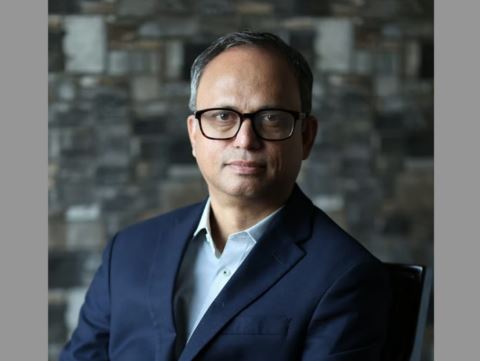
Bangladesh's garment factory owners have no objection to paying workers wages equivalent to those in Vietnam if similar infrastructure, policy support, and other facilities are ensured in the country, said Bangladesh Garment Manufacturers and Exporters Association (BGMEA) President Mahmud Hasan Khan.
"If we receive the same facilities as countries that pay higher wages, we will have no problem offering higher wages as well.
However, Bangladesh has yet to develop the necessary infrastructure and supportive environment," he said.
He made the remarks on Sunday (November 22) at a discussion titled "Garment Workers' Wage: Fairness and Industry Development," organized by the private research organization Power and Participation Research Centre (PPRC).
Highlighting Bangladesh's disadvantages compared to Vietnam in various aspects of business, including logistics, he said, "We are far behind Vietnam in lead time, and we do not have a deep-sea port. We also lack a strong backward linkage industry like Vietnam, as well as the necessary energy support for such industries."
He also claimed that although the minimum wage for garment workers is Tk 12,500, their average actual monthly earnings stand at Tk 19,500.
Referring to government-provided benefits for workers in other countries, he said Bangladesh was lagging behind in these areas.
At the same event, representatives of workers explained why employees had taken to the streets, with workers' and factory owners' representatives presenting contrasting views on the issue.
Syed Sultan Uddin Ahmed, Executive Director of the Bangladesh Institute of Labour Studies (BILS), said workers believe that their concerns will not be addressed through discussions unless they take to the streets.
"Workers assume that if they are not on the streets, their issues will not be brought to the negotiating table. We must overcome this crisis of trust," he said.
In response, BGMEA President Mahmud Hasan Khan questioned the practice of taking to the streets to resolve disputes.
"If problems cannot be resolved without taking to the streets, are we still living in such a primitive era? We must move away from this mindset," he said.
PPRC Executive Chairman Dr. Hossain Zillur Rahman, who chaired the discussion, said taking to the streets to draw attention to an issue could be understandable, but disorder was undesirable.
Representatives of Bangladesh's garment industry and labour organizations emphasized the need for a permanent, transparent, and evidence-based wage-setting framework that balances workers' demands for fair wages with the industry's sustainable growth and competitiveness.
BILS Executive Director Syed Sultan Uddin Ahmed further said that governments in other countries provide various social protection benefits to workers, whereas Bangladesh does not offer similar support.
"In other countries, workers receive various social protection benefits from the government, but that is not the case in Bangladesh. Here, the entire system depends on factory owners," he said.
He also highlighted several shortcomings in Bangladesh's minimum wage-setting process, including a lack of necessary data, the absence of a national minimum wage, no clear definition of the basis for determining minimum wages, and a lack of research by the wage board.
Meanwhile, Taslima Akhter, president of the Bangladesh Garment Workers' Solidarity, disagreed with the practice of including additional earnings from overtime work when calculating workers' minimum wages.
She said the focus should be on how much workers earn for their regular working hours, excluding overtime payments.
Musleh Uddin, a member of the Minimum Wage Board, expressed hope that negotiations would produce an effective wage structure for garment workers within the current month.
During the discussion, garment entrepreneur, former BGMEA president, and current president of the Bangladesh Chamber of Industries (BCI), Anwar-ul Alam Chowdhury Parvez, also highlighted the ongoing challenges facing the garment sector.
-MT

Loading...
Loading...
Also read








Editor : Iqbal Sobhan Chowdhury
Published by the Editor on behalf of the Observer Ltd. from Globe Printers, 24/A, New Eskaton Road, Ramna, Dhaka.
Editorial, News and Commercial Offices : Aziz Bhaban (2nd floor), 93, Motijheel C/A, Dhaka-1000.
Phone: PABX- 41053001-06; Advertisement: 41053012; 01793317829, 01550707291, 01550707296
E-mail: [email protected], [email protected]. [email protected], [email protected], [email protected], [email protected], Online-email: [email protected]


