



| HEADLINE |

|

Leaked data reveals scale of suicides in Russian army
Published : Tuesday, 24 November, 2026 at 1:42 PM
Observer Online Report


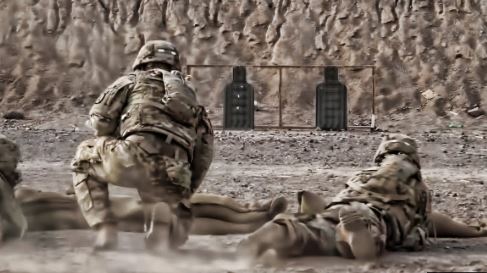
In late October 2024, Sergeant Alexei Bolgov, who was guarding a military headquarters in the occupied Donetsk region, called his wife, Natalia, and told her: "What is happening here is horrific. I will tell you everything when I return."
But he never made it home.
Five weeks later, shortly after his 29th birthday, Bolgov walked into a forest near the village of Stepove, about 300 metres from his unit's command post, and shot himself. The incident was revealed in a report written by his commander and obtained by The Guardian.
His commander wrote: "On the day of his death, Bolgov appeared unusually quiet and withdrawn."
According to confidential data from Russia's state statistics agency, Rosstat, analysed by The Guardian, more than 1,000 Russian soldiers have died by suicide since Moscow launched its full-scale invasion of Ukraine.
Another 885 military deaths in Ukraine or nearby areas were recorded as firearm injuries of "undetermined intent". Experts say this classification is sometimes used to conceal cases of suicide. The Guardian's own investigation also identified several such cases that were actually suicides.
Taken together, the number of soldiers who died by suicide is equivalent to an entire Russian military regiment.
Analysts believe the actual number of suicides could be considerably higher. The findings offer a rare glimpse into the immense psychological pressure facing Russian troops after nearly five years of war, marked by heavy casualties and strict military discipline.
Suicide among military personnel is not unique to any particular conflict. An investigation by The New York Times found that at least 158 active-duty US service members died by suicide in 2023.
However, military analysts say the problem appears more severe in the Russian armed forces. They point to intense pressure from fellow soldiers and commanders, as well as fears of being sent on extremely dangerous combat missions.
Contracts that leave soldiers with little or no opportunity to withdraw from military service further contribute to feelings of despair and helplessness.
Rob Lee, a senior fellow at the Foreign Policy Research Institute, said the Russian military uses widespread coercion to force soldiers to the front lines.
"There is clearly a lot of coercion used by the Russian military to force people to the front. In many cases, they abuse soldiers and subject them to various forms of physical violence," he said.
He added that it was therefore not surprising that some soldiers resorted to suicide.
The statistics were obtained from a collection of more than 11 million death certificates recovered by the Belarusian opposition-linked hacking group Cyber Partisans and the Ukrainian hacking group Silent Crow.
The Kremlin does not publish data on military suicides and treats casualty figures as state secrets.
Of the 1,087 military suicides identified by The Guardian, at least 614 occurred in occupied Ukrainian territories or Russian border regions, primarily Belgorod and Bryansk. The locations of another 113 deaths were not specified in the records.
More than half of the recorded suicides involved firearms, particularly in areas close to the front line. The deaths occurred in military camps, on battlefields, at training centres and in private residences.
Among those who died by suicide in war zones were 43 young soldiers aged 18 or 19.
The data also includes 108 men under the age of 25 who died by suicide in Russian regions away from the front lines. Some of them may have been conscripts. Although they were not officially supposed to be deployed to fight in Ukraine, many were reportedly pressured into signing contracts that made it possible to send them to the battlefield.
The number of military suicides has increased as the war has dragged on.
More than 50 cases were recorded in 2022. The figure exceeded 200 in 2024 and reached a peak of 365 in 2025, reflecting the broader human cost of Russia's war.
In 2026, despite the database being incomplete and lagging behind actual developments on the battlefield, nearly 300 suicides have already been recorded. This makes the year the second-highest on record since the invasion began.
Activists and lawyers working with Russian soldiers who have fled military service believe the actual number could be much higher.
"I would say this is an underestimate. Naturally, the real number is much higher," said Ivan Chuvilyaev, a spokesperson for Idite Lesom, an organisation that helps Russian soldiers desert the military.
He compared conditions on the front line to a "tin can" from which very little information can escape.
"Any Rosstat statistics, like any other figures related to the war, are essentially just reports sent up the chain of command," he said.
Chuvilyaev added that a soldier might die by suicide but be officially recorded as a hero. His parents might even receive a medal in his name.
He also said officials had little incentive to establish the actual figures, as such numbers could trigger serious scrutiny of the military command structure.
The findings, based on a database of more than 11 million death certificates, suggest that the number of Russian soldiers who died by suicide during the war could be equivalent to the strength of an entire military regiment.
Source: The Guardian
-MT

Loading...
Loading...
Also read



Editor : Iqbal Sobhan Chowdhury
Published by the Editor on behalf of the Observer Ltd. from Globe Printers, 24/A, New Eskaton Road, Ramna, Dhaka.
Editorial, News and Commercial Offices : Aziz Bhaban (2nd floor), 93, Motijheel C/A, Dhaka-1000.
Phone: PABX- 41053001-06; Advertisement: 41053012; 01793317829, 01550707291, 01550707296
E-mail: [email protected], [email protected]. [email protected], [email protected], [email protected], [email protected], Online-email: [email protected]


