



| HEADLINE |

|

Bangladesh’s expectations and achievements at COP31
Published : Wednesday, 25 November, 2026 at 6:16 PM
Jahid Biplob, returning from Türkiye


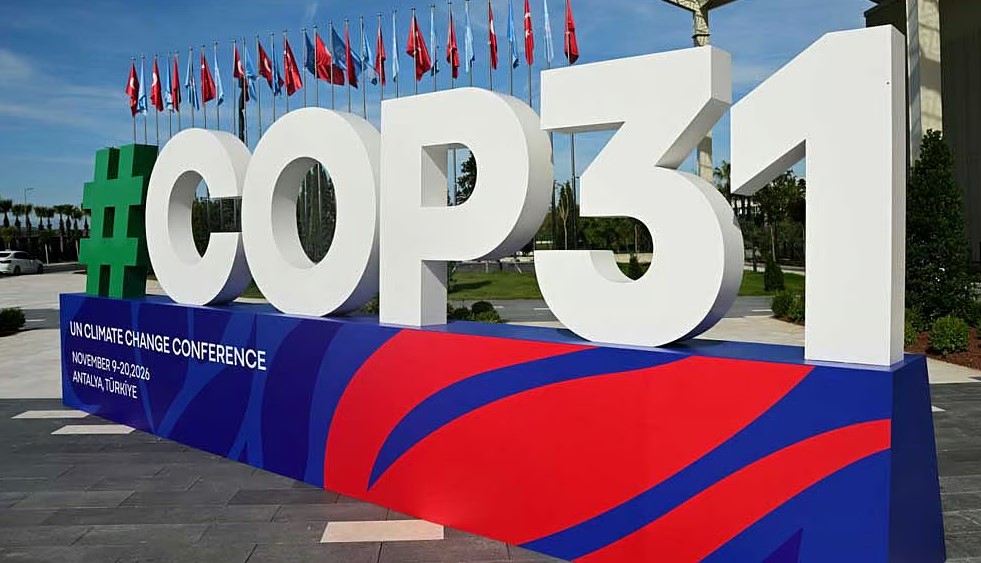
Some progress in climate finance, adaptation and addressing loss and damage; securing the expected funding remains a major challenge
Strong stance on behalf of climate-vulnerable countries; grants worth around Tk 7.84 billion secured from two international funds, while Dhaka calls for grants instead of loans and technology transfer
Bangladesh is among the countries most vulnerable to the adverse impacts of climate change, despite having contributed relatively little to global warming. Against this backdrop, Bangladesh participated in the United Nations Climate Change Conference, COP31, held in Antalya, Türkiye, with expectations of climate justice, compensation for loss and damage, increased financing for adaptation and the transfer of modern technology.
One of Bangladesh’s major achievements at the conference was securing grants worth around Tk 7.84 billion from two international funds. Of this amount, US$30 million will come from the Climate Investment Funds (CIF) and €30 million from the Global Shield. However, Bangladesh may receive an additional €20 million if the first phase of the Global Shield programme is successfully implemented. This additional amount remains conditional.
The conference was held in Antalya, Türkiye, from November 9 to 20, with representatives from around 200 countries participating. Bangladesh’s key expectations included grant-based climate finance instead of loans from developed countries, increased support for adaptation, an effective fund to address loss and damage, and easier access to technology transfer. Dhaka also called for greater international cooperation to address coastal protection, river erosion, salinity, floods, cyclones and climate-induced displacement.
Bangladesh adopted a coordinated position with the Least Developed Countries (LDCs) group, the G77 and China, and forums representing climate-vulnerable countries. Although some progress was made in financing, adaptation and technological cooperation, expectations were not fully met in terms of securing compensation for loss and damage and large-scale grant funding.
Prime Minister’s Five-Point Proposal
Presenting Bangladesh’s position at the conference, Prime Minister Tarique Rahman proposed five urgent measures for climate-vulnerable countries. One of the key proposals was to allocate at least 50 per cent of international climate finance to adaptation activities.
He also called for introducing debt-for-climate initiatives and climate-resilient debt mechanisms to reduce the debt burden of countries vulnerable to climate change. He emphasised equitable access to environmentally friendly technologies, easier financing for the transition to renewable energy and skills development.
The Prime Minister proposed the adoption of a ‘Belém-Antalya Action Mechanism’. Its objective is to ensure a just energy transition without adversely affecting the economies, labour markets and employment opportunities of developing countries.
He said countries historically responsible for climate change have a responsibility to act. Yet developing and vulnerable countries are suffering the greatest losses. The climate crisis cannot be addressed by imposing additional debt burdens on these countries. Grant-based financing and technological cooperation must therefore be ensured.
Grants Worth Tk 7.84 Billion a Major Achievement
Bangladesh’s most visible achievement at COP31 was securing grants worth around Tk 7.84 billion from two international funds. The US$30 million from CIF is equivalent to approximately Tk 3.74 billion, while the €30 million from the Global Shield amounts to around Tk 4.10 billion. These funds do not have to be repaid.
Special Assistant Dr Saimum Parvez disclosed the information after returning to the country on November 22. He told The Daily Observer that Bangladesh could receive an additional €20 million, equivalent to around Tk 2.73 billion, if the first phase of the Global Shield programme is successfully implemented. In that case, the total grant amount could reach approximately Tk 10.58 billion.
The CIF funding will be spent on strengthening coastal infrastructure and expanding climate-resilient agriculture. Meanwhile, the Global Shield funding will be used to strengthen climate insurance and financial protection mechanisms for public and private institutions.
Although financial commitments have long been announced at international conferences, disbursement often faces various complications. In this context, securing specific grant amounts from two funds represents a visible outcome of Bangladesh’s diplomatic efforts. However, the timely release and effective utilisation of the funds will also be crucial.
Adaptation Requires US$11 Billion Annually
Bangladesh told the conference that it needs US$10 billion to US$11 billion annually to address the impacts of climate change. However, the country spends around US$4.5 billion to US$5 billion every year from its own budget on climate-related activities.
The Bangladesh delegation said substantial funding was required for adaptation, disaster management, coastal protection, agriculture and infrastructure development. A major portion of this funding needs to come from international sources in the form of grants.
Bangladesh also supported the LDC group's demand to increase annual adaptation finance to US$120 billion by 2035. It further called for simplifying direct access to funding from the Green Climate Fund, the Global Environment Facility and the Adaptation Fund, as well as reducing delays in application procedures and fund disbursement.
Expectations Not Met on Compensation for Loss and Damage
Every year, floods, cyclones, river erosion, tidal surges, salinity and heatwaves cause extensive damage to homes, agricultural land, infrastructure and people's livelihoods in Bangladesh. The country had expected to receive support from the UN's Fund for Responding to Loss and Damage to address these losses.
Bangladesh called for increasing funding to the mechanism, simplifying the application process and ensuring that money reaches affected communities quickly. However, it failed to secure any major new financial commitments.
According to international media reports, Spain announced a new contribution of €15 million at the conference. The European Union and Italy formally advanced their previous pledges.
Bangladesh also has a project proposal worth US$20 million under this fund. The project is planned to restore coastal ecosystems with the participation of local communities. However, as it remained at the preliminary review stage during the conference, it cannot be considered a confirmed financial achievement.
Progress in Adaptation, Technology and Diplomacy
Some important decisions were made at the conference to advance the implementation of the global goal on climate adaptation. Initiatives were taken to review countries' experiences and challenges in implementing the 59 Belém Adaptation Indicators and to establish a special task force to improve their methodologies. Emphasis was also placed on implementing the Baku Adaptation Roadmap (2026–2028) and strengthening developing countries' capacity to use technology.
The conference also discussed accelerating the delivery of technical assistance through the Warsaw International Mechanism and the Santiago Network to address loss and damage. These initiatives are important for Bangladesh, as the country needs modern technology, early warning systems, coastal embankments, salinity-tolerant crops and disaster-resilient infrastructure to tackle the climate crisis.
Bangladesh's pavilion showcased climate risks, adaptation initiatives, NDC 3.0, carbon strategies and efforts to strengthen the resilience of local communities. Special emphasis was placed on promoting jute and jute products as alternatives to plastic. On November 12, Prime Minister Tarique Rahman visited Bangladesh's Jute Pavilion, accompanied by his wife, Dr Zubaida Rahman, and Foreign Minister Dr Khalilur Rahman. More than 40 side discussions and events were organised there.
The conference was also significant for Bangladesh at the diplomatic level. During a meeting with Australian Prime Minister Anthony Albanese, Prime Minister Tarique Rahman discussed climate cooperation, investment, agricultural development and the repatriation of Rohingyas. Investment and climate cooperation also featured prominently in his meeting with Chinese Vice President Han Zheng.
Bangladesh also highlighted opportunities for participation in green industries, renewable energy, jute-based products and the carbon credit market. Special Assistant Dr Saimum Parvez said discussions had been held with representatives of various countries and international organisations on the potential for carbon credit sales. However, no specific revenue from this sector has yet been secured.
Major Agreement Eludes Conference; Challenges Ahead for Bangladesh
Although COP31 produced some decisions on climate finance, adaptation, technology and a just energy transition, consensus could not be reached on the proposed Presidency-led ‘Cover Decision’ under the joint Turkish-Australian presidency. As a result, the conference fell short of an overall political consensus. In particular, expected progress was not achieved in reducing the use of fossil fuels, increasing adaptation finance and securing new funding for the loss and damage mechanism.
Experts believe Bangladesh's main challenge now is to translate the financing and international cooperation secured at COP31 into tangible development outcomes. Alongside ensuring the timely release and effective utilisation of pledged funds, priority must be given to coastal infrastructure development, preventing river erosion, climate-resilient agriculture, safe drinking water, early warning systems and the rehabilitation of people displaced by climate change.
At the same time, Bangladesh must use the period during which it will continue to enjoy LDC benefits until 2029 to prepare projects eligible for funding from international climate funds.
Overall, COP31 was both a diplomatic success and a conference of unmet expectations for Bangladesh. Securing grants worth around Tk 7.84 billion is a significant achievement, but the amount is small compared with the enormous losses Bangladesh faces due to climate change. The real success of the conference will therefore depend on the effective disbursement of pledged funds, the implementation of international cooperation and ensuring the protection of the lives and livelihoods of people vulnerable to climate change.

Loading...
Loading...
Also read







Editor : Iqbal Sobhan Chowdhury
Published by the Editor on behalf of the Observer Ltd. from Globe Printers, 24/A, New Eskaton Road, Ramna, Dhaka.
Editorial, News and Commercial Offices : Aziz Bhaban (2nd floor), 93, Motijheel C/A, Dhaka-1000.
Phone: PABX- 41053001-06; Advertisement: 41053012; 01793317829, 01550707291, 01550707296
E-mail: [email protected], [email protected]. [email protected], [email protected], [email protected], [email protected], Online-email: [email protected]


