



| HEADLINE |

|

India, Japan step up military ties to counter China
Published : Wednesday, 25 November, 2026 at 7:38 PM
Observer Online Report


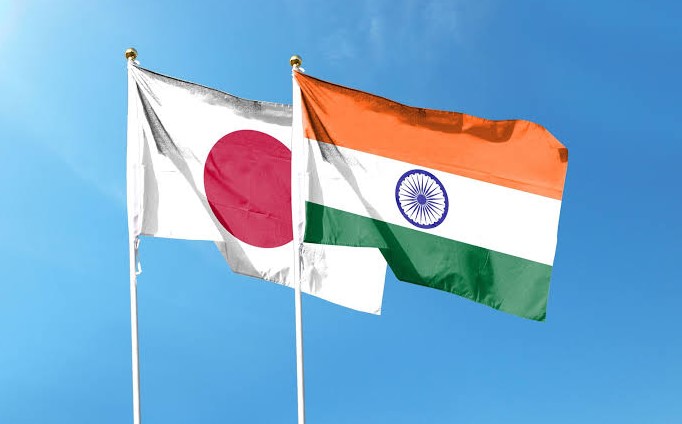
India and Japan are strengthening defence cooperation to counter China’s growing military capabilities and regional influence, expanding joint exercises, maritime security, defence technology sharing and access to military training facilities without entering into a formal military alliance.
The latest move came after the two countries agreed to allow Japan’s Self-Defence Forces to conduct live-fire exercises, including missile drills, at Indian military training grounds. The agreement was reached during the fourth India-Japan ‘2+2’ dialogue in Tokyo on November 19, where the two countries’ foreign and defence ministers signed a document outlining the understanding, according to a report by The Times of India.
The arrangement would mark the first time Japanese forces get an opportunity to conduct direct live-fire exercises at Indian military training facilities. However, the implementation process and necessary conditions have yet to be finalised.
China remains a major security concern for both countries. India’s concerns stem from the border tensions with China following the 2020 Galwan Valley clash, Beijing’s growing military infrastructure and its close defence ties with Pakistan. Japan, meanwhile, remains concerned about China’s claims over the Senkaku Islands and its military activities around Taiwan.
The two countries are also expanding maritime security cooperation in the Indian Ocean and the Strait of Malacca. On August 20, Indian Defence Minister Rajnath Singh and his Japanese counterpart Shinjiro Koizumi signed a memorandum of understanding covering maritime surveillance, information sharing, search and rescue operations, disaster response, ship repair and logistical support.
Joint military exercises are another key part of the partnership. The two countries conduct the ‘Dharma Guardian’ army exercise, the ‘JIMEX’ naval exercise and the ‘Veer Guardian’ air force exercise. They also participate in the ‘Malabar’ naval exercise alongside the United States and Australia.
Defence technology cooperation is also gaining momentum. The two countries have agreed to jointly develop Japan’s ‘UNICORN’ integrated antenna system for Indian naval warships. They are also exploring joint research on missiles and advanced military technologies.
Despite expanding cooperation, India and Japan have no mutual defence treaty requiring either country to provide military assistance if the other comes under attack. India seeks to maintain its strategic autonomy, while Japan’s military role remains subject to constitutional and legal restrictions.
Instead of forming a formal military alliance, the two countries are seeking to strengthen their defence capabilities and raise the potential costs and risks of any conflict in the Indo-Pacific region.
- MaT

Loading...
Loading...
Also read





Editor : Iqbal Sobhan Chowdhury
Published by the Editor on behalf of the Observer Ltd. from Globe Printers, 24/A, New Eskaton Road, Ramna, Dhaka.
Editorial, News and Commercial Offices : Aziz Bhaban (2nd floor), 93, Motijheel C/A, Dhaka-1000.
Phone: PABX- 41053001-06; Advertisement: 41053012; 01793317829, 01550707291, 01550707296
E-mail: [email protected], [email protected]. [email protected], [email protected], [email protected], [email protected], Online-email: [email protected]


