



| HEADLINE |

|

Ziaul killed 10 BDR men after Pilkhana mutiny: ICT
Published : Thursday, 26 November, 2026 at 1:11 PM
Observer Online Report


Collected Photo
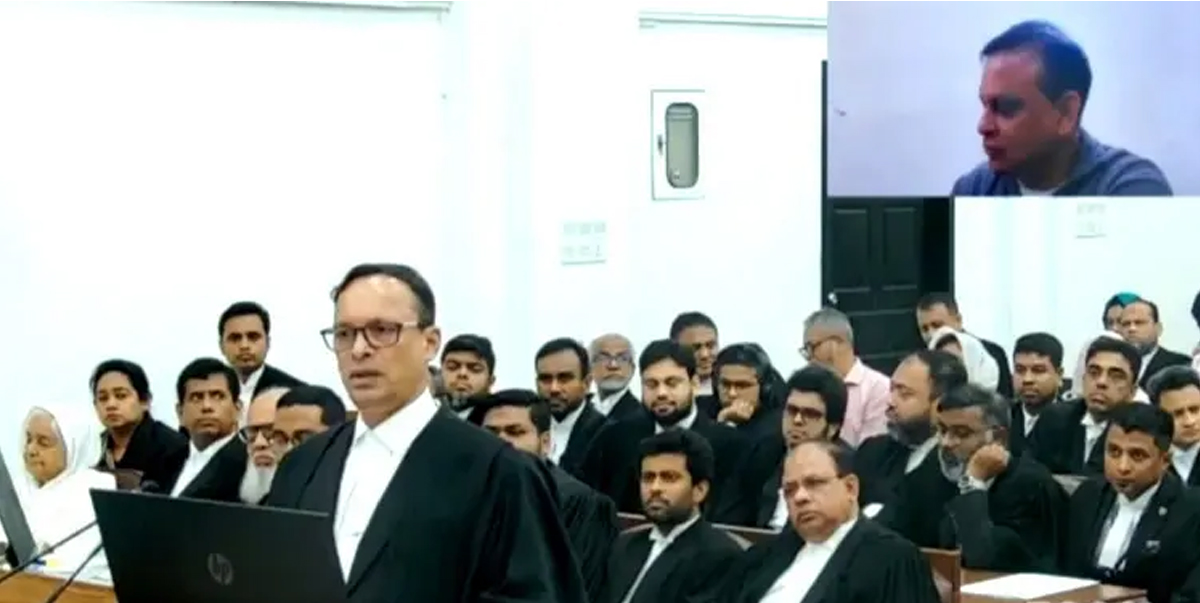
International Crimes Tribunal (ICT) Chief Prosecutor Md Aminul Islam has alleged that former military officer Ziaul Ahsan killed eight to ten Bangladesh Rifles (BDR) members under the guise of nationwide operations following the 2009 Pilkhana mutiny, and was directly involved in the enforced disappearance of BNP leader Ilias Ali.
The Chief Prosecutor presented these allegations on Thursday during the third consecutive day of closing arguments in the crimes against humanity case against Major General (retd) Ziaul Ahsan at International Crimes Tribunal-1.
Citing the testimony of Ziaul Ahsan’s personal bodyguard, army soldier Imrul Kayes, the prosecution claimed the victims were either injected with poison or shot in the head mid-river and dumped into the water tied to cement-filled sacks.
Killings under the cover of post-Pilkhana drives
The Chief Prosecutor stated that following the 2009 Pilkhana mutiny and massacre, "Operation Rebel Hunt" was launched across the country to arrest fugitive BDR members. During this operation, then-Colonel Ziaul Ahsan killed eight to ten BDR personnel, according to Imrul Kayes’s testimony.
Quoting the bodyguard, Aminul Islam explained that the victims were killed in two ways. First, by administering lethal injections. Second, victims were taken by boat from an army camp under Postogola Bridge to the middle of the river, placed on cement-filled sacks, shot in the head, and dumped into the river wrapped in ropes and cement sacks.
Staged crossfire before Iftar
Recounting another incident from Imrul’s testimony, the prosecutor said Ziaul Ahsan called his bodyguard to the North Tower area in Uttara just before Iftar during the final days of Ramadan in 2011. Imrul missed his Iftar that day and was told to walk ahead upon arrival.
A short distance from North Tower, Imrul saw four bullet-ridden bodies lying on the ground. While it was officially claimed they died in crossfire while preparing for a robbery, Imrul testified that the entire operation was staged.
Coded confession over Ilias Ali’s disappearance
The Chief Prosecutor recounted that on April 13, 2012, Ziaul Ahsan, Major Naushad, and Squadron Leader Saif travelled from RAB headquarters toward the Mohakhali flyover in a microbus. Imrul did not know who the target was, while Ziaul made several phone calls waiting for the target to arrive.
After learning the target would not show up, Imrul dropped Ziaul at his residence and went on a nine-day leave. During his leave, Imrul learned from the media that BNP leader M Ilias Ali had disappeared from the Mohakhali Bridge area.
Returning to work on April 23, Imrul noticed an unusual atmosphere at RAB headquarters. Colleagues informed him that Ziaul Ahsan had destroyed the arms in-out register and CCTV footage. Additionally, the regular 9:00 AM roll call had been shifted to 7:00 AM since April 18, with Ziaul attending personally.
During one morning roll call, Ziaul was speaking on the phone when another call came in. He told the first caller, "Hang up, Tarique Sir is calling." Speaking to then-Prime Minister's Security Adviser Tarique Ahmed Siddique, Ziaul reportedly said, "Sir, as per your instructions, I have 'golfed' Ilias Ali. If you behave like this now, how will it work? I am a commando; just post me to the jungle instead. That is better for me."
The prosecution argued that the word "golf" was used as a code word for enforced disappearance, directly implicating Ziaul Ahsan in Ilias Ali's abduction.
-SA

Loading...
Loading...
Also read







Editor : Iqbal Sobhan Chowdhury
Published by the Editor on behalf of the Observer Ltd. from Globe Printers, 24/A, New Eskaton Road, Ramna, Dhaka.
Editorial, News and Commercial Offices : Aziz Bhaban (2nd floor), 93, Motijheel C/A, Dhaka-1000.
Phone: PABX- 41053001-06; Advertisement: 41053012; 01793317829, 01550707291, 01550707296
E-mail: [email protected], [email protected]. [email protected], [email protected], [email protected], [email protected], Online-email: [email protected]


