



| HEADLINE |

|

Students account for 17pc of new HIV cases in Bangladesh
Published : Thursday, 26 November, 2026 at 5:56 PM
Aamir Al Hamza


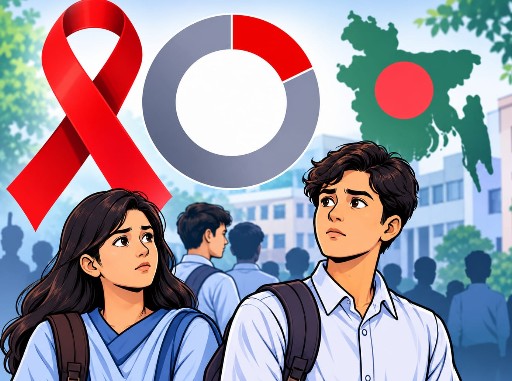
Nearly 17 per cent of newly diagnosed HIV cases in Bangladesh involved students in 2025, more than double the proportion recorded in 2021, raising concerns over young people's awareness, prevention measures and access to confidential testing.
According to the National AIDS/STD Control Department under the Directorate General of Health Services (DGHS), 321 of the 1,891 people newly diagnosed with HIV in 2025 were students, accounting for 16.97 per cent of the total.
The proportion of students among newly diagnosed patients stood at 7.13 per cent in 2021 and declined to 4.43 per cent in 2022. However, it increased sharply to 14.50 per cent in 2023 and 15.50 per cent in 2024, indicating a significant rise over the past two years.
Age-based data also highlight the vulnerability of younger people. Around 21.05 per cent of newly diagnosed patients were aged between 20 and 24, while 4.87 per cent were between 15 and 19. The largest share, 62.61 per cent, belonged to the 25–49 age group.
Significant diagnosis and treatment gaps
The overall situation points to substantial gaps in HIV detection and treatment. An estimated 17,480 people were living with HIV in Bangladesh in 2025, but only 14,313 had been officially diagnosed. Of those diagnosed, 8,579 were receiving antiretroviral therapy (ART), which helps control the virus and enables patients to lead healthier lives.
This indicates that around 3,167 people living with HIV remained undiagnosed, while 5,734 diagnosed individuals were not receiving ART.
Limited access to testing and treatment facilities remains a major challenge. HIV testing services are not equally available across the country, particularly outside major urban centres, making early detection difficult for many people.
Experts call for stronger awareness programmes
Public health experts have called for stronger HIV prevention and awareness programmes, particularly in schools, colleges and universities, to ensure that students receive accurate information about transmission, testing and treatment.
Experts say awareness campaigns should go beyond occasional programmes and become a regular part of educational and community activities. They have also emphasised confidential and youth-friendly testing services, early diagnosis, counselling and uninterrupted access to treatment.
They further recommend expanding HIV testing facilities across districts, strengthening prevention programmes and increasing domestic funding to reduce dependence on external assistance.
Better coordination among government agencies, healthcare providers and community organisations is also necessary to reach vulnerable groups and ensure that people living with HIV receive appropriate services.
Stigma remains a major barrier
Reducing stigma and discrimination is another important priority. Fear of social rejection, discrimination and breaches of confidentiality can discourage people, particularly young individuals, from seeking HIV testing and treatment.
Experts stress that awareness initiatives must address common misconceptions about the virus. HIV does not spread through handshakes, hugging, sharing food, using common toilets or ordinary social contact.
Correct and consistent condom use, avoiding the sharing of needles and syringes, and seeking timely testing after possible exposure are important preventive measures.
People diagnosed with HIV should have access to regular medical care and antiretroviral therapy. With early diagnosis and consistent treatment, people living with HIV can lead long and healthy lives.
Need for a comprehensive response
The growing proportion of students among newly diagnosed cases highlights the need for a comprehensive national response focusing on education, prevention, testing and treatment.
Regular awareness programmes in educational institutions, wider availability of confidential testing, stronger healthcare infrastructure and adequate funding are essential to addressing the challenge.
Protecting young people from HIV requires accurate information, responsible behaviour and accessible healthcare services. Reducing stigma and ensuring early diagnosis will also be crucial to preventing further transmission in Bangladesh.

Loading...
Loading...
Also read




Editor : Iqbal Sobhan Chowdhury
Published by the Editor on behalf of the Observer Ltd. from Globe Printers, 24/A, New Eskaton Road, Ramna, Dhaka.
Editorial, News and Commercial Offices : Aziz Bhaban (2nd floor), 93, Motijheel C/A, Dhaka-1000.
Phone: PABX- 41053001-06; Advertisement: 41053012; 01793317829, 01550707291, 01550707296
E-mail: [email protected], [email protected]. [email protected], [email protected], [email protected], [email protected], Online-email: [email protected]


