



| HEADLINE |

|

Tk 4,700 Per Citizen Vanish Every Year
Bangladesh's $6.8b Money Laundering Alarm
Published : Friday, 27 November, 2026 at 12:00 AM
Faruk Ahmed


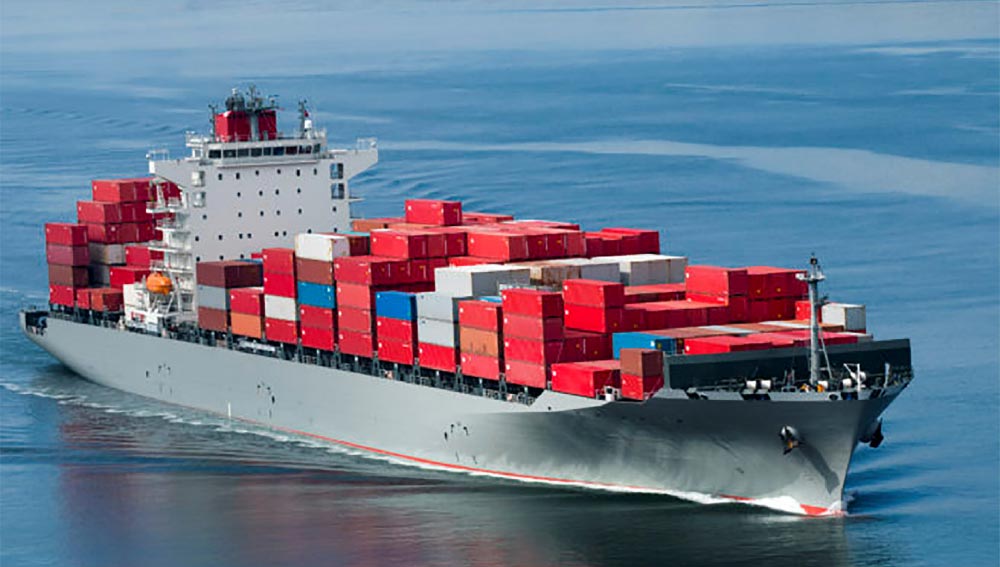 Bangladesh is losing an estimated US$6.83 billion annually through trade-related illicit financial flows-a staggering drain equivalent to nearly Tk 4,700 per citizen that threatens the country's economic security and the future of millions.
The warning, based on a 2026 estimate published recently by Washington-based Global Financial Integrity (GFI) that exposes a financial leakage that Bangladesh can no longer afford to overlook.
Between 2013 and 2022, according to the report, the country recorded US$68.3 billion in trade-related illicit financial flows, equivalent to approximately 16 per cent of its international trade value.
At an illustrative exchange rate of Tk 122.7 per dollar and a population of around 178 million, the annual outflow represents nearly Tk 83,800 crore. A family of five carries an indirect economic burden of approximately Tk 23,500 a year.
This is not a direct deduction from household income, but an indication of national wealth lost instead of being invested in employment, healthcare, education and public welfare.
Even more alarming, a new International Growth Centre (IGC) investigation published on November 19 has uncovered recurring and extraordinary discrepancies in import payments, exposing weaknesses that can facilitate capital flight.
Researchers matched approximately 5.5 million Bangladesh Bank letter of credit (LC) settlement records with customs declarations covering FY2020-21 to FY2024-25.
In a working sample of around 720,000 transactions involving China and India, they identified 103 commodity categories with over-invoicing ratios exceeding 10 per cent at some point during the five-year period.
Railway and tramway equipment imported from China recorded an over-invoicing ratio of 23,130 per cent in FY2024-25, while fertiliser imports reached 2,904 per cent in FY2021-22. Pharmaceutical imports from India recorded LC payments of US$62.7 million against customs-declared imports worth only US$29.6 million in FY2020-21.
These anomalies do not prove that every transaction involved criminal money laundering; differences in units, timing and classification can distort individual ratios. But recurring discrepancies demand immediate investigation.
How is the money siphoned off?
According to the study, an importer purchasing machinery worth US$10 million may arrange an LC for US$15 million, transferring the additional US$5 million abroad, potentially to an account controlled by the importer or an associated party. The country pays for goods it never receives.
Export under-invoicing works in reverse: an exporter sells goods for US$10 million but declares only US$6 million, keeping the remaining earnings abroad. Phantom imports and multiple invoicing offer further opportunities.
The consequences reach every household. Capital flight weakens foreign exchange reserves, puts pressure on the taka and makes imported fuel, food, fertiliser, medicines and industrial raw materials more expensive. It also undermines tax collection and deprives the government of resources for hospitals, schools, infrastructure and social protection.
As investment capital disappears, businesses struggle to expand and employment opportunities shrink. Young graduates face a tougher job market, while families lose purchasing power under rising prices. Ordinary citizens, who neither participate in nor benefit from these transfers, ultimately bear much of the economic burden.
Bangladesh Bank and the National Board of Revenue have digitally connected the Foreign Exchange Transaction Management System (FxTMS) with the ASYCUDA World customs platform to strengthen verification of banking payments against customs declarations.
Bangladesh Bank has also tightened surveillance of import-export transactions. Under measures introduced in August 2026, banks must notify the central bank at least 24 hours before opening LCs worth US$3 million or more.
The Bangladesh Financial Intelligence Unit (BFIU) has pursued stronger coordination among regulators, customs, tax authorities, law enforcement agencies and commercial banks.
But digital monitoring and inter-agency committees cannot substitute for effective enforcement, prosecution and asset recovery.
Experts say the government should immediately establish an independent Trade Transparency Unit, as recommended by the IGC, to analyse banking and customs data, identify suspicious transactions and expose repeat offenders.
“Bangladesh Bank and NBR must introduce risk-based, real-time verification of import payments against international commodity prices, shipment quantities, customs declarations and beneficial ownership records”, said a financial expert working in a financial research institution.
Artificial intelligence and automated price benchmarks should flag abnormal invoices before foreign currency leaves the country, he added.
“Investigations must remain independent of political influence, and their outcomes should be made public”, said another financial expert working in a commercial bank noting that the ACC, BFIU and law enforcement agencies must jointly investigate high-risk sectors, particularly capital machinery, fuel, fertiliser and industrial raw materials.
Experts say banks and businesses facilitating deliberate misinvoicing must face accountability, while international cooperation should be intensified to freeze, trace and recover assets held abroad.

Loading...
Loading...
Also read



Editor : Iqbal Sobhan Chowdhury
Published by the Editor on behalf of the Observer Ltd. from Globe Printers, 24/A, New Eskaton Road, Ramna, Dhaka.
Editorial, News and Commercial Offices : Aziz Bhaban (2nd floor), 93, Motijheel C/A, Dhaka-1000.
Phone: PABX- 41053001-06; Advertisement: 41053012; 01793317829, 01550707291, 01550707296
E-mail: [email protected], [email protected]. [email protected], [email protected], [email protected], [email protected], Online-email: [email protected]


