



| HEADLINE |

|

The long flight ends in hunters’ traps
Published : Friday, 27 November, 2026 at 12:00 AM
Abul Ahasan Titu from Fakirhat, Bagerhat


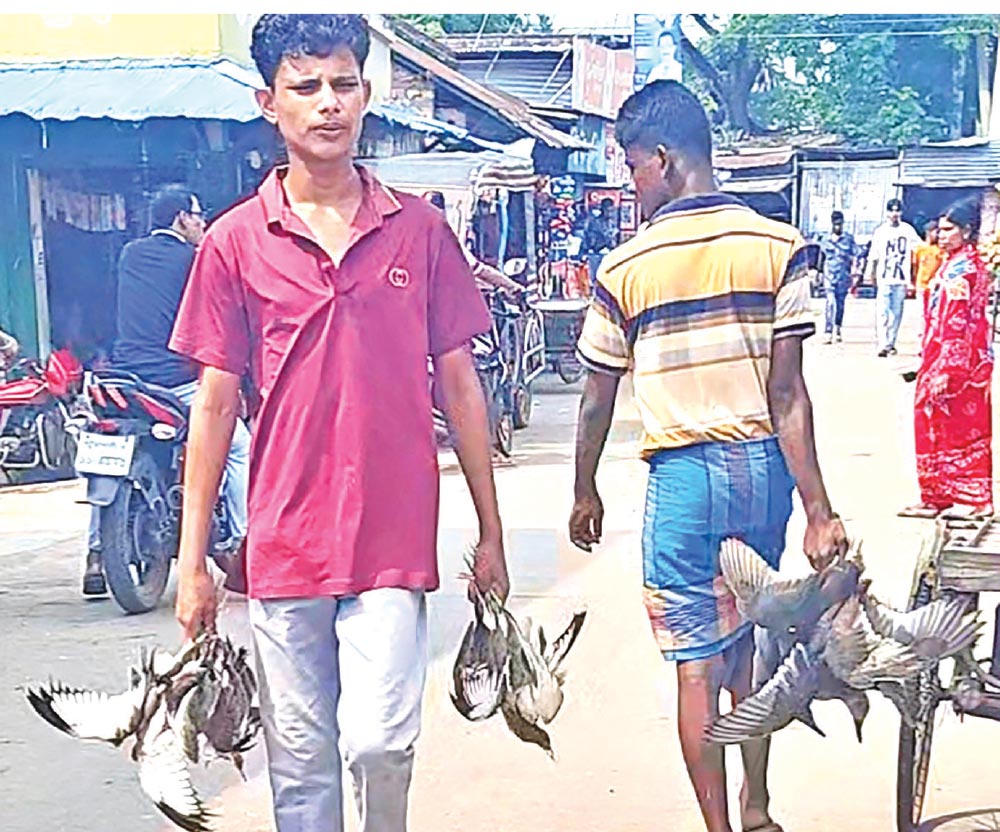 After flying thousands of kilometres from Siberia, Russia, China and Mongolia in search of food and shelter, migratory birds arrive in Bangladesh's wetlands as winter sets in. But in Bagerhat, their seasonal refuge has turned into a hunting ground, where nets, traps and recorded bird calls are being used to lure them to their deaths.
In Fakirhat, Mollahat and Chitalmari, hunters are reportedly targeting the birds in wetlands, canals and fish farms. Local residents say more than 50 groups are involved in catching and selling birds, with an estimated 2,000 to 3,000 trapped every day across the three upazilas.
An investigation found traps set in wetlands at Mayarkhali, Kendua, Bogura, Kharia, Kodla, Sonakhali, Ruierkul, Kalshira, Barashia and Sabokhali. Nets are also being spread across large fish farms to catch birds that land on the water.
The hunting often takes place at night. Hunters play recorded calls of different bird species through loudspeakers near wetlands. Drawn by the familiar sounds, birds descend onto the water, only to become entangled in nets and traps. A hunter can reportedly catch several to dozens of birds in a single day.
Migratory birds seeking winter shelter are being trapped and sold, with up to 3,000 caught daily. The photo taken on Thursday shows migratory birds are being sold openly at Falltita Bazar in Fakirhat upazila.
The captured birds are then moved through local selling networks. Sales have been reported at Faltita Bazar in Fakirhat and in Kodalia, Mollarkul, Sarsapur, Chunkhola, Chanderhat and Kamargaon. Buyers can place orders over the phone, with sellers delivering birds to agreed locations.
During an investigation at Faltita Bazar, sellers appeared reluctant to be filmed and tried to prevent video recording. One seller demanded Tk3,500 for four ducks but left after noticing the camera.
Herons, egrets, snipes, wild ducks, waterhens and other species are among the birds being hunted. According to local sources, a pair of migratory birds sells for Tk300 to Tk1,000, while local birds fetch Tk150 to Tk500.
The scale of the hunting has alarmed residents, who fear the wetlands could gradually lose their winter visitors. Some are reluctant to speak out against the hunters, fearing repercussions. They have called for regular monitoring, legal action against those involved and public awareness campaigns to protect the birds.
Fakirhat Upazila Nirbahi Officer Rokonuz Zaman said he was aware of the allegations and that the administration would identify the hunting and selling spots before conducting joint drives with the Forest Department. Those involved would face legal action, he said.
Mohammad Shahin Kabir, divisional forest officer of Bagerhat Social Forestry Division, said only three staff members were available to monitor the three upazilas, making regular inspections difficult. He said the allegations would be investigated and action taken with assistance from the administration.
For these migratory birds, the journey to Bangladesh is a search for survival, not a passage to a marketplace. Yet the wetlands that should offer them refuge have become places of capture and trade. Unless hunting is stopped and the wetlands are protected, the birds may eventually find fewer reasons to return.

Loading...
Loading...
Also read



Editor : Iqbal Sobhan Chowdhury
Published by the Editor on behalf of the Observer Ltd. from Globe Printers, 24/A, New Eskaton Road, Ramna, Dhaka.
Editorial, News and Commercial Offices : Aziz Bhaban (2nd floor), 93, Motijheel C/A, Dhaka-1000.
Phone: PABX- 41053001-06; Advertisement: 41053012; 01793317829, 01550707291, 01550707296
E-mail: [email protected], [email protected]. [email protected], [email protected], [email protected], [email protected], Online-email: [email protected]


