



| HEADLINE |

|

100-kilometre restriction at Dhaka airport
Published : Saturday, 28 November, 2026 at 11:38 AM
Observer Online Report


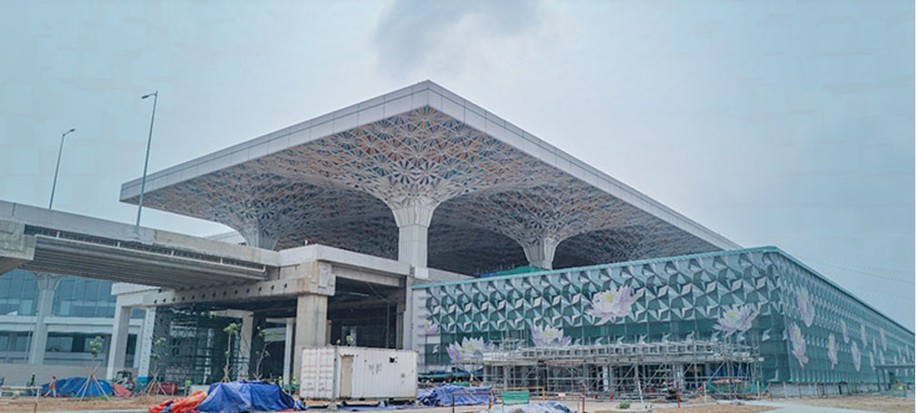
The government is set to sign a 15-year agreement with a Japanese consortium to operate and maintain the third terminal of Hazrat Shahjalal International Airport, but a key provision in the deal is already drawing attention: no other commercial airport will be allowed to begin operations within a 100-kilometre radius of the capital's main airport during the contract period.
The restriction will not apply to the construction of new airports or ongoing construction projects, or to military installations. However, it effectively limits the government's scope to launch commercial airport operations in the surrounding region for the next 15 years.
The operation and maintenance agreement is scheduled to be signed with the Japanese consortium on Monday.
If preparations proceed as planned, the third terminal will begin limited operations on December 16, Victory Day, with four flights. The government plans to gradually increase flight operations and bring the terminal into full operation within a maximum of 14 months.
The terminal will be operated under a public-private partnership (PPP) arrangement, with the Civil Aviation Authority of Bangladesh (CAAB) representing the government and a Japanese consortium serving as the private partner.
This is just 0.45 percent of the more than Tk 22,213 crore spent on constructing the third terminal.
The revenue-sharing arrangement will follow several stages.
The government will receive no revenue during the first eight months. For the following six months, Bangladesh will receive 13.5 percent of the revenue.
Once full operations begin, the government will receive $2.10 for every international passenger and 27 percent of cargo revenue.
The operator, meanwhile, will earn from boarding bridges, shops, lounges, multi-storey car parking facilities and advertising.
Another major concern is the increase in the embarkation fee for international departing passengers using the new terminal.
Passengers will have to pay $12.50, or around Tk 1,560, as an embarkation fee. At the existing first and second terminals, the fee is Tk 500, meaning the charge at the new terminal will be nearly three times higher.
Mofizur Rahman, managing director of private airline Novoair, told Kaler Kantho that aviation-related charges in Bangladesh were already comparatively high.
“If the embarkation fee increases two to three times, the additional cost will ultimately be passed on to passengers and increase their travel expenses,” he said.
He also expressed concern over the terms accepted during negotiations, suggesting that Bangladesh had a weak bargaining position.
Imran Asif, chief executive officer of Air Astra, said stakeholders should be consulted before introducing or increasing regulatory charges that raise travel costs, in line with International Civil Aviation Organization (ICAO) guidelines.
Airlines and passengers are both stakeholders, he said, adding that they were unaware of any consultation before the proposed fee increase.
Biman Bangladesh Airlines will handle a maximum of 50 percent of international flight ground-handling operations at the terminal. The Japanese consortium will appoint a second operator to manage the remaining share.
Four international companies have been shortlisted for the role: Turkey's Celebi Aviation, the UK's Menzies Aviation, Switzerland's Swissport and the UAE-based dnata.
Biman currently earns around Tk 1,500 crore annually from ground-handling services at Hazrat Shahjalal International Airport.
Transferring a substantial portion of the new terminal's ground-handling business to another operator could therefore affect the national flag carrier's revenue.
Aviation analyst ATM Nazrul Islam said depriving Biman of a significant share of the third terminal's ground-handling business would mean a major loss of commercial opportunities for the state-owned airline.
In the 2025-26 fiscal year, CAAB paid Tk 1,150.38 crore towards loan repayment. Its total expenditure during the fiscal year stood at Tk 3,242.76 crore, up 26.5 percent from the previous year.
In contrast, its revenue increased by only 2.4 percent. CAAB's revenue in the previous fiscal year was Tk 3,990.74 crore.
Civil Aviation and Tourism Minister M Rashiduzzaman Millat said loan instalments were being paid from revenue generated by the existing terminals and other operations.
Around Tk 1,100 crore has already been paid, while another Tk 900 crore is scheduled to be paid in December, he said.
Former CAAB chairman Air Vice Marshal (retd) M Mofidur Rahman said the authority had failed to generate the additional revenue expected from the third terminal because it had remained out of commercial operation.
A Biman Bangladesh Airlines flight is expected to mark the beginning of the inaugural operations.
The initial plan includes two departing flights bound for Malaysia and Dubai and two arriving flights from Thailand and Singapore.
According to CAAB sources, the new terminal will increase Hazrat Shahjalal International Airport's annual passenger-handling capacity from around 80 lakh to nearly two crore. Its cargo-handling capacity will also increase.
However, completing the necessary preparations and trial operations before the full launch remains a major challenge.
Construction of the third terminal began on December 28, 2019. Although it was formally inaugurated on October 7, 2023, commercial operations have yet to begin.
Aviation analyst Wing Commander (retd) Nazrul Islam said the initiative to finally operationalise the terminal was positive after years of delays.
However, he raised concerns over the increased embarkation fee and several conditions in the operating agreement. The terminal's actual operating costs also remain unclear, he said.
He added that although the new facility could attract greater interest from foreign airlines, slot allocation would depend on overall operational capacity, including boarding bridges, aircraft parking space and ground-handling services.
Maintaining the market share of domestic airlines would also be important, he said.
The third terminal is expected to significantly expand passenger services and the airport's capacity. But the financial implications of the 15-year operating agreement, the 100-kilometre restriction on competing commercial airports, higher passenger charges and mounting loan repayments will become clearer only after the facility begins full-scale operations and starts generating revenue.
The restriction will not apply to the construction of new airports or ongoing construction projects, or to military installations. However, it effectively limits the government's scope to launch commercial airport operations in the surrounding region for the next 15 years.
The operation and maintenance agreement is scheduled to be signed with the Japanese consortium on Monday.
If preparations proceed as planned, the third terminal will begin limited operations on December 16, Victory Day, with four flights. The government plans to gradually increase flight operations and bring the terminal into full operation within a maximum of 14 months.
The terminal will be operated under a public-private partnership (PPP) arrangement, with the Civil Aviation Authority of Bangladesh (CAAB) representing the government and a Japanese consortium serving as the private partner.
The consortium comprises Sumitomo Corporation, Japan Airport Terminal Co Ltd, Nippon Koei and Narita International Airport Corporation.
Under the agreement, the Japanese operator will pay a one-time concession fee of $8.1 million, equivalent to around Tk 100 crore.
This is just 0.45 percent of the more than Tk 22,213 crore spent on constructing the third terminal.
The revenue-sharing arrangement will follow several stages.
The government will receive no revenue during the first eight months. For the following six months, Bangladesh will receive 13.5 percent of the revenue.
Once full operations begin, the government will receive $2.10 for every international passenger and 27 percent of cargo revenue.
The operator, meanwhile, will earn from boarding bridges, shops, lounges, multi-storey car parking facilities and advertising.
Another major concern is the increase in the embarkation fee for international departing passengers using the new terminal.
Passengers will have to pay $12.50, or around Tk 1,560, as an embarkation fee. At the existing first and second terminals, the fee is Tk 500, meaning the charge at the new terminal will be nearly three times higher.
Mofizur Rahman, managing director of private airline Novoair, told Kaler Kantho that aviation-related charges in Bangladesh were already comparatively high.
“If the embarkation fee increases two to three times, the additional cost will ultimately be passed on to passengers and increase their travel expenses,” he said.
He also expressed concern over the terms accepted during negotiations, suggesting that Bangladesh had a weak bargaining position.
Imran Asif, chief executive officer of Air Astra, said stakeholders should be consulted before introducing or increasing regulatory charges that raise travel costs, in line with International Civil Aviation Organization (ICAO) guidelines.
Airlines and passengers are both stakeholders, he said, adding that they were unaware of any consultation before the proposed fee increase.
He warned that a threefold increase would particularly affect migrant workers, adding that passengers were being made to bear the additional costs associated with the new terminal.
The allocation of ground-handling services at the third terminal is another contentious issue.
Biman Bangladesh Airlines will handle a maximum of 50 percent of international flight ground-handling operations at the terminal. The Japanese consortium will appoint a second operator to manage the remaining share.
Four international companies have been shortlisted for the role: Turkey's Celebi Aviation, the UK's Menzies Aviation, Switzerland's Swissport and the UAE-based dnata.
Biman currently earns around Tk 1,500 crore annually from ground-handling services at Hazrat Shahjalal International Airport.
Transferring a substantial portion of the new terminal's ground-handling business to another operator could therefore affect the national flag carrier's revenue.
Aviation analyst ATM Nazrul Islam said depriving Biman of a significant share of the third terminal's ground-handling business would mean a major loss of commercial opportunities for the state-owned airline.
However, he also stressed that Biman needed to improve the quality of its services.
Repayment of foreign loans taken to construct the third terminal began in June this year.
In the 2025-26 fiscal year, CAAB paid Tk 1,150.38 crore towards loan repayment. Its total expenditure during the fiscal year stood at Tk 3,242.76 crore, up 26.5 percent from the previous year.
In contrast, its revenue increased by only 2.4 percent. CAAB's revenue in the previous fiscal year was Tk 3,990.74 crore.
Civil Aviation and Tourism Minister M Rashiduzzaman Millat said loan instalments were being paid from revenue generated by the existing terminals and other operations.
Around Tk 1,100 crore has already been paid, while another Tk 900 crore is scheduled to be paid in December, he said.
Former CAAB chairman Air Vice Marshal (retd) M Mofidur Rahman said the authority had failed to generate the additional revenue expected from the third terminal because it had remained out of commercial operation.
Before its launch, annual revenue was projected to exceed Tk 5,000 crore once the terminal became operational, he said.
Preparations are underway to launch limited operations at the third terminal on December 16 with four flights, two departures and two arrivals.
A Biman Bangladesh Airlines flight is expected to mark the beginning of the inaugural operations.
The initial plan includes two departing flights bound for Malaysia and Dubai and two arriving flights from Thailand and Singapore.
According to CAAB sources, the new terminal will increase Hazrat Shahjalal International Airport's annual passenger-handling capacity from around 80 lakh to nearly two crore. Its cargo-handling capacity will also increase.
However, completing the necessary preparations and trial operations before the full launch remains a major challenge.
Construction of the third terminal began on December 28, 2019. Although it was formally inaugurated on October 7, 2023, commercial operations have yet to begin.
Aviation analyst Wing Commander (retd) Nazrul Islam said the initiative to finally operationalise the terminal was positive after years of delays.
However, he raised concerns over the increased embarkation fee and several conditions in the operating agreement. The terminal's actual operating costs also remain unclear, he said.
He added that although the new facility could attract greater interest from foreign airlines, slot allocation would depend on overall operational capacity, including boarding bridges, aircraft parking space and ground-handling services.
Maintaining the market share of domestic airlines would also be important, he said.
The third terminal is expected to significantly expand passenger services and the airport's capacity. But the financial implications of the 15-year operating agreement, the 100-kilometre restriction on competing commercial airports, higher passenger charges and mounting loan repayments will become clearer only after the facility begins full-scale operations and starts generating revenue.

Loading...
Loading...
Also read






Editor : Iqbal Sobhan Chowdhury
Published by the Editor on behalf of the Observer Ltd. from Globe Printers, 24/A, New Eskaton Road, Ramna, Dhaka.
Editorial, News and Commercial Offices : Aziz Bhaban (2nd floor), 93, Motijheel C/A, Dhaka-1000.
Phone: PABX- 41053001-06; Advertisement: 41053012; 01793317829, 01550707291, 01550707296
E-mail: [email protected], [email protected]. [email protected], [email protected], [email protected], [email protected], Online-email: [email protected]


