





| HEADLINE |

|
Md Imdadul Haque Sohag
 In South Asia, rivers are no longer mere watercourses; they are now the arteries of politics, economics, and diplomacy. The Ganges, Brahmaputra, Meghna, and Indus systems carry not only water but also agriculture, power generation, food security, transport, and trade.
Md Imdadul Haque Sohag
 The global energy order is shifting. Power is no longer determined solely by who controls oil or gas fields, but by who can govern carbon. As countries expand carbon pricing frameworks, the right to emit greenhouse gases has become a
Md Imdadul Haque Sohag
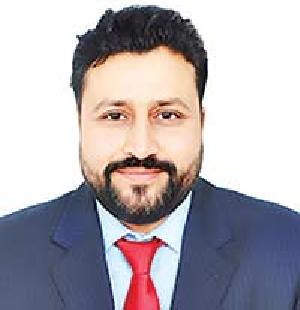 Bangladesh's real economy is held together not by theoretical frameworks but by millions of entrepreneurs who operate deep within the national supply chain. They move fuel, construction materials, agro-inputs, industrial raw materials, FMCG distributions and logistics across all 64 districts.
Md Imdadul Haque Sohag
 Bangladesh stands today at a pivotal crossroads in its national development trajectory. Over the past two decades, the country has made impressive gains in macroeconomic growth, infrastructural expansion, and digital innovation. The success stories are undeniable-rising per capita income, improved
Md Imdadul Haque Sohag
 In today's polarized world, neutrality is not passive silence - it is active strategy. As global rivalries sharpen across the Indo-Pacific, Bangladesh stands at a rare crossroads: trusted by all, beholden to none. Against a backdrop where maritime connectivity, energy
Md Imdadul Haque Sohag
 As nations rapidly organize themselves into blocs defined by rival superpowers, Dhaka maintains its position, effectively challenging the double standards of major global powers. The strategic importance of the Bay of Bengal places the nation squarely at the center of
Md Imdadul Haque Sohag
 Bangladesh still pins hopes on the promises for Teesta water and a fair share of the Ganges, on which an Indo-Bangladesh water sharing agreement is set to expire in December, 2026.What is worrying is that the lifeblood of our countless
Md Imdadul Haque Sohag
 Connectivity is more than just about reducing distance; it's about creating new opportunities, finding renewed strength. It is the real engine of our national economy. Iconic infrastructure like the Bangabandhu Bridge, the Padma Bridge, or the historical Hardinge Bridge have
Md Imdadul Haque Sohag
 Bangladesh stands at the confluence of two insecurities: the climate crisis and maritime risks in the Bay of Bengal. One is born of a warming planet; the other of porous seas where piracy, illegal fishing, trafficking and disasters collide. For
Md Imdadul Haque Sohag
 Bangladesh is no longer a marginal, aid-dependent country. It has emerged as one of the world's fastest-growing economies and a an actor in the Indo-Pacific region. With its location on the Bay of Bengal, Dhaka matters to Washington not just
LATEST NEWS
- Khaleda Zia’s passing leaves irreplaceable void, her legacy will live on: Modi
- Contract expires for Shamit Shome: What’s next for Bangladesh midfielder?
- Tasnim Jara declares assets worth Tk 19 lakh, annual income Tk 7 lakh
- Forex reserves reach 3-year high as December remittances top $3b
- Nationwide absentee funeral prayers held for Khaleda Zia
- Nation waves final goodbye to uncompromising leader Khaleda Zia
- Conveyed Modi’s condolences to Tarique Rahman myself: Jaishankar

Editor : Iqbal Sobhan Chowdhury
Published by the Editor on behalf of the Observer Ltd. from Globe Printers, 24/A, New Eskaton Road, Ramna, Dhaka.
Editorial, News and Commercial Offices : Aziz Bhaban (2nd floor), 93, Motijheel C/A, Dhaka-1000.
Phone: PABX- 41053001-06; Advertisement: 41053012; 01793317829, 01550707291, E-mail: [email protected], [email protected] Online: email: [email protected] 41053014; 01550707297 Advertisement: 01550707296
Published by the Editor on behalf of the Observer Ltd. from Globe Printers, 24/A, New Eskaton Road, Ramna, Dhaka.
Editorial, News and Commercial Offices : Aziz Bhaban (2nd floor), 93, Motijheel C/A, Dhaka-1000.
Phone: PABX- 41053001-06; Advertisement: 41053012; 01793317829, 01550707291, E-mail: [email protected], [email protected] Online: email: [email protected] 41053014; 01550707297 Advertisement: 01550707296


