



| HEADLINE |

|
Homage to a thought-provoking scholar
Abu Zafor\'s 19th death anniversary
Published : Saturday, 24 February, 2018 at 12:00 AM
Takir Hossain


Abu Zafor's 19th death anniversary
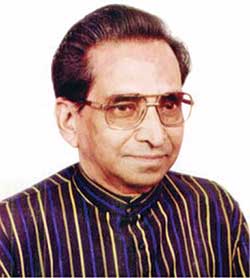 Yesterday marked the 19th death anniversary of Abu Zafor. Zafor was a noted educationist, essayist and columnist of our country. His meticulous writings enriched the cultural and literary movement in the '60s and '70s of the last century
During the period, the nation crossed many social and political obstacles and traversed a number of turmoil; our creative faculties progressed with novel dreams, ideas and premises. We have gone on to face secular democracy which quickly got confused with post-war traumas, corruption, ideological differences that often go with war ravaged countries. Intellectuals and promoters of creativities were expecting a free, liberal, non-communal and progressive atmosphere for their innovative ventures. But the aforementioned situations plummeted almost all the high hopes, bringing about a reverse to dictatorial rule. The voice of the free was subdued, liberal thoughts were suffocating in the midst of sporadic but widespread rise of terror unleashed both by the state and by the apolitical outlaws. During that period the country went through many ups and downs in all aspects. As an intense onlooker, Abu Zafor intimately scrutinises the transforming socio-political and economic conditions of the country.
The writer always fought against communalism and anti-Liberation War forces during his lifetime. His writings carry messages against fundamentalism and religious bigotry and narrate the writings of the oppressed people in our society. Bengali nationalism and individuality are also noticeable subjects in his essays.
Zafor was a politically and socially conscious author. He tried to break the chain of social and political discrimination through his writings. He was actively involved in national movements; in particular his immense contribution to the Liberation War will be remembered with utmost reverence.
Zafor was born in Murshidabad district of West Bengal in 1937. After completing his MA in 1960, he joined B.L. College [Khulna] as a lecturer. Subsequently he moved to Jagannath University [Dhaka] and worked there for over a decade. After retirement, he served at several important posts in the Education Ministry. His repertoire may not have been voluminous, but it's considered a touchstone where the standard of language and themes are concerned. Some of his noteworthy publications are "Anwishta Jiban" (A collection of essays), "Shahitye Samaj Bhabna," "Hasan Azizul Haque-er Golpey Samaj Bastobota" and "Rabindranath-er Rajnoitik Chintadhara."
Zafor authored a significant number of research papers published in national and international journals. He also contributed regularly to a number of newspapers in Bangladesh. He also wrote regularly in monthly literature magazines Muktodhara and Desh. He was an outstanding amateur portrait artist also.
Noted painter Murtaja Baseer recalled Zafor: "I first met him in 1961 in Dhaka. He was very close to poet Shamsur Rahman. Rahman introduced me to him. Zafor was very congenial and a great conversationalist. During the '60s and '70s, Ahmed was very close to noted painters, poets and journalists of the country.
Sculptor cum painter Syed Abdullah Khalid once said to the writer that he maintained a close relationship with Professor Abu Zafor. The latter occasionally visited the "Aparajeyo Bangla" when this sculpture was being constructed.
Veteran poet Mahadev Saha said, "Abu Zafor, highly educated and cultured, was a progressive and liberal person. His incisive and thought-provoking writing has enlightened our literary world."
Zafor was known for speaking his mind. His opinion always favoured the cause of the masses, in particular the marginalised.
It's true that research-oriented works find very limited exposure in our literary scene; this is more so evident at book fairs like the ongoing Ekushey Boi Mela. But one expects this tendency to change. Innovative, analytical literature, like Abu Zafor's, should be available to more readers.
Yesterday marked the 19th death anniversary of Abu Zafor. Zafor was a noted educationist, essayist and columnist of our country. His meticulous writings enriched the cultural and literary movement in the '60s and '70s of the last century During the period, the nation crossed many social and political obstacles and traversed a number of turmoil; our creative faculties progressed with novel dreams, ideas and premises. We have gone on to face secular democracy which quickly got confused with post-war traumas, corruption, ideological differences that often go with war ravaged countries. Intellectuals and promoters of creativities were expecting a free, liberal, non-communal and progressive atmosphere for their innovative ventures. But the aforementioned situations plummeted almost all the high hopes, bringing about a reverse to dictatorial rule. The voice of the free was subdued, liberal thoughts were suffocating in the midst of sporadic but widespread rise of terror unleashed both by the state and by the apolitical outlaws. During that period the country went through many ups and downs in all aspects. As an intense onlooker, Abu Zafor intimately scrutinises the transforming socio-political and economic conditions of the country.
The writer always fought against communalism and anti-Liberation War forces during his lifetime. His writings carry messages against fundamentalism and religious bigotry and narrate the writings of the oppressed people in our society. Bengali nationalism and individuality are also noticeable subjects in his essays.
Zafor was a politically and socially conscious author. He tried to break the chain of social and political discrimination through his writings. He was actively involved in national movements; in particular his immense contribution to the Liberation War will be remembered with utmost reverence.
Zafor was born in Murshidabad district of West Bengal in 1937. After completing his MA in 1960, he joined B.L. College [Khulna] as a lecturer. Subsequently he moved to Jagannath University [Dhaka] and worked there for over a decade. After retirement, he served at several important posts in the Education Ministry. His repertoire may not have been voluminous, but it's considered a touchstone where the standard of language and themes are concerned. Some of his noteworthy publications are "Anwishta Jiban" (A collection of essays), "Shahitye Samaj Bhabna," "Hasan Azizul Haque-er Golpey Samaj Bastobota" and "Rabindranath-er Rajnoitik Chintadhara."
Zafor authored a significant number of research papers published in national and international journals. He also contributed regularly to a number of newspapers in Bangladesh. He also wrote regularly in monthly literature magazines Muktodhara and Desh. He was an outstanding amateur portrait artist also.
Noted painter Murtaja Baseer recalled Zafor: "I first met him in 1961 in Dhaka. He was very close to poet Shamsur Rahman. Rahman introduced me to him. Zafor was very congenial and a great conversationalist. During the '60s and '70s, Ahmed was very close to noted painters, poets and journalists of the country.
Sculptor cum painter Syed Abdullah Khalid once said to the writer that he maintained a close relationship with Professor Abu Zafor. The latter occasionally visited the "Aparajeyo Bangla" when this sculpture was being constructed.
Veteran poet Mahadev Saha said, "Abu Zafor, highly educated and cultured, was a progressive and liberal person. His incisive and thought-provoking writing has enlightened our literary world."
Zafor was known for speaking his mind. His opinion always favoured the cause of the masses, in particular the marginalised.
It's true that research-oriented works find very limited exposure in our literary scene; this is more so evident at book fairs like the ongoing Ekushey Boi Mela. But one expects this tendency to change. Innovative, analytical literature, like Abu Zafor's, should be available to more readers.
Loading...
Loading...
Also read



Editor : Iqbal Sobhan Chowdhury
Published by the Editor on behalf of the Observer Ltd. from Globe Printers, 24/A, New Eskaton Road, Ramna, Dhaka.
Editorial, News and Commercial Offices : Aziz Bhaban (2nd floor), 93, Motijheel C/A, Dhaka-1000.
Phone: PABX- 41053001-06; Advertisement: 41053012; 01793317829, 01550707291, E-mail: [email protected], [email protected] Online: email: [email protected] 41053014; 01550707297 Advertisement: 01550707296
Published by the Editor on behalf of the Observer Ltd. from Globe Printers, 24/A, New Eskaton Road, Ramna, Dhaka.
Editorial, News and Commercial Offices : Aziz Bhaban (2nd floor), 93, Motijheel C/A, Dhaka-1000.
Phone: PABX- 41053001-06; Advertisement: 41053012; 01793317829, 01550707291, E-mail: [email protected], [email protected] Online: email: [email protected] 41053014; 01550707297 Advertisement: 01550707296


