



| HEADLINE |

|
Law Talk
We need change in the attitude
Published : Thursday, 5 July, 2018 at 12:00 AM


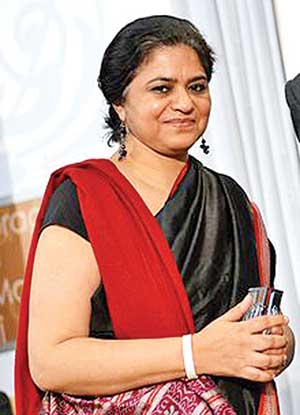
Barrister Sara Hossain
Raihan Rahman Rafid from the Daily Observer talked to Sara Hossain on 4 July 2018.
Daily Observer: You played a key role in drafting the Domestic Violence (Prevention and Protection) Act, 2010 which is Bangladesh's first comprehensive legislation on violence against women. How would you contemplate the effectiveness of the law in upholding women's rights?
Sara Hossain: I wouldn't say that it is the first comprehensive legislation on violence; we have earlier legislation such as Nari o Sishu Nirjaton Daman Ain which deals with other forms of violence like rape, trafficking or acid attacks. But the Domestic Violence Act is important since it is the first law that deals with the daily reality of how domestic violence occurs. So it is just not about extreme forms of violence but every aspect of violence that a person faces in the family.
The act is important because it relates to women in the family but also relates to violence against children in the family both boys and girls. As I mentioned, it recognized a whole range of violence that occurs in this context. It defined domestic violence as not only physical violence but also included psychological, financial, and very importantly sexual violence.
The act is also important because it gave a range of different kinds of remedies or protections. It also gave responsibilities to not just the government agencies but also recognized the role of rights organizations, women's organizations, legal aid organizations.
Unfortunately, the law has been less effective than we hoped. It is indeed giving protection around the country but the law requires other necessary supports in place, for women and children to be able to use it. For example, it requires emergency shelters where someone can go to when they are facing violence. We have some shelters run by government agencies and NGOs. But they are not nearly enough for 160 million people.
So if someone leaves the house due to domestic violence, generally there is no place to go unless another family member renders support. We still have a very problematic attitude in Bangladesh that the role of a woman is always inside the marriage and you cannot question people who are older than you even if they are abusive. We also have the attitude to remain quiet and silent if anything happens inside the family. Once we can break that silence and people really understand that violence against anyone, particularly your family members, is a crime and you would be held accountable for that, the situation would definitely improve. So we need to change the attitude first of all.
DO: Do you think that in our country the importance of rights of the third gender people is highly overlooked and neglected? What solutions can be devised to confirm a healthy standard of living for them?
SR: Yes. I think it is very important that the government of the highest level from the cabinet has recognized the Hijra community and this recognition means that it is possible now to advocate for legal recognition of the community and to advocate for their protection in different spheres in terms of health, access to employment, safeguard violence. Much needs to be done to make these possible. One example is that after the government announced that there would be jobs in public or civil services for the Hijra community, unfortunately, many people were subjected to a medical test which was an invasive and degrading test. Many didn't even want to come forward any more for that reason. So, although there has been a progressive decision, a lot needs to be done very concretely to understand what steps need to be taken by different ministries and agencies. I think the best way to identify those steps would be to speak with people from the Hijra community directly to understand them.
There are also issues not just about the Hijra community but regarding people of different sexual orientations. The first step that needs to be taken is for the government to recognize that we have people in Bangladesh from all different sexual identities. I think that recognition is absolutely crucial. Unfortunately, we are not in that position where that is being done and we need to keep on fighting for that.
DO: Present quota system in Bangladesh civil bureaucracy has 10% reservation for women. In the context of the ongoing movement, do you think we have already reached a favourable competitive environment for women where any reservation or positive discrimination will not be required to ascertain their active participation?
SR: The whole issue about quota is a live issue in Bangladesh at this moment. I think quotas are a really important instrument for ensuring equality in any society and I think we do need quotas.
But which quotas we need for which people and to what extent must be discussed.
The fact that we have a committee that is now been established by the government to look into the issue regarding quotas, is a welcome step. I hope that committee would be very transparent and very open in consulting with everybody relevant. There's a great deal of experience in the world at large about how you establish quotas that are fair and that increase fairness instead of unfairness. We need to look at those examples.
At the same time I think it is also important to say that the discussion on quota should not be shut down with violence, it should be taken through rational discussion and not by violence against people who are raising demonstration for a change.
DO: Does our legal system exempt marital rape from any kind of punishment? Do you think that it is time we recognized marital rape as an offence?
SR: The Penal Code does recognize some kind of marital rape. It recognizes marital rape if a wife is below 16 years old. The Nari O Shishu Nirjatan Daman Ain also suggests that. So the situation is a bit odd, because due to Child Marriage Restraint Act, any marriage below that age is not legal. But if such marriage occurs for any reason, then the wife could claim that any sexual act with her without her consent even by her married husband is illegal. Therefore, the position of the law is contradictory here which needs to be clarified urgently.
And certainly, yes, we do need to recognize marital rape as an offence simply because of the reality what marital rape means. It means that somebody is having a sexual relation with someone who happens to be his wife without her permission or consent.
A common understanding is that when someone marries the husband is given permission to have physical relation anytime under any condition. But I think for many women this is not how they actually feel. Interestingly, a few years back it was found in a government survey that majority of the surveyed women shared that they had actually faced physical relationship from their husband without their consent.
Consent in physical relation is an understanding which is commonly shared but not reflected by the law. It is important that the same is reflected as well.
DO: The ban on 'Two Finger Test' is a successful result of BLAST's efforts combined with other organizations. What actions do you think should be taken to implement the judgment by the Court?
SR: I think there are a number of steps that can be taken. Firstly, a copy of the judgment can be sent to different hospitals and health institutions through the health ministry. Secondly, I think the ministry of women and children affairs which has a lead role in terms of addressing violence against women can spearhead the efforts to try and communicate this judgment nationally to the relevant agencies and hospitals. That would have the most impact. They could also provide the information to all the victim support centers and police stations to disseminate the information through media.
The more people know about what the judgment involves, the more likely it is to be effective.
DO: Thank you for your time.
SR: You are welcome.
Loading...
Loading...



Editor : Iqbal Sobhan Chowdhury
Published by the Editor on behalf of the Observer Ltd. from Globe Printers, 24/A, New Eskaton Road, Ramna, Dhaka.
Editorial, News and Commercial Offices : Aziz Bhaban (2nd floor), 93, Motijheel C/A, Dhaka-1000.
Phone: PABX- 41053001-06; Advertisement: 41053012; 01793317829, 01550707291, E-mail: [email protected], [email protected] Online: email: [email protected] 41053014; 01550707297 Advertisement: 01550707296
Published by the Editor on behalf of the Observer Ltd. from Globe Printers, 24/A, New Eskaton Road, Ramna, Dhaka.
Editorial, News and Commercial Offices : Aziz Bhaban (2nd floor), 93, Motijheel C/A, Dhaka-1000.
Phone: PABX- 41053001-06; Advertisement: 41053012; 01793317829, 01550707291, E-mail: [email protected], [email protected] Online: email: [email protected] 41053014; 01550707297 Advertisement: 01550707296


