



| HEADLINE |

|
Academic success: Reading difficulties
Published : Monday, 18 January, 2021 at 12:00 AM
Vivian Huizenga


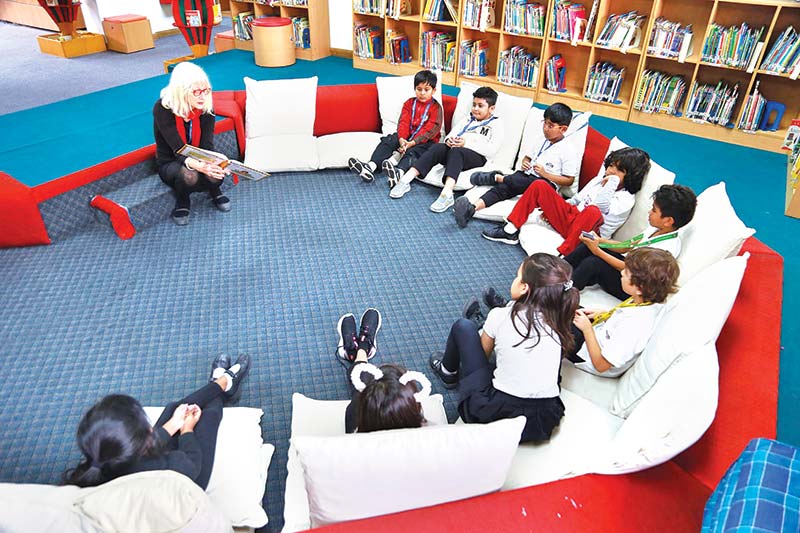 Reading is essential to academic success. We teach and encourage reading throughout school. The preschool children begin to learn letters and the sounds letter make. This is the decoding and fluency phase. By Grade 2 the focus changes to understanding what is being read. But not all children develop in the same way. For some, reading is difficult even in university. Why?
 There is a considerable amount of research in the area of understanding how reading works compared to math, which is just beginning to be understood. Up until 25 years ago, there was still a lot of debate as to just how reading works. Now we have some pretty definite proven understanding of reading and good remedial techniques.
Reading and intelligence: Very intelligent children and adults can have significant reading problems. We are talking about decoding and reading with ease and speed. This is a specific part of reading called decoding. Comprehension and understanding of what is read is of course connected to intelligence but this is another part of reading.
To simplify, there are three specific areas of the brain that work together to read (decode) smoothly. In the front, there is 1) a decoder (matches sounds and sound patterns to letters, phonics), 2) a visual dictionary (remembers what words look like, sight words) and 3) a fluency centre (the ability to put that all together quickly, fluency). Most children learn to read words no matter who their teacher is or which program is used as long as children are exposed to print copy.
Worldwide, 10 per cent of children in good quality schools have reading difficulties (about 1 out of every 10). These children have a specific weakness in one, two, or all three of these brain areas. The difficulties can be mild to severe. This problem is genetic, is inherited, and is present in the brain from birth.
Reading begins to emerge by age five, earlier for some, really blooms by age 6 and then flies by age seven. It is normal for 6-year-olds to range from knowing a few letters to reading well already. Development is very uneven at this stage. Some children have developmental lags and then they catch up on their own. By Grade 2 most children can read words well. The late bloomers have some glitch in their reading system and they cannot automatically match the sounds with the letters. They can look at the same letter and not remember the sound. They have trouble with new words and cannot read a word they just had help with! This problem affects spelling too. It is very frustrating for the child and parents!
Dyslexia: Dyslexia is the term used for reading weaknesses and disabilities. Older students and adults with reading difficulties tend to read slowly, avoid reading, find reading tiring, and spell poorly yet have great ideas and can express themselves well orally.
This problem used to be called 'reading blindness'. These children are humiliated and tired from trying so hard to do what for others comes so naturally. It is not fair. They are very smart in school, can answer all the questions orally but keep making silly mistakes in spelling and reading. As they grow older they find ways to hide the problem and avoid having to read out loud in public. Many of these children become fantastic lawyers and scientists but they have learned to ask mothers to read aloud for them and secretaries to read, spell, and edit for them.
Supporting Dyslexics in school: In good schools, students are screened three times a year in the early years to monitor reading development closely. Any child with weaknesses is immediately placed in a remedial reading program that focuses on all three brain areas to strengthen any weak wiring in the reading system. If caught before age eight, most weaknesses can be resolved with 50 to 150 hours of high-quality intensive remediation depending on severity. For older students, it takes longer. Typically, psycho-educational testing is needed to confirm and diagnose Dyslexia by a qualified specialist.
In school, learning support personnel and the teachers work closely to ensure the student's true potential is realized despite reading difficulties. Reduced reading loads, audio books, shortened spelling tests, and attention to confidence is essential for those who struggle. Electronic aids and word processors are also helpful in upper primary and secondary. Software such as Read & Write, WYNN, or any MAC will read text aloud, scribe, and edit.
A school does not often have the time or expertise to remediate a reading disability fully. The amount of hours and intensity required is just not available in most schools. Some parents wish to add high-quality remediation to speed up the process. Programs such as Lindamood Bell or Wilson Reading specialists are available in English-speaking countries to supplement reading development intensively, however they are costly.
University accommodations: A formal diagnosis is often useful for later years when accommodations such as additional time, large print, or oral testing are allowed in secondary and university. These accommodations are also offered for law or medical school entrance exams, such as SAT, GRE, LSAT, or MCAT. Universities will accommodate those with reading disabilities because the real intelligence of an individual is what matters in the real world.
Untreated reading problems or severe cases undermine students' ability to show their true intelligence and gain access to top careers. Good schools make sure these children's needs are met so they can succeed and enter universities.
The writer is counsellor, International School Dhaka
Loading...
Loading...
Also read



Editor : Iqbal Sobhan Chowdhury
Published by the Editor on behalf of the Observer Ltd. from Globe Printers, 24/A, New Eskaton Road, Ramna, Dhaka.
Editorial, News and Commercial Offices : Aziz Bhaban (2nd floor), 93, Motijheel C/A, Dhaka-1000.
Phone: PABX- 41053001-06; Advertisement: 41053012; 01793317829, 01550707291, E-mail: [email protected], [email protected] Online: email: [email protected] 41053014; 01550707297 Advertisement: 01550707296
Published by the Editor on behalf of the Observer Ltd. from Globe Printers, 24/A, New Eskaton Road, Ramna, Dhaka.
Editorial, News and Commercial Offices : Aziz Bhaban (2nd floor), 93, Motijheel C/A, Dhaka-1000.
Phone: PABX- 41053001-06; Advertisement: 41053012; 01793317829, 01550707291, E-mail: [email protected], [email protected] Online: email: [email protected] 41053014; 01550707297 Advertisement: 01550707296


