



| HEADLINE |

|
Exclusive interview of Pakistan High Commissioner to Bangladesh
Published : Saturday, 7 August, 2021 at 12:00 AM
Shahriar Feroze


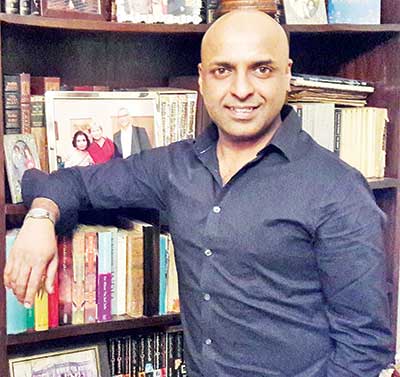 Pakistan High Commissioner, Imran Ahmed Siddiqui's exclusive interview
to The Daily Observer comes at a time when the second wave of the Corona
pandemic has swept over the subcontinent. Additionally, geopolitical
and security scenario of the region is also going through a
transformation. Ranging from our bilateral ties, Pakistan's position in
security and economic groupings to regional strategic stability, the
Pakistan envoy speaks on a number of issues. The interview has been
conducted by our Assistant Editor, Shahriar Feroze
Pakistan High Commissioner, Imran Ahmed Siddiqui's exclusive interview
to The Daily Observer comes at a time when the second wave of the Corona
pandemic has swept over the subcontinent. Additionally, geopolitical
and security scenario of the region is also going through a
transformation. Ranging from our bilateral ties, Pakistan's position in
security and economic groupings to regional strategic stability, the
Pakistan envoy speaks on a number of issues. The interview has been
conducted by our Assistant Editor, Shahriar FerozeDaily Observer: What is the current status of bilateral relations between Pakistan and Bangladesh? We understand there have been challenging times.
Imran Ahmed Siddiqui: Pakistan and Bangladesh enjoy unbreakable fraternal relations based on shared history, common faith and convergent interests in promoting durable peace and sustainable development in our region and beyond.
Our respective leaders are committed to promoting bilateral ties. Prime Minister Imran Khan who holds Bangladesh leadership and people in high esteem had written a letter to Hon. Prime Minister Sheikh Hasina on Bangladesh's Golden Jubilee in which while extending felicitations on the 50th anniversary of Bangladesh and expressing good wishes for the leadership and people of Bangladesh, Hon. Prime Minister Imran Khan had recalled the far-sighted vision of reconciliation and friendship between the two countries so dearly cherished by our respective leaders.
High Level contacts are an important part of efforts to further promote our bilateral relations. Hon Prime Minister Imran Khan has invited Hon Prime Minister Sheikh Hasina to visit Pakistan at her earliest convenience. We are honoured to receive Prime Minister Hasina's reply expressing goodwill and accepting the invitation. The visit will promote deeper understanding between the two countries to our mutual benefit.
As Pakistan's representatives, we are focused on promoting relations in all relevant fiends including economic and commercial, cultural cooperation and people to people contacts. We need to develop deeper institutional linkages and connections, for regional peace, development and prosperity, as well as for addressing the contemporary global challenges, such as climate change, environmental degradation and public health crises.
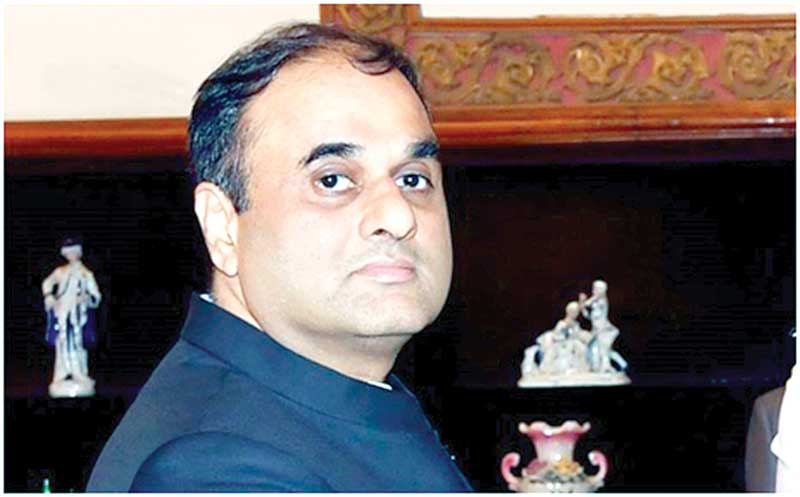 D O: What is Pakistan's position on new security and economic groupings and blocs being promoted by certain quarters?
Pakistan envoy: Pakistan calls for durable peace and security for sustainable development and connectivity. We attach high importance to enhanced trade, investment, energy security, tourism and people to people contacts in the region and beyond. This is in line with Pakistan's "geo-economic priority" to leverage its geography for the achievement of regional growth, development and prosperity.
Naturally, our primary interest is in a peaceful, stable and inclusive world order conducive for sustainable development strategies. We are, therefore, committed to peaceful coexistence, cooperative multilateralism and win-win outcomes based on the principle of inclusivity and shared objectives of peace, progress and prosperity.
Pakistan sincerely hopes that all states would cooperate for achieving international peace and development and for addressing contemporary global challenges.
D O: Both Pakistan and India are nuclear states. In the presence of an active dispute between the two countries, the need for regional strategic stability becomes even more urgent. What are Pakistan's views on it?
Pakistan envoy: Pakistan has consistently maintained that efforts to promote stability at the regional and global levels must include measures towards conflict resolution and addressing longstanding disputes between States, including through reinforcing the UN's role in this regard.
We believe that regional states must understand the implications of continued instability and the risks associated with it.
Regional asymmetries and destabilizing arms build-up, both in the strategic and conventional domains, dangerous concepts such as limited war under a "nuclear overhang"; as well as pre-emptive strike doctrines constitute destabilizing factors. These threats to regional and global stability must be properly understood and reflected in national security policies.
The understanding of drivers and implications of instability and associated risks depend upon the quality of leadership in any country. Medieval supremacist ideologies seeking regional domination have the potential to undermine peace and stability. Irresponsible and provocative statements, particularly coming from the senior leadership, can be misconstrued particularly in the absence of strategic communication channels.
Additionally, regional stability is closely associated with meaningful conventional arms control measures and restraining conduct. What we witness in our region is a contrary trend being promoted by some known for their belligerence and aggression against smaller states of the region as well as occupation of foreign peoples and territories such as Jammu and Kashmir.
Pakistan has, in the past, proposed the concept of strategic restraint regime in South Asia which consists of three main elements: i) the resolution of disputes particularly the core issue of Jammu and Kashmir, ii) maintenance of a balance between conventional forces; and iii) reciprocal measures for nuclear and missile restraint.
Pakistan has also proposed a number of CBMs aimed at promoting restraint and regional stability, which encompass political, operational and arms control aspects. However, these measures have not evoked a positive response from the other side.
We firmly believe that root causes of tensions and insecurity should be addressed through peaceful means. The relevant states should exercise maximum restraint and avoid an arms race. Pakistan's conduct is in line with this. However, we are increasingly concerned about certain destabilizing developments and provocative unilateral measures in our region.
D O: India considers Jammu and Kashmir its internal matter. Why is Jammu and Kashmir a dispute between Pakistan and India?
Pakistan envoy: Jammu and Kashmir, is an internationally recognized dispute and the oldest outstanding item on the UN Security Council's agenda. A number of UNSC resolutions call for just resolution of the Jammu and Kashmir dispute through a plebiscite under the UN auspices. The issue has been discussed thrice at the UNSC since India's illegal, unilateral action on 5thAugust 2019. The UN Secretary General and the UN General Assembly's President have underscored the need for resolution of the Jammu and Kashmir dispute as per the UN Charter and the relevant UNSC resolutions. This reaffirms that Jammu and Kashmir is an internationally recognized dispute, not an internal matter of any country.
No amount of propaganda can change the disputed nature of the Jammu and Kashmir or negate the Kashmiris' inalienable right to self-determination.
Since 5 August 2019, the occupying state has intensified its campaign of gross and systematic human rights violations against the Kashmiri people which have been extensively documented in the reports of the UN High Commissioner for Human Rights and other rights bodies.
There is an attempt to change the demographic structure of Indian Illegally Occupied Jammu and Kashmir (IIoJK) through the issuance of fake domicile certificates. All these and other measures are violations of international law, including the Security Council Resolutions and the Fourth Geneva Convention.
Since August 5, 2019, several international organizations and bodies have expressed serious concern over the deteriorating human rights situation in Jammu and Kashmir. These, among others, include the Office of the UN High Commissioner for Human Rights, the European Human Rights Commission, the United Kingdom's All Party Parliamentary Group on Kashmir, and other civil society organizations.
Pakistan believes that lasting peace and stability in South Asia is contingent upon the resolution of the Jammu and Kashmir dispute in accordance with the United Nations Security Council resolutions and wishes of the Kashmiri people.
D O: after India's recent actions in Jammu and Kashmir, will Pakistan adopt a policy adjusting to new realities?
Pakistan envoy: There is absolutely no change in Pakistan's position on the Indian Illegally Occupied Jammu & Kashmir. In this regard, you must have seen the statements made by Pakistani leadership, clearly stipulating Pakistan's principled position.
The most unmistakable reality in IIoJK is the massive rejection of all instruments of foreign occupation by the valiant Kashmiri people. We salute the spirit of our sisters in brothers.
D O: Recent understanding between Pakistan and India on ceasefire has resulted in some relief for the Kashmiri people. Can the world expect that this understanding will further expand to cover other aspects of the dispute?
Pakistan envoy: Pakistan has consistently called for implementation of the understanding reached between the two countries in 2003 on ceasefire along Line of Control (LoC).
The reiteration of this understanding in February 2021 is consistent with Pakistan's position for maintaining peace along the LOC, to save precious Kashmiri lives and to alleviate the sufferings of Kashmiris living along both sides of the LOC.
Pakistan has been calling for creation of an enabling environment for a 'meaningful' and 'result oriented' engagement. The Jammu & Kashmir dispute remains the core issue that needs resolution as per the UN Resolutions and in accordance with the aspirations of the Kashmiri people. Sincere efforts to settle this long pending dispute could promote lasting peace and stability in the region.
Loading...
Loading...
Also read



Editor : Iqbal Sobhan Chowdhury
Published by the Editor on behalf of the Observer Ltd. from Globe Printers, 24/A, New Eskaton Road, Ramna, Dhaka.
Editorial, News and Commercial Offices : Aziz Bhaban (2nd floor), 93, Motijheel C/A, Dhaka-1000.
Phone: PABX- 41053001-06; Advertisement: 41053012; 01793317829, 01550707291, E-mail: [email protected], [email protected] Online: email: [email protected] 41053014; 01550707297 Advertisement: 01550707296
Published by the Editor on behalf of the Observer Ltd. from Globe Printers, 24/A, New Eskaton Road, Ramna, Dhaka.
Editorial, News and Commercial Offices : Aziz Bhaban (2nd floor), 93, Motijheel C/A, Dhaka-1000.
Phone: PABX- 41053001-06; Advertisement: 41053012; 01793317829, 01550707291, E-mail: [email protected], [email protected] Online: email: [email protected] 41053014; 01550707297 Advertisement: 01550707296


