



| HEADLINE |

|
Bangladesh pharma sector may face post LDC challenges
Published : Thursday, 21 March, 2024 at 12:00 AM
Shamsul Huda


 Bangladeshs development in pharmaceuticals sector is unique among all least developed countries. At present, apart from meeting over 97 percent domestic demands it is also exported to over 150 countries.
Local pharmaceuticals industry could grow a lot by utilizing the opportunities as an LDC member country now but challenges are plenty ahead after achieving a developing country status.
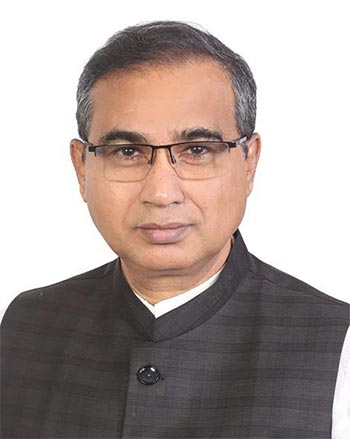
The major challenges are related to local manufacturing of active pharmaceuticals ingredients, marred by inadequate research and development, challenges in post LDC graduation period and in product registration, said KSM Mostafizur Rahman, executive member, Drug Control Committee (DCC) in the Directorate General of Drug Administration (DGDA),
Talking with the Daily Observer, he said an API Park in Baushia, Gozaria of Munshigonj plans to produce active pharmaceuticals ingredients and for this all infrastructures are almost ready. A leading pharma company is likely to go into operation as first one in API Park in the current month and few others within couple of months, he said.
It is a matter of huge investment to produce active ingredients and if all the companies in the API Park produce the same product it would saturate the small local market and the manufacturers may face trouble in export as it is difficult to compete with India and China, Rahman said who is also president of Bangladesh Agrochemical Manufacturers Association (BAMA).
So the DGDA can devise a policy that a single item of API could be produced by maximum two companies among many housed in the industrial park as a result there will be no over production for an item and the market will not be over saturated which will help manufacture to get a certain market share for a particular product, Rahman said.
He said the challenge in product registration in local market is becoming a concern as currently it is not happening as per expectations. He said, "At this moment before LDC graduation we should go for a large numbers of product registration as LDC membership registration criteria have been simplified, easy and of less hassles.
"But once we graduate to a developing nation status it would be difficult for maintaining strict compliance like pharma bioequivalence tests and few others in parallel with other big countries."
During developing country status the worlds giant companies may come to Bangladesh with their registered products maintaining high compliances, he said and added the DGDA should help in registering more products within the LDC timeframe.
Rahaman also managing director of National AgriCare Group said policy support for developing this sector is inevitably needed. He said currently local consumption of locally produced drugs are about $4 billion and if this amount of products are being imported it would cost Bangladesh around $40 billion.
"In the coming days without our own raw materials it will be difficult to compete with India and China who have their own raw materials", he said.
The DCC member said in the coming days we must go for biosimilar products as currently the world is moving to pharma biotech products. For this a huge investments, research and developments and policy supports are needed.
The BAMA president said like pharmaceuticals development under the WTO TRIPs (Trade related aspects of Intellectual property rights) Bangladesh can also develop its agrochemicals industries as this sector can utilize all opportunities like the pharma sector as an LDC member.
Loading...
Loading...
Also read


Editor : Iqbal Sobhan Chowdhury
Published by the Editor on behalf of the Observer Ltd. from Globe Printers, 24/A, New Eskaton Road, Ramna, Dhaka.
Editorial, News and Commercial Offices : Aziz Bhaban (2nd floor), 93, Motijheel C/A, Dhaka-1000.
Phone: PABX- 41053001-06; Advertisement: 41053012; 01793317829, 01550707291, E-mail: [email protected], [email protected] Online: email: [email protected] 41053014; 01550707297 Advertisement: 01550707296
Published by the Editor on behalf of the Observer Ltd. from Globe Printers, 24/A, New Eskaton Road, Ramna, Dhaka.
Editorial, News and Commercial Offices : Aziz Bhaban (2nd floor), 93, Motijheel C/A, Dhaka-1000.
Phone: PABX- 41053001-06; Advertisement: 41053012; 01793317829, 01550707291, E-mail: [email protected], [email protected] Online: email: [email protected] 41053014; 01550707297 Advertisement: 01550707296


