



| HEADLINE |

|
Bangladesh, Singapore collaborate for transparent, cost-effective worker migration
Published : Friday, 7 March, 2025 at 10:56 PM
Shakib Ahmed


Bangladesh and Singapore on Friday explored ways to enhance the migration process for workers, focusing on reducing costs and improving transparency.
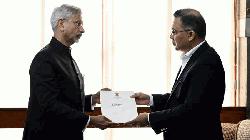
Chief Adviser's Special Envoy Lutfey Siddiqi met with Singapore’s Minister of Manpower, Dr. Tan See Leng, in Singapore to discuss these initiatives.
Siddiqi commended Singapore’s professional approach to migrant worker welfare, particularly in healthcare provision. Dr. Tan, who also serves as Singapore’s Second Minister for Trade and Industry, acknowledged the significant contributions of migrant workers, including Bangladeshis, to Singapore’s construction sector.
During the meeting, Siddiqi provided an update on the progress of free trade agreement (FTA) negotiations between the two countries. He expressed optimism that the FTA would open up opportunities for Bangladeshi workers in a wider range of skills and sectors.
Earlier, Siddiqi inaugurated a new online attestation service for In-Principle Approvals (IPAs) at the Bangladesh High Commission in Singapore. IPAs are preliminary work permits issued by the Singapore government, and the new online system eliminates the need for employers and agents to physically visit the Bangladesh mission for attestation.
The online solution, developed by an inter-ministerial group including the Secretary of the Ministry of Expatriates' Welfare and the Bangladesh High Commissioner in Singapore, addresses long-standing complaints about administrative burdens.
In a meeting with representatives of Bangladeshi workers in Singapore, Siddiqi pledged to address their grievances. He emphasized the government’s commitment to improving the welfare of migrant workers, stating, "Both Chief Adviser Professor Yunus and Advisor Dr. Asif Nazrul have identified the welfare of migrant workers as a key priority of this government."
Siddiqi added, "We are working to improve the airport experience, passport services, airfare monitoring, and responsiveness to worker concerns. While there is more work to be done, it is encouraging to see positive results."
The discussions and initiatives underscore the commitment of both countries to creating a more transparent, efficient, and worker-friendly migration process.
Siddiqi commended Singapore’s professional approach to migrant worker welfare, particularly in healthcare provision. Dr. Tan, who also serves as Singapore’s Second Minister for Trade and Industry, acknowledged the significant contributions of migrant workers, including Bangladeshis, to Singapore’s construction sector.
During the meeting, Siddiqi provided an update on the progress of free trade agreement (FTA) negotiations between the two countries. He expressed optimism that the FTA would open up opportunities for Bangladeshi workers in a wider range of skills and sectors.
Earlier, Siddiqi inaugurated a new online attestation service for In-Principle Approvals (IPAs) at the Bangladesh High Commission in Singapore. IPAs are preliminary work permits issued by the Singapore government, and the new online system eliminates the need for employers and agents to physically visit the Bangladesh mission for attestation.
The online solution, developed by an inter-ministerial group including the Secretary of the Ministry of Expatriates' Welfare and the Bangladesh High Commissioner in Singapore, addresses long-standing complaints about administrative burdens.
In a meeting with representatives of Bangladeshi workers in Singapore, Siddiqi pledged to address their grievances. He emphasized the government’s commitment to improving the welfare of migrant workers, stating, "Both Chief Adviser Professor Yunus and Advisor Dr. Asif Nazrul have identified the welfare of migrant workers as a key priority of this government."
Siddiqi added, "We are working to improve the airport experience, passport services, airfare monitoring, and responsiveness to worker concerns. While there is more work to be done, it is encouraging to see positive results."
The discussions and initiatives underscore the commitment of both countries to creating a more transparent, efficient, and worker-friendly migration process.
Loading...
Loading...
Also read








Editor : Iqbal Sobhan Chowdhury
Published by the Editor on behalf of the Observer Ltd. from Globe Printers, 24/A, New Eskaton Road, Ramna, Dhaka.
Editorial, News and Commercial Offices : Aziz Bhaban (2nd floor), 93, Motijheel C/A, Dhaka-1000.
Phone: PABX- 41053001-06; Advertisement: 41053012; 01793317829, 01550707291, E-mail: [email protected], [email protected] Online: email: [email protected] 41053014; 01550707297 Advertisement: 01550707296
Published by the Editor on behalf of the Observer Ltd. from Globe Printers, 24/A, New Eskaton Road, Ramna, Dhaka.
Editorial, News and Commercial Offices : Aziz Bhaban (2nd floor), 93, Motijheel C/A, Dhaka-1000.
Phone: PABX- 41053001-06; Advertisement: 41053012; 01793317829, 01550707291, E-mail: [email protected], [email protected] Online: email: [email protected] 41053014; 01550707297 Advertisement: 01550707296


