



| HEADLINE |

|
Bangladesh begins second round of tariff talks with USTR
Published : Wednesday, 9 July, 2025 at 8:29 PM
Shahnaj Begum


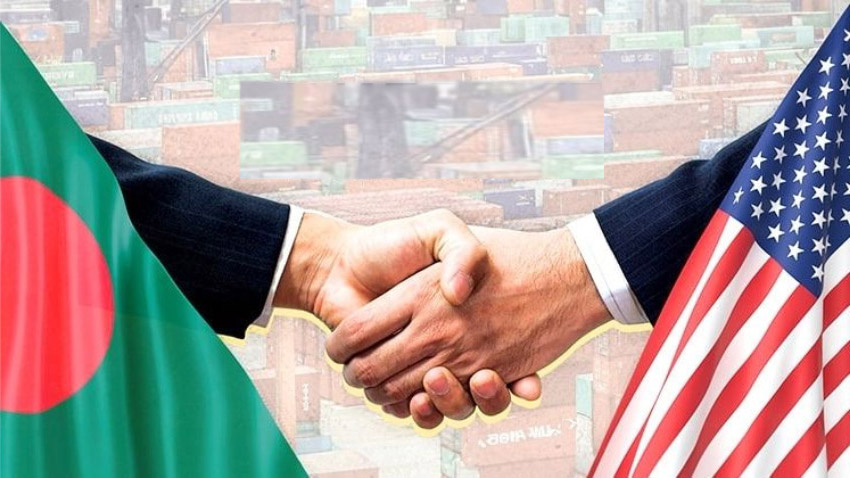
Bangladesh has kicked off the second round of negotiations with the United States Trade Representative (USTR) on the agreement on reciprocal tariffs from Wednesday to Friday, putting the utmost effort for a positive outcome.
Bangladesh is among the first countries to restart negotiations following the issuance of President Donald Trump's letter to the leaders of 14 countries on Monday.
Meanwhile, Commerce Adviser Sk Bashir Uddin, Commerce Secretary and an Additional Commerce Secretary has joined the discussions held in Washington, while National Security Adviser Dr Khalilur Rahman to join them virtually from Dhaka, according to the foreign Ministry sources.
Meanwhile, Bangladesh termed the imposition of a 35 per cent supplementary tariff on Bangladeshi products by the US is not justified, especially when the trade deficit between the countries is comparatively low.
“It is true that our trade deficit with the US is only about $5 billion, while Vietnam’s is $125 billion. Even so, the US has agreed to offer Vietnam some concessions. In that case, given our much smaller deficit, there is no justification for imposing such a high tariff on us. We will continue to negotiate,” Finance Adviser Salehuddin Ahmed told media.
“The meeting looks likely to be somewhat positive. US president has already sent a letter. Now one-to-one negotiations will follow.” He remarked.
“The 35 per cent tariff imposed on Bangladesh by the US is not a final decision, as the discussions are still ongoing,” Golam Mortoza, press minister at the Bangladesh Embassy in Washington, DC, said. He wrote in a post on Facebook “Bangladesh is putting the utmost effort for a positive outcome, and that possibility is not over yet.”
However, Economists and business leaders identified three causes of the failure of tariff negositation. (1) ignoring repeated calls to engage lobbyists to bolster Bangladesh's position to USTR (ii) government anticipated a more favourable agreement based on Bangladesh's Least Developed Country (LDC) status and (iii) government sidelined the private sector throughout negotiations and (iv) another reason behind Bangladesh's failure to succeed in negotiations with USTR by the US includes certain conditions that are inconsistent with established international trade practices and bilateral trade agreements.
Moreover, while the tariff was initially set to take effect on July 1, the US president has extended the deadline to August 1, after most affected countries scrambled to renegotiate but despite having a three-month window from April to July, Bangladesh failed to take up the issue in proper manner.
Bangladesh’s inability to mount an effective trade negotiation strategy has left exporters vulnerable to a steep 35% reciprocal US tariff — one of the highest among 14 countries targeted by Trump’s revived protectionist push, said experts.
Zahid Hussain, former lead economist at the World Bank's Dhaka Office told media that “I spoke to various levels of the government yesterday, and I learned that a flat 20% tariff has been agreed upon for Vietnam by the US. In Bangladesh's case, the new tariff will be added to the previous tariff. If this 35% is added to the existing 15%-16%, the average tariff on imports from our country to America will be over 50%.”
Zahid Hussain further said: “Also, if you notice that countries like BRICS, Indonesia, and South Africa have also negotiated better than us, which Trump does not like, it seems. Out of the 14 countries who got Trump's letter, only 4 countries are behind us in negotiations; the rest have got equal or better deals than us.”
By highlighting Bangladesh’s poor negotiation skills, the former lead economist at the World Bank stated that he could no longer be optimistic about the negotiations that have been going on since April.
“Actually, we (Bangladesh) were not able to crack any deal, we could not come to any agreement; that is why we received this letter. If you look closely, you will see that our delegation has been in America for the past few weeks, but it seems they have achieved no success. It is clear.”
Although the government is optimistic about the ongoing meeting, Dr Zahir said, “I don't think there will be any major changes in the space of two days. If that were the case, the letter would not have been issued. Yes, Trump said there is time. If the government can do what they couldn't do in the next meeting, that will be good for the country. But I don't hope things can be turned around so quickly.”
According to several sources, the draft Reciprocal Tariff Agreement from the US includes conditions requiring Bangladesh to impose trade sanctions on any country sanctioned by the US. Similarly, if the US imposes additional tariffs on a country, Bangladesh would be required to follow suit.
Additionally, one clause stipulates that Bangladesh cannot offer import concessions to any other country for products that it grants such concessions to the US. This contradicts the World Trade Organization's Most-Favoured Nation (MFN) principle.
To appease the United States, Bangladesh has taken steps to increase imports from the country, including the official purchase of Boeing aircraft, LNG, and wheat.
Earlier, Dhaka proposed to buy Boeing planes and increase imports of US wheat, cotton, and oil in a bid to reduce the trade deficit, which Trump has used as justification for imposing painful levies.
Bangladesh is among the first countries to restart negotiations following the issuance of President Donald Trump's letter to the leaders of 14 countries on Monday.
Meanwhile, Commerce Adviser Sk Bashir Uddin, Commerce Secretary and an Additional Commerce Secretary has joined the discussions held in Washington, while National Security Adviser Dr Khalilur Rahman to join them virtually from Dhaka, according to the foreign Ministry sources.
Meanwhile, Bangladesh termed the imposition of a 35 per cent supplementary tariff on Bangladeshi products by the US is not justified, especially when the trade deficit between the countries is comparatively low.
“It is true that our trade deficit with the US is only about $5 billion, while Vietnam’s is $125 billion. Even so, the US has agreed to offer Vietnam some concessions. In that case, given our much smaller deficit, there is no justification for imposing such a high tariff on us. We will continue to negotiate,” Finance Adviser Salehuddin Ahmed told media.
“The meeting looks likely to be somewhat positive. US president has already sent a letter. Now one-to-one negotiations will follow.” He remarked.
“The 35 per cent tariff imposed on Bangladesh by the US is not a final decision, as the discussions are still ongoing,” Golam Mortoza, press minister at the Bangladesh Embassy in Washington, DC, said. He wrote in a post on Facebook “Bangladesh is putting the utmost effort for a positive outcome, and that possibility is not over yet.”
However, Economists and business leaders identified three causes of the failure of tariff negositation. (1) ignoring repeated calls to engage lobbyists to bolster Bangladesh's position to USTR (ii) government anticipated a more favourable agreement based on Bangladesh's Least Developed Country (LDC) status and (iii) government sidelined the private sector throughout negotiations and (iv) another reason behind Bangladesh's failure to succeed in negotiations with USTR by the US includes certain conditions that are inconsistent with established international trade practices and bilateral trade agreements.
Moreover, while the tariff was initially set to take effect on July 1, the US president has extended the deadline to August 1, after most affected countries scrambled to renegotiate but despite having a three-month window from April to July, Bangladesh failed to take up the issue in proper manner.
Bangladesh’s inability to mount an effective trade negotiation strategy has left exporters vulnerable to a steep 35% reciprocal US tariff — one of the highest among 14 countries targeted by Trump’s revived protectionist push, said experts.
Zahid Hussain, former lead economist at the World Bank's Dhaka Office told media that “I spoke to various levels of the government yesterday, and I learned that a flat 20% tariff has been agreed upon for Vietnam by the US. In Bangladesh's case, the new tariff will be added to the previous tariff. If this 35% is added to the existing 15%-16%, the average tariff on imports from our country to America will be over 50%.”
Zahid Hussain further said: “Also, if you notice that countries like BRICS, Indonesia, and South Africa have also negotiated better than us, which Trump does not like, it seems. Out of the 14 countries who got Trump's letter, only 4 countries are behind us in negotiations; the rest have got equal or better deals than us.”
By highlighting Bangladesh’s poor negotiation skills, the former lead economist at the World Bank stated that he could no longer be optimistic about the negotiations that have been going on since April.
“Actually, we (Bangladesh) were not able to crack any deal, we could not come to any agreement; that is why we received this letter. If you look closely, you will see that our delegation has been in America for the past few weeks, but it seems they have achieved no success. It is clear.”
Although the government is optimistic about the ongoing meeting, Dr Zahir said, “I don't think there will be any major changes in the space of two days. If that were the case, the letter would not have been issued. Yes, Trump said there is time. If the government can do what they couldn't do in the next meeting, that will be good for the country. But I don't hope things can be turned around so quickly.”
According to several sources, the draft Reciprocal Tariff Agreement from the US includes conditions requiring Bangladesh to impose trade sanctions on any country sanctioned by the US. Similarly, if the US imposes additional tariffs on a country, Bangladesh would be required to follow suit.
Additionally, one clause stipulates that Bangladesh cannot offer import concessions to any other country for products that it grants such concessions to the US. This contradicts the World Trade Organization's Most-Favoured Nation (MFN) principle.
To appease the United States, Bangladesh has taken steps to increase imports from the country, including the official purchase of Boeing aircraft, LNG, and wheat.
Earlier, Dhaka proposed to buy Boeing planes and increase imports of US wheat, cotton, and oil in a bid to reduce the trade deficit, which Trump has used as justification for imposing painful levies.
Loading...
Loading...
Also read





Editor : Iqbal Sobhan Chowdhury
Published by the Editor on behalf of the Observer Ltd. from Globe Printers, 24/A, New Eskaton Road, Ramna, Dhaka.
Editorial, News and Commercial Offices : Aziz Bhaban (2nd floor), 93, Motijheel C/A, Dhaka-1000.
Phone: PABX- 41053001-06; Advertisement: 41053012; 01793317829, 01550707291, E-mail: [email protected], [email protected] Online: email: [email protected] 41053014; 01550707297 Advertisement: 01550707296
Published by the Editor on behalf of the Observer Ltd. from Globe Printers, 24/A, New Eskaton Road, Ramna, Dhaka.
Editorial, News and Commercial Offices : Aziz Bhaban (2nd floor), 93, Motijheel C/A, Dhaka-1000.
Phone: PABX- 41053001-06; Advertisement: 41053012; 01793317829, 01550707291, E-mail: [email protected], [email protected] Online: email: [email protected] 41053014; 01550707297 Advertisement: 01550707296


