



| HEADLINE |

|
Hilsa not available in rural Rajshahi markets
Published : Tuesday, 15 July, 2025 at 12:00 AM
Rafiqul Hasan Firoz


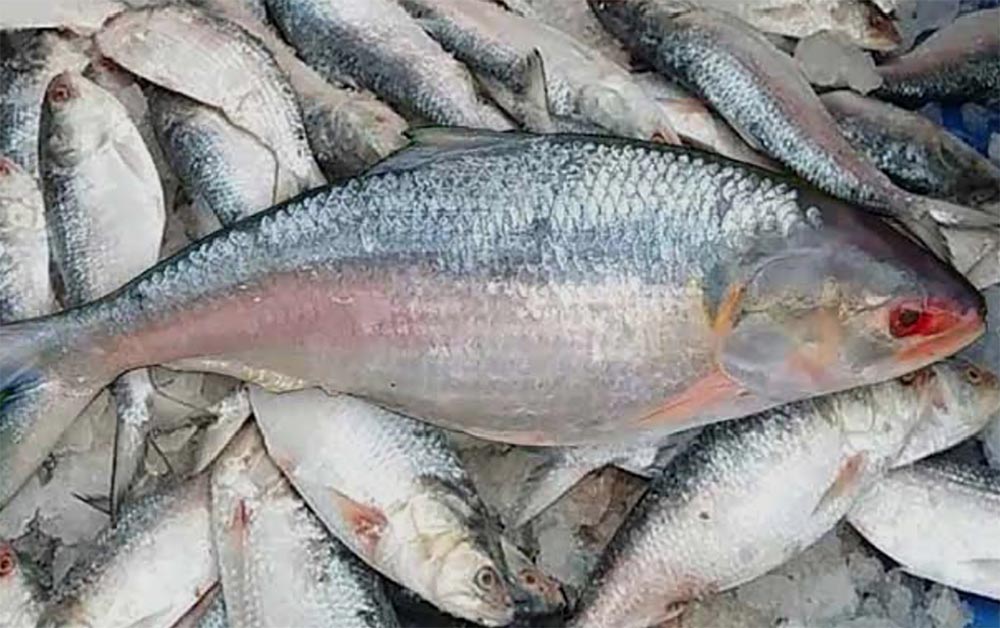 RAJSHAHI, July 14: Once upon a time, hilsa was a delicacy for lower and middle class Bengalis. The national fish 'hilsa' is no longer a common fish. It now adorns only the food menus of the upper class, as if this fish has become a kind of luxury item.
Hilsa fish is no longer seen in the markets of nine upazilas of Rajshahi. Earlier, when the monsoon season arrived, hilsa fish, also known as 'Rupali fish', was often seen in the markets of rural areas. Now the common people of rural areas have forgotten the taste of hilsa.
Meanwhile, the price of Jatka hilsa in the Padma River flowing past Rajshahi City has skyrocketed. Due to this, the common people of the city can no longer buy hilsa. However, the proverb 'Bengali with fish and rice' was once popular among the people of Bangladesh regarding hilsa fish.
Due to the low supply of hilsa in the Rajshahi region, sellers are charging sky-high prices. Although hilsa is available in the metropolis, not everyone can buy it due to the sky-high prices. As a result, most people are forced to return home after buying Rui, Mrigal, and Katla fish cultivated in ponds. On the other hand, the festival of Pantha Hilsa on the 1st day of Baishakh is celebrated with other fish. Due to the demand all over the world, hilsa is exported to different countries of the world. Due to the high price due to export abroad, many have forgotten the joy of hilsa.
Amjad Hossain, a resident of Bhatkhali Village in Bagmara Upazila, said that during the monsoon season, hilsa fish was often available at low prices in various markets including Bagmara, Tanor, and Mohanpur upazilas. But due to the increase in prices because of export abroad, hilsa is no longer seen in the markets of rural areas. As a result, people in rural areas have forgotten the taste of hilsa.
Ahmed Shafi Uddin, a resident of the metropolis, said that at one time, the main attraction of the joyous festivals of the city dwellers, including the people of Rajshahi, was hilsa fish. Relatives, friends, and acquaintances would gather for hilsa parties. But now that food is no longer available because the price of hilsa is very high. It has gone beyond the reach of the poor.
He also said that not enough hilsa is caught in the Padma River. That is why people living along the river have changed their professions.
He believes that it is important for the River Research Institute and other conscious groups to come forward to help the people of this region regain the tradition of hilsa.
Loading...
Loading...
Also read



Editor : Iqbal Sobhan Chowdhury
Published by the Editor on behalf of the Observer Ltd. from Globe Printers, 24/A, New Eskaton Road, Ramna, Dhaka.
Editorial, News and Commercial Offices : Aziz Bhaban (2nd floor), 93, Motijheel C/A, Dhaka-1000.
Phone: PABX- 41053001-06; Advertisement: 41053012; 01793317829, 01550707291, E-mail: [email protected], [email protected] Online: email: [email protected] 41053014; 01550707297 Advertisement: 01550707296
Published by the Editor on behalf of the Observer Ltd. from Globe Printers, 24/A, New Eskaton Road, Ramna, Dhaka.
Editorial, News and Commercial Offices : Aziz Bhaban (2nd floor), 93, Motijheel C/A, Dhaka-1000.
Phone: PABX- 41053001-06; Advertisement: 41053012; 01793317829, 01550707291, E-mail: [email protected], [email protected] Online: email: [email protected] 41053014; 01550707297 Advertisement: 01550707296


