



| HEADLINE |

|
Consensus talks:
BNP warns against weakening executive powers
Published : Monday, 28 July, 2025 at 6:20 PM
Shakib Ahmed


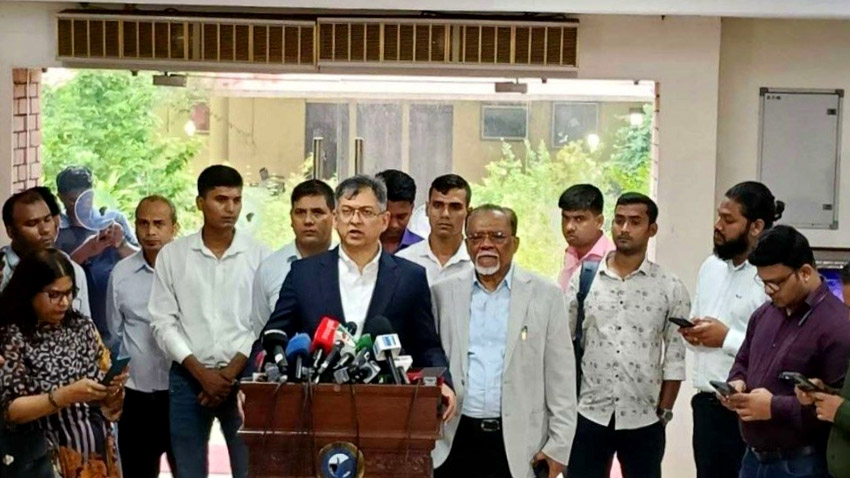
BNP Standing Committee member Salahuddin Ahmed on Monday cautioned that efforts to weaken the executive branch’s authority could undermine the effectiveness of governance and disrupt the constitutional balance of power.
Speaking during the second phase of multi-party dialogue hosted by National Consensus Commission (NCC) at the Foreign Service Academy in Dhaka, Salahuddin reaffirmed his party’s commitment to democratic reforms, but firmly opposed any move to diminish executive powers in the name of consensus.
“The executive must remain accountable to both Parliament and the people,” he said. “But accountability without authority is meaningless. Stripping the executive of decision-making power while holding it responsible will only obstruct efficient governance.”
Despite expressing support for major reforms to prevent the return of authoritarianism, Salahuddin stressed that undermining the executive branch would be counterproductive. “We are participating in these talks to help safeguard democracy, not to dismantle the executive’s ability to function,” he added.
During the session, Salahuddin highlighted several key proposals from the BNP that have been accepted, including a 10-year total term limit for the office of Prime Minister and the formation of an independent search committee for appointing Election Commission members—comprising representatives from the ruling party, opposition, and the judiciary.
He also underscored the BNP’s call for a referendum to ratify any future constitutional amendments concerning the caretaker government system. “Accepting this proposal is a significant step toward long-term political stability,” he noted.
However, Salahuddin warned against reducing the executive’s role in appointments to constitutional bodies such as the Public Service Commission, Anti-Corruption Commission, and the Office of the Comptroller and Auditor General. “Disempowering the executive in these areas could create bureaucratic gridlock and weaken service delivery,” he said.
While the BNP remains engaged in the dialogue, Salahuddin emphasized that disagreement is a legitimate part of democratic discourse. “Consensus does not mean uniformity. Disagreement, even temporary withdrawal, is a natural part of a healthy democratic process,” he said.
He further argued that a note of dissent should not be used to falsely claim national consensus. “If a major political force like the BNP is excluded, then calling it a national consensus is misleading,” he asserted.
Earlier in the day, the NCC began reviewing reform proposals related to appointments in constitutional bodies. During the session, BNP representatives Salahuddin Ahmed and Ismail Zabihullah briefly walked out in protest but rejoined the talks about 45 minutes later.
Salahuddin confirmed that BNP will take part in the next phase of discussions and remains committed to contributing to meaningful reform through dialogue.
Speaking during the second phase of multi-party dialogue hosted by National Consensus Commission (NCC) at the Foreign Service Academy in Dhaka, Salahuddin reaffirmed his party’s commitment to democratic reforms, but firmly opposed any move to diminish executive powers in the name of consensus.
“The executive must remain accountable to both Parliament and the people,” he said. “But accountability without authority is meaningless. Stripping the executive of decision-making power while holding it responsible will only obstruct efficient governance.”
Despite expressing support for major reforms to prevent the return of authoritarianism, Salahuddin stressed that undermining the executive branch would be counterproductive. “We are participating in these talks to help safeguard democracy, not to dismantle the executive’s ability to function,” he added.
During the session, Salahuddin highlighted several key proposals from the BNP that have been accepted, including a 10-year total term limit for the office of Prime Minister and the formation of an independent search committee for appointing Election Commission members—comprising representatives from the ruling party, opposition, and the judiciary.
He also underscored the BNP’s call for a referendum to ratify any future constitutional amendments concerning the caretaker government system. “Accepting this proposal is a significant step toward long-term political stability,” he noted.
However, Salahuddin warned against reducing the executive’s role in appointments to constitutional bodies such as the Public Service Commission, Anti-Corruption Commission, and the Office of the Comptroller and Auditor General. “Disempowering the executive in these areas could create bureaucratic gridlock and weaken service delivery,” he said.
While the BNP remains engaged in the dialogue, Salahuddin emphasized that disagreement is a legitimate part of democratic discourse. “Consensus does not mean uniformity. Disagreement, even temporary withdrawal, is a natural part of a healthy democratic process,” he said.
He further argued that a note of dissent should not be used to falsely claim national consensus. “If a major political force like the BNP is excluded, then calling it a national consensus is misleading,” he asserted.
Earlier in the day, the NCC began reviewing reform proposals related to appointments in constitutional bodies. During the session, BNP representatives Salahuddin Ahmed and Ismail Zabihullah briefly walked out in protest but rejoined the talks about 45 minutes later.
Salahuddin confirmed that BNP will take part in the next phase of discussions and remains committed to contributing to meaningful reform through dialogue.
Loading...
Loading...
Also read







Editor : Iqbal Sobhan Chowdhury
Published by the Editor on behalf of the Observer Ltd. from Globe Printers, 24/A, New Eskaton Road, Ramna, Dhaka.
Editorial, News and Commercial Offices : Aziz Bhaban (2nd floor), 93, Motijheel C/A, Dhaka-1000.
Phone: PABX- 41053001-06; Advertisement: 41053012; 01793317829, 01550707291, E-mail: [email protected], [email protected] Online: email: [email protected] 41053014; 01550707297 Advertisement: 01550707296
Published by the Editor on behalf of the Observer Ltd. from Globe Printers, 24/A, New Eskaton Road, Ramna, Dhaka.
Editorial, News and Commercial Offices : Aziz Bhaban (2nd floor), 93, Motijheel C/A, Dhaka-1000.
Phone: PABX- 41053001-06; Advertisement: 41053012; 01793317829, 01550707291, E-mail: [email protected], [email protected] Online: email: [email protected] 41053014; 01550707297 Advertisement: 01550707296


