



| HEADLINE |

|
AL can't stand firm, BNP will lead future: Salahuddin
Published : Sunday, 7 September, 2025 at 8:34 PM
Shakib Ahmed


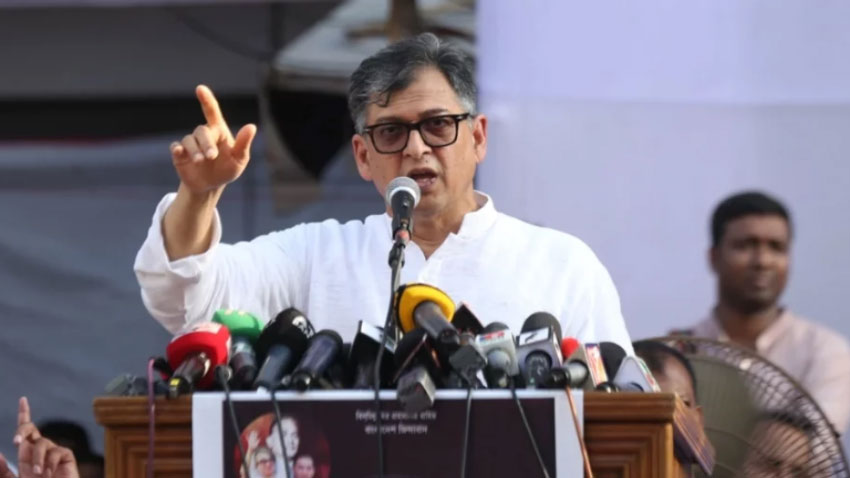
BNP Standing Committee Member Salahuddin Ahmed on Sunday ridiculed the ruling Awami League, saying its workers are in disarray and lack direction.
“At one place they shout ‘Joy,’ then a mile and a half later they say ‘Bangla.’ This is the condition of Awami League. They can no longer stand firm, and the politics of tomorrow will ensure they never rise again,” Salahuddin said at a program in Dhaka.
He stressed that stability can only return through elections, with the establishment of a parliamentary government that fulfills the aspirations of the people.
He hoped that the national parliamentary election in Bangladesh would be held in the first half of February 2026, shortly before the start of Ramadan, or possibly even earlier. “Those trying to create obstacles or spread confusion with misleading statements should take note—the country is already in an election mood,” he added.
BNP senior leader Salahuddin Ahmed also hinted that their Acting Chairman Tarique Rahman will soon return to Bangladesh, enabling the party to carry out half of its election campaign on that historic day.
"Our leader Tarique Rahman will soon return to Bangladesh. On that day, all aspects of the country's election process will be strengthened, Insha'Allah," he said.
From BNP's side, Salahuddin said they will be able to complete half of the election activities across the country on that day.
"On that day, we will be able to carry out half of our election campaign across the country, Insha'Allah. Campaigning is an integral part of the election, so half of it will be completed on that day," he said.
Salahuddin also said Tarique's return will be one of the most unforgettable and historic events in Bangladesh's history.
He praised Tarique's leadership, saying that through his talent, dedication, hard work and leadership, he has established himself at the top of Bangladesh's political leadership.
"We have worked closely with him in anti-fascism and other movement struggles, and we have seen political maturity in him. Under his leadership, this nation will go far ahead," the BNP leader said.
The Bangladesh Nationalist Tax Lawyers' Forum arranged the discussion programme at the Institution of Diploma Engineers, Bangladesh.
Salahuddin said the nation must soon establish a political government through an election, specifically a constitutional parliamentary government. "Through it, the aspirations and dreams of the country's martyrs must be fulfilled. We are moving forward with this goal."
He emphasised that the country must be run strictly according to the Constitution, warning against using extra-constitutional or special instruments to govern.
The BNP leader said terms like "extra-constitutional order," "super-constitutional instrument," or "special constitutional order" are just different ways of saying the same legal measure.
"Such measures are only needed when the normal constitutional provisions are not working. Today, our Constitution is in place and the state is being run according to it. There is no reason to issue any special proclamation. Why would anyone need to do this, and for whose satisfaction?" he asked.
Salahuddin said the people of the country carried out struggles, including sacrifices during the student-led mass uprising, to maintain democratic continuity and establish the right to vote. "We want to be a stable nation."
He said the interim government was formed following constitutional procedures, with the Chief Adviser and other advisers taking the oath under Article 106 of the Constitution. "There has been no disruption of constitutional continuity, and there is no reason to undermine it now."
"The Chief Adviser said in his speech that this interim government is an expression of the aspirations expressed by the students through the uprising. Does this mean that constitutional continuity was violated through the student uprising? Of course not! So, we hope good sense will prevail upon all," the BNP leader said.
He called upon all, including experts and advisers who are discussing and giving recommendations, to act and think within democratic and constitutional principles to ensure stability in the country.
“At one place they shout ‘Joy,’ then a mile and a half later they say ‘Bangla.’ This is the condition of Awami League. They can no longer stand firm, and the politics of tomorrow will ensure they never rise again,” Salahuddin said at a program in Dhaka.
He stressed that stability can only return through elections, with the establishment of a parliamentary government that fulfills the aspirations of the people.
He hoped that the national parliamentary election in Bangladesh would be held in the first half of February 2026, shortly before the start of Ramadan, or possibly even earlier. “Those trying to create obstacles or spread confusion with misleading statements should take note—the country is already in an election mood,” he added.
BNP senior leader Salahuddin Ahmed also hinted that their Acting Chairman Tarique Rahman will soon return to Bangladesh, enabling the party to carry out half of its election campaign on that historic day.
"Our leader Tarique Rahman will soon return to Bangladesh. On that day, all aspects of the country's election process will be strengthened, Insha'Allah," he said.
From BNP's side, Salahuddin said they will be able to complete half of the election activities across the country on that day.
"On that day, we will be able to carry out half of our election campaign across the country, Insha'Allah. Campaigning is an integral part of the election, so half of it will be completed on that day," he said.
Salahuddin also said Tarique's return will be one of the most unforgettable and historic events in Bangladesh's history.
He praised Tarique's leadership, saying that through his talent, dedication, hard work and leadership, he has established himself at the top of Bangladesh's political leadership.
"We have worked closely with him in anti-fascism and other movement struggles, and we have seen political maturity in him. Under his leadership, this nation will go far ahead," the BNP leader said.
The Bangladesh Nationalist Tax Lawyers' Forum arranged the discussion programme at the Institution of Diploma Engineers, Bangladesh.
Salahuddin said the nation must soon establish a political government through an election, specifically a constitutional parliamentary government. "Through it, the aspirations and dreams of the country's martyrs must be fulfilled. We are moving forward with this goal."
He emphasised that the country must be run strictly according to the Constitution, warning against using extra-constitutional or special instruments to govern.
The BNP leader said terms like "extra-constitutional order," "super-constitutional instrument," or "special constitutional order" are just different ways of saying the same legal measure.
"Such measures are only needed when the normal constitutional provisions are not working. Today, our Constitution is in place and the state is being run according to it. There is no reason to issue any special proclamation. Why would anyone need to do this, and for whose satisfaction?" he asked.
Salahuddin said the people of the country carried out struggles, including sacrifices during the student-led mass uprising, to maintain democratic continuity and establish the right to vote. "We want to be a stable nation."
He said the interim government was formed following constitutional procedures, with the Chief Adviser and other advisers taking the oath under Article 106 of the Constitution. "There has been no disruption of constitutional continuity, and there is no reason to undermine it now."
"The Chief Adviser said in his speech that this interim government is an expression of the aspirations expressed by the students through the uprising. Does this mean that constitutional continuity was violated through the student uprising? Of course not! So, we hope good sense will prevail upon all," the BNP leader said.
He called upon all, including experts and advisers who are discussing and giving recommendations, to act and think within democratic and constitutional principles to ensure stability in the country.
Loading...
Loading...
Also read





Editor : Iqbal Sobhan Chowdhury
Published by the Editor on behalf of the Observer Ltd. from Globe Printers, 24/A, New Eskaton Road, Ramna, Dhaka.
Editorial, News and Commercial Offices : Aziz Bhaban (2nd floor), 93, Motijheel C/A, Dhaka-1000.
Phone: PABX- 41053001-06; Advertisement: 41053012; 01793317829, 01550707291, E-mail: [email protected], [email protected] Online: email: [email protected] 41053014; 01550707297 Advertisement: 01550707296
Published by the Editor on behalf of the Observer Ltd. from Globe Printers, 24/A, New Eskaton Road, Ramna, Dhaka.
Editorial, News and Commercial Offices : Aziz Bhaban (2nd floor), 93, Motijheel C/A, Dhaka-1000.
Phone: PABX- 41053001-06; Advertisement: 41053012; 01793317829, 01550707291, E-mail: [email protected], [email protected] Online: email: [email protected] 41053014; 01550707297 Advertisement: 01550707296


