



| HEADLINE |

|
Madagascar President flees amid mass ‘Gen Z’ protests
Published : Monday, 13 October, 2025 at 9:22 PM
Observer Online Report


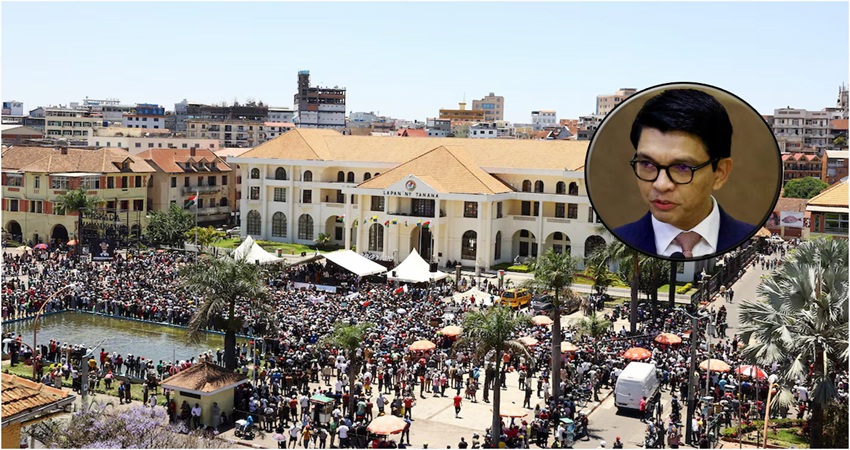
Amid a sweeping youth-led uprising, Madagascar’s President Andry Rajoelina has fled the country, boarding a French military plane to Paris, Reuters reported Monday.
His departure was confirmed by opposition leaders and officials after key military units defected to join protesters.
The crisis erupted on September 25 over acute shortages of water and electricity, but quickly evolved into nationwide protests against corruption, mismanagement, and worsening poverty. Dubbed the "Gen Z" movement, the demonstrations have mobilized thousands—mostly young people—in cities across the island nation.
In a decisive blow to Rajoelina’s rule, sections of the armed forces refused orders to fire on civilians and instead took control of military and gendarmerie sites in the capital, Antananarivo. The Senate president was removed, and Jean André Enremanger appointed interim head, positioning him as acting president during the transition.
On Monday, fresh mass rallies filled the streets of Antananarivo with chants demanding democratic reform. “I earn $67 a month—barely enough to survive,” said 22-year-old protester Adrianarivoni Fanomegantssoa. “We want change, not promises.”
The UN reports at least 22 protesters killed since the unrest began. With a population of nearly 30 million, Madagascar has one of the world’s youngest demographics—median age: under 20—and about 75% live below the poverty line.
The turmoil now threatens critical export industries, including vanilla, nickel, cobalt, textiles, and shrimp, raising concerns about economic fallout and supply chain disruptions.
France has not commented on the use of its aircraft to evacuate Rajoelina but called for a “peaceful and constitutional resolution” to the crisis.
With state institutions in flux, Madagascar faces an uncertain path toward stabilization and elections.
The crisis erupted on September 25 over acute shortages of water and electricity, but quickly evolved into nationwide protests against corruption, mismanagement, and worsening poverty. Dubbed the "Gen Z" movement, the demonstrations have mobilized thousands—mostly young people—in cities across the island nation.
In a decisive blow to Rajoelina’s rule, sections of the armed forces refused orders to fire on civilians and instead took control of military and gendarmerie sites in the capital, Antananarivo. The Senate president was removed, and Jean André Enremanger appointed interim head, positioning him as acting president during the transition.
On Monday, fresh mass rallies filled the streets of Antananarivo with chants demanding democratic reform. “I earn $67 a month—barely enough to survive,” said 22-year-old protester Adrianarivoni Fanomegantssoa. “We want change, not promises.”
The UN reports at least 22 protesters killed since the unrest began. With a population of nearly 30 million, Madagascar has one of the world’s youngest demographics—median age: under 20—and about 75% live below the poverty line.
The turmoil now threatens critical export industries, including vanilla, nickel, cobalt, textiles, and shrimp, raising concerns about economic fallout and supply chain disruptions.
France has not commented on the use of its aircraft to evacuate Rajoelina but called for a “peaceful and constitutional resolution” to the crisis.
With state institutions in flux, Madagascar faces an uncertain path toward stabilization and elections.
HKJ
Loading...
Loading...
Also read



Editor : Iqbal Sobhan Chowdhury
Published by the Editor on behalf of the Observer Ltd. from Globe Printers, 24/A, New Eskaton Road, Ramna, Dhaka.
Editorial, News and Commercial Offices : Aziz Bhaban (2nd floor), 93, Motijheel C/A, Dhaka-1000.
Phone: PABX- 41053001-06; Advertisement: 41053012; 01793317829, 01550707291, E-mail: [email protected], [email protected] Online: email: [email protected] 41053014; 01550707297 Advertisement: 01550707296
Published by the Editor on behalf of the Observer Ltd. from Globe Printers, 24/A, New Eskaton Road, Ramna, Dhaka.
Editorial, News and Commercial Offices : Aziz Bhaban (2nd floor), 93, Motijheel C/A, Dhaka-1000.
Phone: PABX- 41053001-06; Advertisement: 41053012; 01793317829, 01550707291, E-mail: [email protected], [email protected] Online: email: [email protected] 41053014; 01550707297 Advertisement: 01550707296


