



| HEADLINE |

|
Hasina's death penalty: A cycle of founding ICT to facing its verdict
Published : Monday, 17 November, 2025 at 7:23 PM
Shakib Ahmed


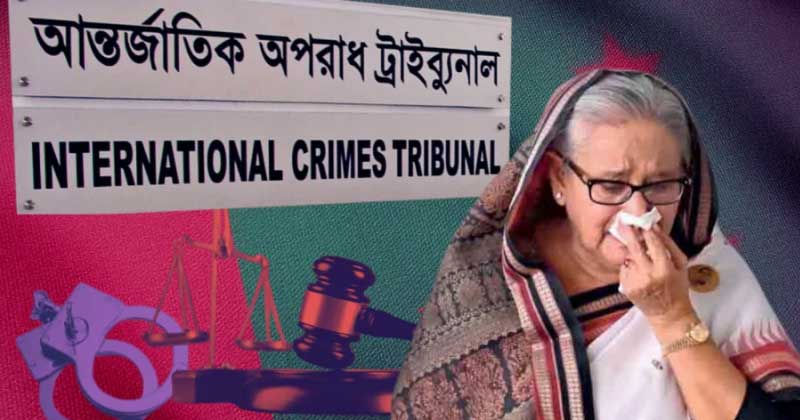
The International Crimes Tribunal (ICT), originally established in 2010 by the then Awami League government to prosecute so-called atrocities committed during the 1971 Liberation War, has delivered its first verdict under the interim government on Monday following last year’s July uprising.
The tribunal, reconstituted in October 2024, is currently handling allegations of crimes against humanity linked to the mass uprising that toppled former prime minister Sheikh Hasina. Today’s ruling concerns the first of several cases filed against her.
Previously, the tribunal delivered verdicts in 57 cases over more than 15 years, with six executions carried out after completing all legal procedures. Five of those executed were senior leaders of the Islamist party Jamaat-e-Islami and one was a BNP leader. The tribunal’s work over the past decade and a half was marked by legal controversies, amendments to the tribunal law, constitutional challenges, disputes over witnesses, and the widely publicized Skype scandal.
According to prosecutors, Sheikh Hasina is named in three cases related to crimes against humanity and is also an accused in several cases filed over disappearances and torture spanning the past 15 years. At least 10 cases are currently under trial in the reconstituted tribunal, and investigators are probing no fewer than 37 cases connected to the July uprising.
The International Crimes Tribunal operates under the International Crimes Tribunals Act of 1973, which authorizes prosecution for genocide, crimes against humanity, war crimes, and other international offenses. Although enacted shortly after independence, the law was amended in 2009 to pave the way for renewed trials. Formal proceedings began in July 2010 at the tribunal housed in the old High Court building in Dhaka. A second tribunal was added in 2012 as caseloads grew.
Over the years, the tribunal tried several senior Jamaat leaders including Abdul Quader Mollah, Motiur Rahman Nizami, Ali Ahsan Mujahid, Muhammad Kamaruzzaman, Delwar Hossain Sayedee, Mir Quasem Ali, Abul Kalam Azad, and ATM Azharul Islam. Al-Badr leaders Chowdhury Mueen Uddin and Ashrafuzzaman Khan were sentenced to death in absentia for killing intellectuals in 1971.
BNP leader Salauddin Quader Chowdhury, Jatiya Party politician Syed Mohammad Qaiser, and Awami League leader Mobarak Hossain were also convicted.
Several convicts died in custody while appealing their sentences, including former Jamaat chief Ghulam Azam, who was sentenced to 90 years. More than 50 appeals remain pending before the Supreme Court, while around 30 older cases are still awaiting trial.
The tribunal’s first verdict came on 21 January 2013 against Jamaat member Abul Kalam Azad. Attempts by Jamaat leaders Quader Mollah and Kamaruzzaman to challenge the tribunal law in the High Court were later shown withdrawn.
However, Quader Mollah later awarded with life sentence of which triggered a group called 'Gonojagoron Mancha' to protest in Dhaka's Shahbagh. Following the protest, Hasina-led government subsequently amended the law to allow the state to appeal for harsher sentences. The Supreme Court later sentenced Mollah to death, and his execution in December 2013 became the first carried out for a 1971 war crimes conviction.
Kamaruzzaman was executed in 2015 after being found guilty of multiple counts of murder and genocide. Delwar Hossain Sayedee’s case drew intense controversy when a defense witness, Sukh Ranjan Bali, disappeared outside the tribunal in 2012 and was later found in India.
In 2025, Bali filed a counter-complaint accusing Sheikh Hasina and 32 others of forcibly sending him across the border.
In 2013, the tribunal sentenced former Jamaat chief Ghulam Azam to 90 years for planning and incitement. ATM Azharul Islam became the first person acquitted on appeal after initially receiving the death penalty.
Mir Quasem Ali was executed in 2016. BNP leader Salauddin Quader Chowdhury was executed in 2015, though his trial was overshadowed by a leaked judgment that became known as the Skype scandal. His family members later faced charges related to the leak.
In 2019, prosecutor Turin Afroz was removed from her post for professional misconduct and was arrested in April 2024 in an attempted murder case following the uprising.
After the interim government took office, it reconstituted the tribunal in October 2024 and introduced further amendments in November. The first case filed in the tribunal accused Sheikh Hasina of crimes against humanity committed during the July 2024 mass uprising. A warrant was issued for her arrest in October last year, and former home minister Asaduzzaman Khan and former police chief Chowdhury Abdullah Al-Mamun were later added as co-accused.
Investigators filed their report on 12 May this year, detailing five charges. Mamun is the only accused in custody and has testified as an approver.
On November 17, the tribunal sentenced the deposed prime minister Sheikh Hasina and former Home Minister Asaduzzaman Khan to death in the much-anticipated case over crimes against humanity involving the last year's July Mass Uprising.
A three-member bench of the ICT-1, led by Justice Golam Mortuza, pronounced the judgement on Monday in presence of co-accused former Inspector General of Police (IGP) Chowdhury Abdullah Al-Mamun.
Hasina and Asaduzzaman are fugitive, while Mamun, a state witness, is under police custody.
The tribunal also ordered to confiscate the properties of Hasina and Asaduzzaman in favour of the state.
This is the first judgement in the July uprising case.
According to the tribunal judgement, Sheikh Hasina was sentenced in two charges, while Asaduzzaman was sentenced in one charge.
As Mamun is the approver, he awarded five-year jail sentences.
The 453-page verdict consists of six parts, said one of the judges of the panel while stating the preamble of the verdict. He also said, there is no scope under the law to raise a question over the jurisdiction of the ICT.
On June 1, the prosecution formally filed charges against Sheikh Hasina and the two accused. Those are:
1. Inciting the crimes through provocative speech:
Following Sheikh Hasina's speech at a press briefing on July 14, 2024, former home minister Asaduzzaman Khan Kamal, former IGP Chowdhury Abdullah Al-Mamun and other senior officials of the then government abetted, assisted and were complicit in launching a severe and coordinated attack on unarmed student protesters.
2. Ordering the extermination of protesters using lethal weapons:
Sheikh Hasina is accused of ordering the extermination of student demonstrators through the use of helicopters, drones and lethal weapons. The then home minister and the then IGP facilitated and implemented this directive by issuing instructions to law enforcement personnel under their command.
3. Killing of BRUR student Abu Sayed:
This charge concerns the July 16, 2024 killing of Begum Rokeya University student Abu Sayed, who was shot multiple times at close range in the chest.
4. Chankharpul killings:
The shooting and killing of six unarmed protesters in Dhaka's Chankharpul area on August 5, 2024, has been brought as a separate count of crimes against humanity.
5. Ashulia mass killing:
The prosecution also cited the shooting of six student protesters in Ashulia on August 5, 2024 - five of whom were later burned after death, while the sixth was allegedly set on fire while still alive.
The Awami League government fell on August 5, 2024, amid the uprising of the students and mass people.
Arguments in the case began on October 12 and concluded on October 23.
Relatives of victims, including the father of martyr Abu Sayeed, testified in the case, along with key witnesses including Nahid Islam, Convener of National Citizen Party (NCP) and Amar Desh editor Dr Mahmudur Rahman.
In total, 54 witnesses testified during the trial.
The tribunal, reconstituted in October 2024, is currently handling allegations of crimes against humanity linked to the mass uprising that toppled former prime minister Sheikh Hasina. Today’s ruling concerns the first of several cases filed against her.
Previously, the tribunal delivered verdicts in 57 cases over more than 15 years, with six executions carried out after completing all legal procedures. Five of those executed were senior leaders of the Islamist party Jamaat-e-Islami and one was a BNP leader. The tribunal’s work over the past decade and a half was marked by legal controversies, amendments to the tribunal law, constitutional challenges, disputes over witnesses, and the widely publicized Skype scandal.
According to prosecutors, Sheikh Hasina is named in three cases related to crimes against humanity and is also an accused in several cases filed over disappearances and torture spanning the past 15 years. At least 10 cases are currently under trial in the reconstituted tribunal, and investigators are probing no fewer than 37 cases connected to the July uprising.
The International Crimes Tribunal operates under the International Crimes Tribunals Act of 1973, which authorizes prosecution for genocide, crimes against humanity, war crimes, and other international offenses. Although enacted shortly after independence, the law was amended in 2009 to pave the way for renewed trials. Formal proceedings began in July 2010 at the tribunal housed in the old High Court building in Dhaka. A second tribunal was added in 2012 as caseloads grew.
Over the years, the tribunal tried several senior Jamaat leaders including Abdul Quader Mollah, Motiur Rahman Nizami, Ali Ahsan Mujahid, Muhammad Kamaruzzaman, Delwar Hossain Sayedee, Mir Quasem Ali, Abul Kalam Azad, and ATM Azharul Islam. Al-Badr leaders Chowdhury Mueen Uddin and Ashrafuzzaman Khan were sentenced to death in absentia for killing intellectuals in 1971.
BNP leader Salauddin Quader Chowdhury, Jatiya Party politician Syed Mohammad Qaiser, and Awami League leader Mobarak Hossain were also convicted.
Several convicts died in custody while appealing their sentences, including former Jamaat chief Ghulam Azam, who was sentenced to 90 years. More than 50 appeals remain pending before the Supreme Court, while around 30 older cases are still awaiting trial.
The tribunal’s first verdict came on 21 January 2013 against Jamaat member Abul Kalam Azad. Attempts by Jamaat leaders Quader Mollah and Kamaruzzaman to challenge the tribunal law in the High Court were later shown withdrawn.
However, Quader Mollah later awarded with life sentence of which triggered a group called 'Gonojagoron Mancha' to protest in Dhaka's Shahbagh. Following the protest, Hasina-led government subsequently amended the law to allow the state to appeal for harsher sentences. The Supreme Court later sentenced Mollah to death, and his execution in December 2013 became the first carried out for a 1971 war crimes conviction.
Kamaruzzaman was executed in 2015 after being found guilty of multiple counts of murder and genocide. Delwar Hossain Sayedee’s case drew intense controversy when a defense witness, Sukh Ranjan Bali, disappeared outside the tribunal in 2012 and was later found in India.
In 2025, Bali filed a counter-complaint accusing Sheikh Hasina and 32 others of forcibly sending him across the border.
In 2013, the tribunal sentenced former Jamaat chief Ghulam Azam to 90 years for planning and incitement. ATM Azharul Islam became the first person acquitted on appeal after initially receiving the death penalty.
Mir Quasem Ali was executed in 2016. BNP leader Salauddin Quader Chowdhury was executed in 2015, though his trial was overshadowed by a leaked judgment that became known as the Skype scandal. His family members later faced charges related to the leak.
In 2019, prosecutor Turin Afroz was removed from her post for professional misconduct and was arrested in April 2024 in an attempted murder case following the uprising.
After the interim government took office, it reconstituted the tribunal in October 2024 and introduced further amendments in November. The first case filed in the tribunal accused Sheikh Hasina of crimes against humanity committed during the July 2024 mass uprising. A warrant was issued for her arrest in October last year, and former home minister Asaduzzaman Khan and former police chief Chowdhury Abdullah Al-Mamun were later added as co-accused.
Investigators filed their report on 12 May this year, detailing five charges. Mamun is the only accused in custody and has testified as an approver.
On November 17, the tribunal sentenced the deposed prime minister Sheikh Hasina and former Home Minister Asaduzzaman Khan to death in the much-anticipated case over crimes against humanity involving the last year's July Mass Uprising.
A three-member bench of the ICT-1, led by Justice Golam Mortuza, pronounced the judgement on Monday in presence of co-accused former Inspector General of Police (IGP) Chowdhury Abdullah Al-Mamun.
Hasina and Asaduzzaman are fugitive, while Mamun, a state witness, is under police custody.
The tribunal also ordered to confiscate the properties of Hasina and Asaduzzaman in favour of the state.
This is the first judgement in the July uprising case.
According to the tribunal judgement, Sheikh Hasina was sentenced in two charges, while Asaduzzaman was sentenced in one charge.
As Mamun is the approver, he awarded five-year jail sentences.
The 453-page verdict consists of six parts, said one of the judges of the panel while stating the preamble of the verdict. He also said, there is no scope under the law to raise a question over the jurisdiction of the ICT.
On June 1, the prosecution formally filed charges against Sheikh Hasina and the two accused. Those are:
1. Inciting the crimes through provocative speech:
Following Sheikh Hasina's speech at a press briefing on July 14, 2024, former home minister Asaduzzaman Khan Kamal, former IGP Chowdhury Abdullah Al-Mamun and other senior officials of the then government abetted, assisted and were complicit in launching a severe and coordinated attack on unarmed student protesters.
2. Ordering the extermination of protesters using lethal weapons:
Sheikh Hasina is accused of ordering the extermination of student demonstrators through the use of helicopters, drones and lethal weapons. The then home minister and the then IGP facilitated and implemented this directive by issuing instructions to law enforcement personnel under their command.
3. Killing of BRUR student Abu Sayed:
This charge concerns the July 16, 2024 killing of Begum Rokeya University student Abu Sayed, who was shot multiple times at close range in the chest.
4. Chankharpul killings:
The shooting and killing of six unarmed protesters in Dhaka's Chankharpul area on August 5, 2024, has been brought as a separate count of crimes against humanity.
5. Ashulia mass killing:
The prosecution also cited the shooting of six student protesters in Ashulia on August 5, 2024 - five of whom were later burned after death, while the sixth was allegedly set on fire while still alive.
The Awami League government fell on August 5, 2024, amid the uprising of the students and mass people.
Arguments in the case began on October 12 and concluded on October 23.
Relatives of victims, including the father of martyr Abu Sayeed, testified in the case, along with key witnesses including Nahid Islam, Convener of National Citizen Party (NCP) and Amar Desh editor Dr Mahmudur Rahman.
In total, 54 witnesses testified during the trial.
Loading...
Loading...
Also read






Editor : Iqbal Sobhan Chowdhury
Published by the Editor on behalf of the Observer Ltd. from Globe Printers, 24/A, New Eskaton Road, Ramna, Dhaka.
Editorial, News and Commercial Offices : Aziz Bhaban (2nd floor), 93, Motijheel C/A, Dhaka-1000.
Phone: PABX- 41053001-06; Advertisement: 41053012; 01793317829, 01550707291, E-mail: [email protected], [email protected] Online: email: [email protected] 41053014; 01550707297 Advertisement: 01550707296
Published by the Editor on behalf of the Observer Ltd. from Globe Printers, 24/A, New Eskaton Road, Ramna, Dhaka.
Editorial, News and Commercial Offices : Aziz Bhaban (2nd floor), 93, Motijheel C/A, Dhaka-1000.
Phone: PABX- 41053001-06; Advertisement: 41053012; 01793317829, 01550707291, E-mail: [email protected], [email protected] Online: email: [email protected] 41053014; 01550707297 Advertisement: 01550707296


