



| HEADLINE |

|
Sociology of Islam
Published : Saturday, 6 December, 2025 at 12:00 AM
By Jakir Al-Faruki


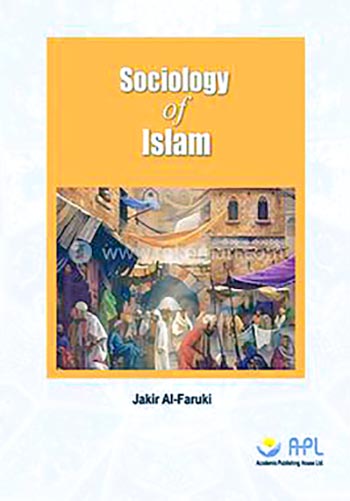 Jakir Al-Faruki's 'Sociology of Islam' stands as a significant milestone in contemporary scholarship on religion and society. Since its publication in February 2021 by Academia Publishing House Ltd., the book has established itself as an essential foundation for understanding how Islamic faith interacts with, shapes, and is shaped by social structures across the world. From the outset, the book signals its thematic direction through a cover that evokes a sense of historical continuity, communal life, and the everyday realities of Muslim societies. This visual cue reflects the core ambition of Al-Faruki's work: to move beyond theological abstraction and situate Islam within the realm of concrete social experience, lived histories, and dynamic global interactions.
The book begins by laying a rigorous conceptual foundation. The opening chapter carefully defines the sociology of Islam as a distinct field situated at the crossroads of sociological theory and Islamic studies. In doing so, Al-Faruki ensures that readers from diverse academic backgrounds enter the discussion with shared clarity about scope, methods, and disciplinary boundaries. This commitment to conceptual precision gives the book its academic solidity, making it suitable not only for learning but also for teaching and reference.
Reviewed by Dr Matiur RahmanHe then turns to the methodological approaches that equip researchers to investigate Muslim societies. The second chapter functions almost as a field manual, outlining the empirical, comparative, interpretive, and philosophical tools essential for understanding religion in social life. From case studies to ethnography to the interpretive tradition of Verstehen, Al-Faruki deftly surveys the spectrum of sociological methods and demonstrates how each can illuminate different dimensions of Islamic social realities. This methodological breadth strengthens the text's value for students exploring how to conduct meaningful research in diverse Muslim contexts.
Building on these methodological underpinnings, the book advances into theoretical frameworks in the sociology of religion. Al-Faruki maps the intellectual terrain of positivism, conflict theory, and functionalism with clarity and authority. His analysis of structural and biological functionalism is particularly noteworthy, as he demonstrates how classical theories provide the analytic scaffolding for understanding Islamic social organisation. This theoretical grounding prepares readers for the book's most compelling contribution: the application of sociological perspectives to the internal structures of Muslim societies.
The fourth chapter marks a decisive shift from theory to analysis, unpacking the foundational worldview of Islam and its translation into social systems. Al-Faruki explores beliefs about God, humankind, and the cosmos, showing how these shape the ethical and institutional architecture of Muslim society. His treatment of Islamic values as guiding forces behind community formation, authority structures, and social norms highlights the rich interplay between faith and the everyday ordering of life.
The book then moves into the institutional core of Muslim societies. Al-Faruki's discussion of social stratification stands out for its comparative depth. By juxtaposing Islamic hierarchies with the Christian and Hindu caste systems, he exposes distinctive patterns of social differentiation shaped by Islamic teachings. This comparative approach helps readers appreciate both the uniqueness and universality of stratification processes across civilisations.
His exploration of institutions such as family, kinship, the state, and economic systems offers a more grounded sociological understanding of Muslim life. Particularly illuminating is the discussion of Zakat as a system of obligatory redistribution that ties spiritual obligation to socio-economic justice. The historical examination of political authority, including the contrast between the Caliphate and Western religious-state structures, adds rich historical texture and deepens the analysis of governance in Islamic societies.
The final chapters elevate the book into the realm of contemporary global debates. Al-Faruki confronts modernity, secularisation, nationalism, and social movements with intellectual courage and clarity. His analysis of the tensions between Islamic identity and secular modernity acknowledges the diverse trajectories of Muslim societies without succumbing to oversimplification. These chapters feel especially urgent, as they speak directly to the sociopolitical transformations reshaping Muslim-majority societies today.
Perhaps the book's most ambitious section is its comparative examination of fundamentalism and resurgence across religious traditions. By situating Islamic fundamentalism alongside American, Hindu, and Jewish expressions, Al-Faruki frames these phenomena as broader sociological patterns rather than isolated crises. His critique of global economic systems and his nuanced treatment of different strands of feminism within Islamic contexts further reflect the book's commitment to a holistic analysis of contemporary debates.
This extensive and multidimensional exploration occupies nearly a fifth of the book, giving it the depth and range necessary for a serious academic text. It is in these final discussions that the work expands beyond the boundaries of a traditional textbook and enters the domain of a scholarly reference, suitable for long-term academic engagement and critical inquiry.
In its entirety, 'Sociology of Islam' is a masterful synthesis of sociological theory, methodological clarity, historical insight, and contemporary relevance. Jakir Al-Faruki succeeds in offering a rigorous, balanced, and intellectually expansive study that will remain indispensable for anyone seeking to understand the complex entanglements of faith, identity, and society in the modern world. It stands not only as a foundational resource for the sociology of religion but also as a thoughtful contribution to global discourse on Islam and modernity.
The reviewer is a researcher and development professional
Loading...
Loading...



Editor : Iqbal Sobhan Chowdhury
Published by the Editor on behalf of the Observer Ltd. from Globe Printers, 24/A, New Eskaton Road, Ramna, Dhaka.
Editorial, News and Commercial Offices : Aziz Bhaban (2nd floor), 93, Motijheel C/A, Dhaka-1000.
Phone: PABX- 41053001-06; Advertisement: 41053012; 01793317829, 01550707291, E-mail: [email protected], [email protected] Online: email: [email protected] 41053014; 01550707297 Advertisement: 01550707296
Published by the Editor on behalf of the Observer Ltd. from Globe Printers, 24/A, New Eskaton Road, Ramna, Dhaka.
Editorial, News and Commercial Offices : Aziz Bhaban (2nd floor), 93, Motijheel C/A, Dhaka-1000.
Phone: PABX- 41053001-06; Advertisement: 41053012; 01793317829, 01550707291, E-mail: [email protected], [email protected] Online: email: [email protected] 41053014; 01550707297 Advertisement: 01550707296


