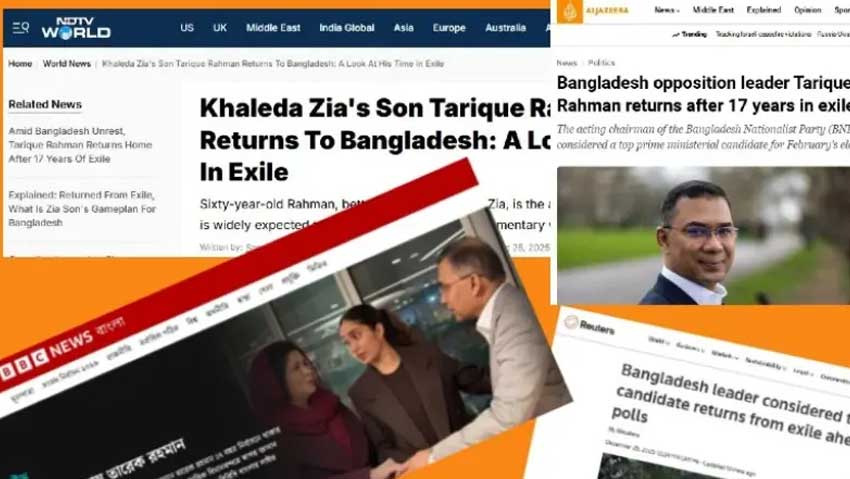
The 13th Jatiya Sangsad Election and referendum in Bangladesh have attracted widespread international media coverage, with major outlets highlighting the historic vote throughout the day.
Prominent platforms such as The Guardian, BBC, Al Jazeera, The Hindu and others carried live updates and analyses, making it a headline story globally.
Reuters described the event as “Voters in long lines in first election after Sheikh Hasina’s ouster,” calling the vote “groundbreaking” in the context of Bangladesh’s recent political turmoil.
The report highlighted that the election follows a period of unrest sparked by controversial job quotas under Sheikh Hasina’s administration, which led to 2024 student-led protests. Hundreds were killed and thousands injured during clashes with security forces, ultimately prompting Hasina’s resignation and departure to India.
The article noted that Generation Z voters were motivated by issues such as employment, anti-corruption measures and political accountability.
The New York Times emphasized that over 120 million citizens participated in choosing new leadership, describing it as a pivotal moment for the country.
The report noted that many Bangladeshis view this vote as an opportunity to establish an inclusive democracy with safeguards against widespread corruption and authoritarianism.
BBC’s live coverage highlighted that this election marked the country’s first polls after 2024 mass uprising, which ended Sheikh Hasina’s 15-year rule, during which 1,400 protesters were killed. Awami League was barred from contesting and allegations of state repression during the unrest were noted, though Hasina denied them.
The Guardian framed the election as signaling “a new era of clean politics under Tarique Rahman,” who returned to Bangladesh from London after 17 years of exile to contest as the main opposition leader, pledging to end corruption and lead the country on a “new path.”
Al Jazeera emphasized that the vote would not only determine the next government but also decide the future of reforms through referendum, highlighting the main contenders: BNP’s Tarique Rahman and Jamaat-e-Islami’s Dr. Shafiqur Rahman.
Geo News of Pakistan described the vote as “historic following 2024 uprising,” noting long queues and an intense electoral contest.
Indian media also covered the election extensively. The Hindu reported a competitive race between BNP and Jamaat, with BNP slightly ahead, citing a 32 percent voter turnout by midday.
The Times of India highlighted isolated clashes and unrest in some areas.
The international coverage underscores global attention on Bangladesh’s democratic transition, marking the election as a crucial step in the nation’s political and reform-oriented future.
SH