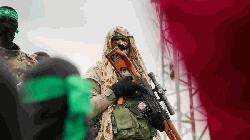
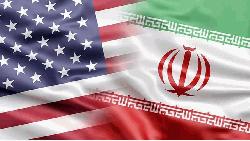
A senior advisor to the commander-in-chief of the Islamic Revolutionary Guard Corps (IRGC) warned Saturday that Iran's current missile barrage represents only a fraction of its total military strength, cautioning that Tehran is prepared for a prolonged conflict, reports Mathrubhumi English.
Major General Ebrahim Jabbari, in a defiant address to state media, dismissed the impact of joint U.S.-Israeli strikes on the nation's defence infrastructure. He asserted that the hundreds of missiles launched toward Israel and U.S. regional assets in the last 24 hours were drawn from the "back" of the country's strategic reserves.
Vow of Sustained Warfare
Jabbari's comments echoed earlier assessments from the IRGC suggesting that Iran maintains the capacity to conduct daily missile strikes for up to two years without exhausting its subterranean "missile cities."
The general claimed that the Revolutionary Guard has yet to deploy its most advanced hypersonic technologies or its full drone fleet in the current engagement, which has already seen significant impacts in Tel Aviv, Abu Dhabi, and at several U.S. bases in the Persian Gulf.
Psychological Warfare
The general, who previously commanded the elite Vali Amr Protection Unit responsible for the Supreme Leader's security, emphasised that Iran's "most effective missiles" remain protected in deep-buried, reinforced facilities that he described as "enormous."
"Our armed forces are at the height of their readiness," Jabbari added, claiming that the initial wave of U.S. and Israeli strikes failed to penetrate Iran's most sensitive storage sites.
The threat of "unseen" weaponry follows reports from the International Atomic Energy Agency (IAEA) that inspectors have been barred from several facilities, leading to international concern regarding the potential operationalisation of new strategic capabilities.