The world is currently facing a period of deep uncertainty. In late February 2026, tensions escalated sharply along the Pakistan-Afghanistan border. From February 22, Pakistan launched airstrikes across several Afghan provinces, particularly targeting Nangarhar and Paktika, reportedly killing at least 18 civilians. Afghanistan responded with countermeasures.
The Pakistani government claimed these were defensive actions, while Afghan authorities stated that civilians were attacked. On February 26-27, Pakistan declared that the two countries were now in an open state of war. The conflict stems from longstanding border disputes, the presence of militant groups, and political tensions. The United Nations and other international organizations have called for peace talks, U.S. President Donald Trump expressed support for Pakistan's actions, and China has attempted to mediate. Despite these efforts, halting the conflict remains challenging, and the humanitarian risks to ordinary citizens continue to rise.
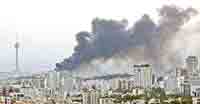
At the same time, tensions between Israel and Iran in the Middle East have reached new heights. On February 28, 2026, Israel and the United States jointly conducted air and missile strikes on key Iranian facilities. Explosions were reported in Tehran and other cities, creating panic in multiple parts of the world. Iran announced retaliatory defense measures, including missile launches across several Middle Eastern regions.
This conflict has also threatened oil supplies passing through the Strait of Hormuz, impacting the global economy. International powers such as Russia, European countries, and the United Nations have called for peace, while Gulf countries-including Saudi Arabia, Kuwait, Qatar, and the United Arab Emirates-have focused on diplomacy and mediation rather than direct involvement.
Meanwhile, the Russia-Ukraine war, which began in 2022, continues into 2026. This prolonged conflict has significant implications for global politics and security. Ukrainian President Volodymyr Zelensky has warned that if the situation continues to escalate, it could be comparable to a third world war. Western countries, especially the United States and the European Union, are providing Ukraine with military and economic support, as well as humanitarian aid. Relations with Russia continue to deteriorate, signaling growing instability on the international stage.
Combined, these conflicts have left the world in a state of uncertainty. The Pakistan-Afghanistan war, the Israel-Iran military tensions, and the ongoing Russia-Ukraine conflict have created an unpredictable global environment. While a third world war has not been officially declared, analysts view the current situation as one of the greatest global risks in recent decades. Calls for peace and dialogue continue, but the ongoing presence of weapons, missiles, and military escalation places ordinary people and economies at serious risk.
Today, the world reminds us that war brings nothing but destruction, threatening the lives of children, families, and civilians. True victory for humanity lies in peace, dialogue, empathy, and international cooperation. It is not weapons but light, compassion, and understanding that can establish lasting global peace.
Each of us can contribute through our prayers for peace. War is not the answer; peace is humanity's liberation. For the sake of human life, compassion and constructive action must replace violence-this is the true triumph of our era.
The writer is a student, Economics Department, Dhaka College





