Iran's decision to keep the strategic Strait of Hormuz open has sparked cautious optimism that Bangladesh's fragile economy may regain some momentum under the country's new political leadership.
However, economists and business leaders warn that the potential relief could quickly dissipate if domestic political instability, corruption and administrative weaknesses remain unresolved.
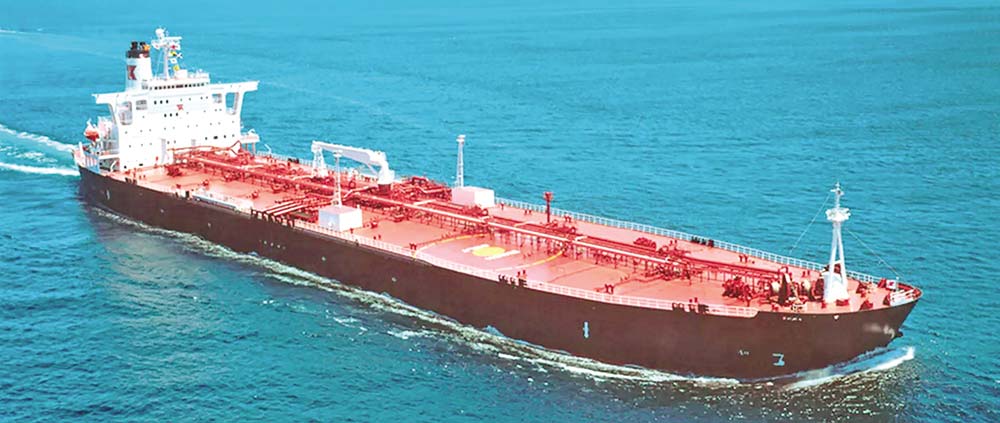
Iran's Revolutionary Guard announced on Friday that the Strait of Hormuz would remain open to international shipping, although vessels linked to the United States or Israel would not be permitted to pass through the waterway. The announcement suggests that Tehran intends to impose selective restrictions rather than a full blockade of the critical shipping route, through which a substantial share of the world's oil supply passes.
For Bangladesh, which relies heavily on energy imports from the Middle East, any closure of the Strait of Hormuz could have triggered severe economic consequences. The latest development has therefore eased some immediate concerns about surging fuel prices at a time when the country is grappling with persistent inflation, sluggish investment and slowing economic growth.
Analysts caution, however, that domestic political risks may pose an equally serious threat to economic stability.
Opposition groups have already warned they will resist any attempt by the new administration to push through the proposed July Charter when Parliament reconvenes on Thursday. Economists say prolonged political confrontation could undermine investor confidence and delay economic recovery.
"We see a light at the end of the tunnel as Iran keeps the Strait of Hormuz open," said a leading businessman in Dhaka. "This route is the lifeline of the global economy and a crucial artery for Bangladesh because most of our oil and fuel imports come from the Middle East through this channel. But political uncertainty and corruption could still drag down economic growth."
He added that the new government led by Tarique Rahman must prioritise administrative reforms and stronger anti-corruption measures to maintain economic stability and restore investor confidence.
Bangladesh imports more than 80 per cent of its crude oil from Middle Eastern suppliers such as Saudi Arabia and the United Arab Emirates, while large volumes of liquefied natural gas are sourced from Qatar. The country imports more than six million tonnes of petroleum annually, mostly through Middle Eastern supply routes. Analysts estimate that a $10 rise in global oil prices could increase Bangladesh's monthly import bill by roughly $80 million, intensifying inflationary pressure and widening the balance-of-payments deficit.
Energy shocks tend to ripple across the broader economy. Higher fuel costs raise electricity tariffs, transport fares and industrial operating expenses, eventually pushing up the prices of everyday goods. With living costs already rising, further price increases would likely weaken consumer spending and delay business expansion plans.
As of early March 2026, Bangladesh's fuel reserves are estimated to cover between two weeks and one month of domestic demand, making the economy particularly vulnerable to supply disruptions. Business leaders are therefore urging the government to prioritise energy security rather than concentrate solely on conventional infrastructure projects.
Recent economic indicators reflect the mounting strain. Bangladesh's GDP growth has slowed from 4.22 per cent in the previous fiscal year to 3.97 per cent this year, largely due to weak investment and declining tax revenues. In the first six months of the fiscal year alone, the government faced a revenue shortfall of Tk 36,000 crore.
Inflation also remains stubbornly high. According to the Bangladesh Bureau of Statistics, point-to-point inflation rose to 9.13 per cent in February 2026 from 8.58 per cent in January. Food inflation increased to 9.30 per cent, while non-food inflation climbed to 9.01 per cent, reflecting rising costs in both rural and urban areas.
Despite these pressures, the latest Purchasing Managers' Index (PMI) suggests some resilience in the economy. The February PMI rose by 1.8 points to 55.7, indicating faster expansion in agriculture, manufacturing and services, although the construction sector slipped back into contraction.
The PMI, released jointly by the Metropolitan Chamber of Commerce and Industry (MCCI) and Policy Exchange Bangladesh with support from the UK government, provides an early snapshot of economic activity.
For policymakers, the message is clear: while the reopening of the Strait of Hormuz offers temporary relief, Bangladesh's economic recovery will ultimately depend on political stability, stronger energy security and decisive structural reforms at home.





