



| HEADLINE |

|

Power Crisis Cripples RMG Output by 30pc, Raising Export Risks
Published : Tuesday, 14 April, 2026 at 12:00 AM
Business Correspondent


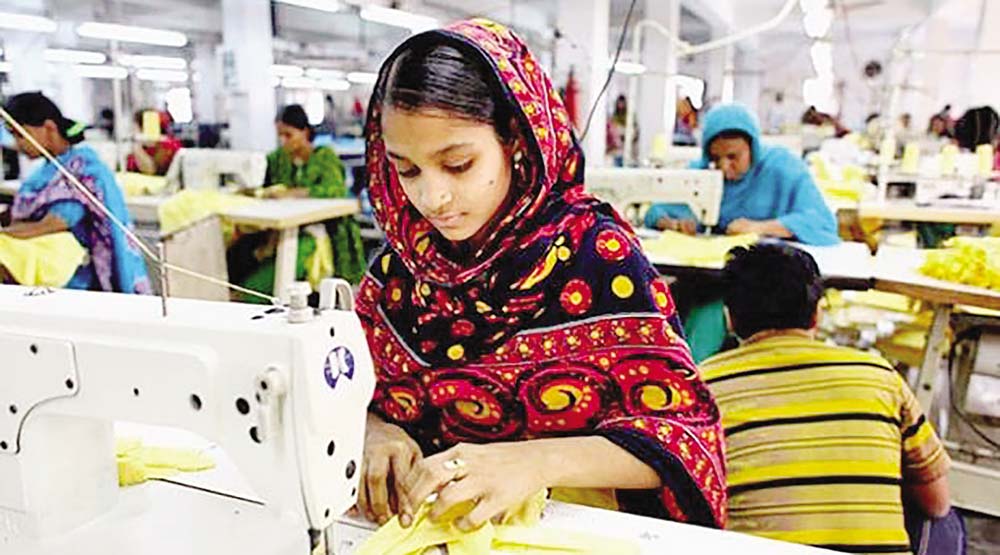 Bangladesh's ready-made garment (RMG) sector is grappling with a severe energy crunch, with production capacity dropping by 25-30 per cent due to persistent shortages of gas and electricity, industry leaders have warned.
The concern was raised by Bangladesh Garment Manufacturers and Exporters Association (BGMEA) President Mahmud Hasan Khan during a meeting with Power, Energy and Mineral Resources Minister Iqbal Hasan Mahmud and State Minister Anindya Islam Amit.
He said factories across the country are operating well below capacity as energy supplies fall short of demand, disrupting production and export schedules.
The situation has been further aggravated by global uncertainties linked to the ongoing Middle East conflict, which has added pressure to already strained energy markets. Although buyer confidence had shown signs of recovery following the national election, the latest developments have exposed fresh vulnerabilities in the sector.
Khan noted that competing countries are maintaining stronger energy security, placing Bangladesh's key export industry at a disadvantage.
The impact is particularly acute in major industrial hubs such as Gazipur and Ashulia, where frequent load-shedding and a shortage of diesel for generators have slowed production and delayed shipments.
Manufacturers are also facing rising costs, driven by higher fuel prices, increased raw material expenses and elevated transport charges, further squeezing profit margins.
To address the crisis, the BGMEA delegation placed several proposals before the government. These include ensuring emergency diesel supply to factories, providing equitable gas distribution-particularly for small and medium enterprises-and accelerating the installation of additional Floating Storage Regasification Units (FSRUs) to boost gas supply.
The association also called for the rapid rollout of Electronic Volume Corrector (EVC) metres and urged the withdrawal of taxes and VAT on imported energy to help reduce production costs.
In addition, BGMEA stressed the need for greater investment in renewable energy, proposing a sharp reduction in import duties on solar photovoltaic equipment, including panels, inverters, DC cables and battery energy storage systems.
The minister and state minister acknowledged the sector's critical role in the economy and assured that steps are being taken to ease the energy shortage.
As an interim measure, the government approved a BGMEA-proposed mechanism to facilitate emergency diesel supply from nearby filling stations to factories.
Officials said further actions are under consideration as the country seeks to stabilise energy supply and sustain export growth in its largest foreign exchange-earning sector.

Loading...
Loading...
Also read



Editor : Iqbal Sobhan Chowdhury
Published by the Editor on behalf of the Observer Ltd. from Globe Printers, 24/A, New Eskaton Road, Ramna, Dhaka.
Editorial, News and Commercial Offices : Aziz Bhaban (2nd floor), 93, Motijheel C/A, Dhaka-1000.
Phone: PABX- 41053001-06; Advertisement: 41053012; 01793317829, 01550707291, E-mail: [email protected], [email protected] Online: email: [email protected] 41053014; 01550707297 Advertisement: 01550707296
Published by the Editor on behalf of the Observer Ltd. from Globe Printers, 24/A, New Eskaton Road, Ramna, Dhaka.
Editorial, News and Commercial Offices : Aziz Bhaban (2nd floor), 93, Motijheel C/A, Dhaka-1000.
Phone: PABX- 41053001-06; Advertisement: 41053012; 01793317829, 01550707291, E-mail: [email protected], [email protected] Online: email: [email protected] 41053014; 01550707297 Advertisement: 01550707296


