



| HEADLINE |

|
DCs vow swift implementation of govt policies at field level
Published : Monday, 4 May, 2026 at 9:28 PM
Staff Correspondent


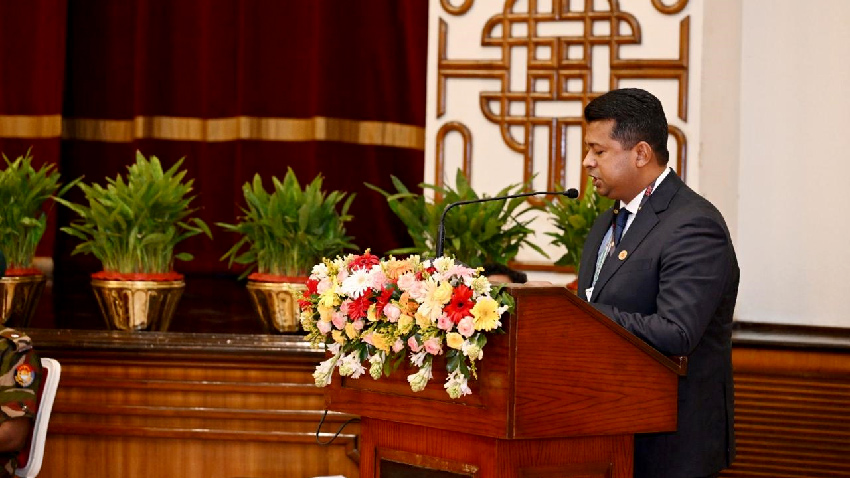
District Commissioners (DCs) have reaffirmed their commitment to ensuring the swift and effective implementation of the new government’s policies and programmes at the grassroots level.
Speaking on behalf of the DCs at an event marking the Deputy Commissioners’ Conference 2026 at Bangabhaban on Sunday evening (May 3), Chattogram Deputy Commissioner Mohammad Zahidul Islam Miah said district administrations are determined to implement all government initiatives aimed at building a “New Bangladesh” under the prime minister’s leadership.
He said work on implementing the government’s election manifesto has already begun and is being carried out with dedication. Key initiatives include the introduction of “family cards” for low-income groups, “farmer cards” for agricultural support, canal excavation programmes to ensure food security, afforestation drives, and intensified cleanliness campaigns to prevent mosquito-borne diseases such as dengue.
The Chattogram DC said mobile courts are being conducted regularly to curb illegal hoarding amid the global energy crisis, alongside efforts to ensure proper fuel management.
Speaking on behalf of the DCs at an event marking the Deputy Commissioners’ Conference 2026 at Bangabhaban on Sunday evening (May 3), Chattogram Deputy Commissioner Mohammad Zahidul Islam Miah said district administrations are determined to implement all government initiatives aimed at building a “New Bangladesh” under the prime minister’s leadership.
He said work on implementing the government’s election manifesto has already begun and is being carried out with dedication. Key initiatives include the introduction of “family cards” for low-income groups, “farmer cards” for agricultural support, canal excavation programmes to ensure food security, afforestation drives, and intensified cleanliness campaigns to prevent mosquito-borne diseases such as dengue.
The Chattogram DC said mobile courts are being conducted regularly to curb illegal hoarding amid the global energy crisis, alongside efforts to ensure proper fuel management.
He added that weekly public hearings are playing an effective role in addressing the concerns of both local residents and expatriates. “District administrations are committed to working with empathy while strictly adhering to laws and regulations,” he said.
Emphasising transparency and accountability, he noted that delivering prompt and expected services to citizens remains a key commitment of the government. DCs are discharging their duties with integrity, professionalism, and neutrality, utilising their experience and skills, he added.
Earlier in the day, during an open discussion with the prime minister at the Osmani Memorial Auditorium in Dhaka, Zahidul proposed using soil from canal excavation as an alternative to fertile topsoil used in brick production.
He said around 130 million tonnes of soil are required annually to produce about 35 million bricks, adding that this demand could be met by excavating nearly 20,000 kilometres of canals.
Using excavated canal soil in brick kilns would help preserve fertile topsoil and minimise damage to agricultural land, he said.
Highlighting the need to protect arable land, he suggested prioritising vertical housing instead of expanding settlements onto farmland. He also proposed bringing fallow land under cultivation and offering incentives to discourage the use of agricultural land for housing.
Referring to rural road construction, he said topsoil is often taken from adjacent farmland, which should be avoided. Instead, soil from canal excavation could be used for road repair and development.
Citing data, he said arable land in Bangladesh has declined from about 21.7 million hectares in 1971 to 8.829 million hectares at present, while the population has risen to nearly 180 million.
According to the Bangladesh Bureau of Statistics’ Agriculture Census 2019, arable land decreased by 168,000 hectares between 2008 and 2019. In Chattogram alone, around 23,027.86 hectares of land have shifted to non-agricultural use over the past decade due to housing, road construction, and brick kilns.
As part of the government’s election pledge, a nationwide programme for excavating and re-excavating rivers, canals, and water bodies was launched on March 16. The initiative began simultaneously in 54 districts, with a plan to cover around 20,000 kilometres over the next five years.
According to the Department of Environment, nearly 129.6 million tonnes of fertile topsoil are used annually for brick production, posing risks to agricultural output and public health.
Loading...
Loading...
Also read







Editor : Iqbal Sobhan Chowdhury
Published by the Editor on behalf of the Observer Ltd. from Globe Printers, 24/A, New Eskaton Road, Ramna, Dhaka.
Editorial, News and Commercial Offices : Aziz Bhaban (2nd floor), 93, Motijheel C/A, Dhaka-1000.
Phone: PABX- 41053001-06; Advertisement: 41053012; 01793317829, 01550707291, E-mail: [email protected], [email protected] Online: email: [email protected] 41053014; 01550707297 Advertisement: 01550707296
Published by the Editor on behalf of the Observer Ltd. from Globe Printers, 24/A, New Eskaton Road, Ramna, Dhaka.
Editorial, News and Commercial Offices : Aziz Bhaban (2nd floor), 93, Motijheel C/A, Dhaka-1000.
Phone: PABX- 41053001-06; Advertisement: 41053012; 01793317829, 01550707291, E-mail: [email protected], [email protected] Online: email: [email protected] 41053014; 01550707297 Advertisement: 01550707296


